
Ready to try BrandSKU?

Choosing where to source your products can make or break your online store. Ship too slow, and customers leave bad reviews. Pay too much, and your margins disappear. That's why the dropshipping from USA vs China decision matters more than most sellers realize.
Both options come with real strengths and real trade-offs. USA suppliers deliver in days but cost more. China suppliers offer huge catalogs and lower prices but longer wait times. In this guide, you'll learn how to pick the right fit — or smartly combine both.
Key Takeaways
- USA suppliers deliver in 2-5 days; China suppliers average 12-18 days.
- China wins on price and product variety; USA wins on quality and support.
- Test new products with China suppliers, then scale winners to US warehouses.
- Watch for fake US suppliers using re-labeled tracking from Pitney Bowes or YunExpress.
- BrandSKU handles sourcing, custom packaging, and fulfillment for branded dropshipping stores.
The Importance of Choosing the Right Dropshipping Supplier
Your supplier is basically your silent business partner. When they mess up, your customers blame you, not them. A late package, a broken product, or a wrong item lands in your inbox as a one-star review.
That's why supplier selection shapes almost everything else in your store. It affects your shipping times, profit margins, return rates, and even how often customers come back for a second order.
Picking between a USA or China supplier isn't just about cost. It's about long-term brand trust. A cheap supplier that ships slow can quietly kill your ads' ROI, while a reliable one turns first-time buyers into repeat fans who actually recommend your store.
Key Differences Between USA and China Dropshipping Suppliers
1. Shipping Times
USA suppliers usually get orders to customers in 2 to 5 business days. Sometimes faster, if the warehouse is on the same coast as the buyer.
China suppliers are a different story. Even with YunExpress or ePacket, you're looking at around 12 days on average — and closer to 18 once customs decides to take its time. That wait is where a lot of first-time buyers quietly disappear.
2. Product Pricing
China suppliers are cheap. Often 60% cheaper on the unit itself, sometimes more if you're sourcing directly from a factory instead of a middleman on AliExpress.
USA suppliers cost more upfront. But here's the catch — once you add international shipping, customs fees, and the occasional lost package refund, the price gap gets a lot smaller than the spreadsheet suggests. True landed cost is the number that actually matters.
3. Product Variety
If you've ever browsed AliExpress at 2 a.m., you already know. China platforms carry basically everything, and viral TikTok products show up within a week of going viral.
USA catalogs are smaller and slower. Where they win is specific categories — apparel, print-on-demand, supplements, pet stuff. Anything that benefits from being made locally, basically.
4. Product Quality
USA suppliers deal with FDA rules, CPSC standards, and labeling laws. That doesn't guarantee perfection, but it does mean fewer nasty surprises.
China is more of a mixed bag. Some factories are excellent. Others send you Batch A that looks great and Batch B that falls apart. Sample testing isn't optional here — skip it and you'll learn the hard way.
5. Branding Options
USA POD platforms like PrintKK let you slap your logo on a single unit. No minimums, no negotiations, no waiting on a factory rep to reply.
China suppliers can go deeper on customization and charge less per unit — but they'll usually ask for 100 to 500 pieces upfront. Good for scaling a winner. Rough for testing something new.
6. Customer Support
With USA suppliers, you email at 10 a.m. and hear back before lunch. English is fluent. Time zones overlap. Refunds get sorted the same day.
China suppliers operate on a 24 to 48 hour reply cycle. Not because they're rude — just time zones and language layers. During a flash sale or a viral moment, that lag can turn one stock issue into a wave of angry emails.
7. Returns and Refunds
USA suppliers give you a local return address, and customers ship items back for a few dollars. Refunds process fast, and sometimes you can even resell the returned unit.
Returns from China? Basically not a thing. Return shipping usually costs more than the product, so most stores just refund the customer and write off the inventory. It's a quiet expense that chews into net profit margins month after month.
Top 5 Dropshipping Suppliers in China
AliExpress
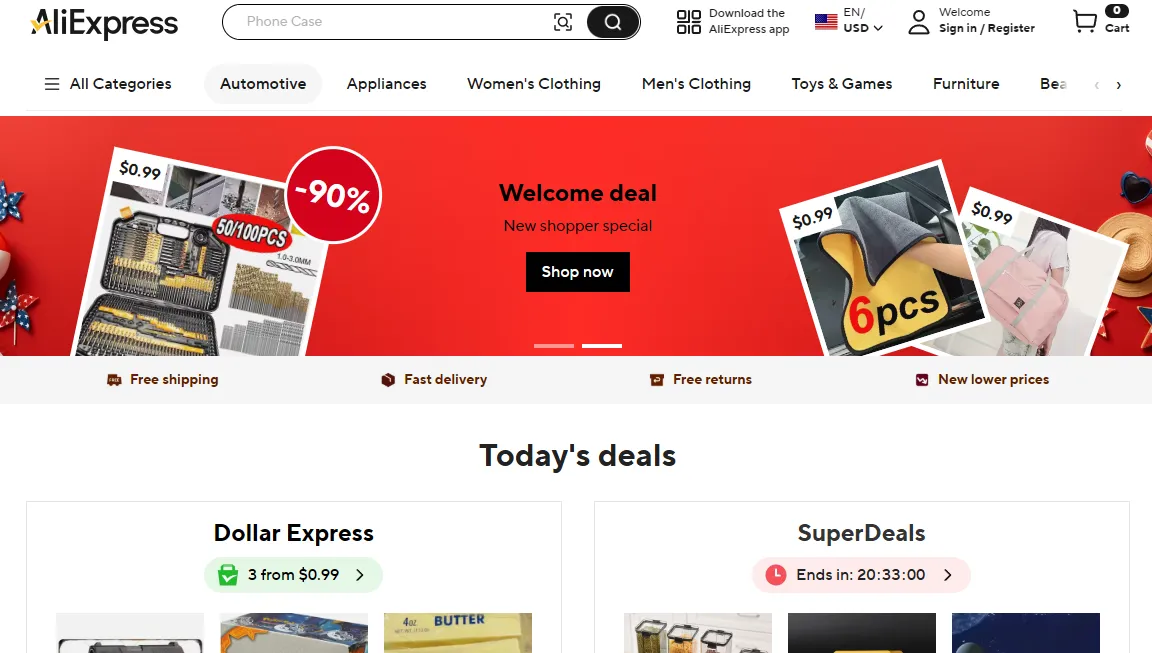
AliExpress is less a supplier and more a giant flea market where thousands of resellers compete for your order. That's actually useful — if one seller flakes, five more sell the same SKU.
The real skill isn't finding products here, it's reading the dispute system. When a package goes missing, buyers who open a claim within 15 days of the delivery deadline recover their money almost every time. Miss that window and AliExpress will side with the seller.
CJdropshipping
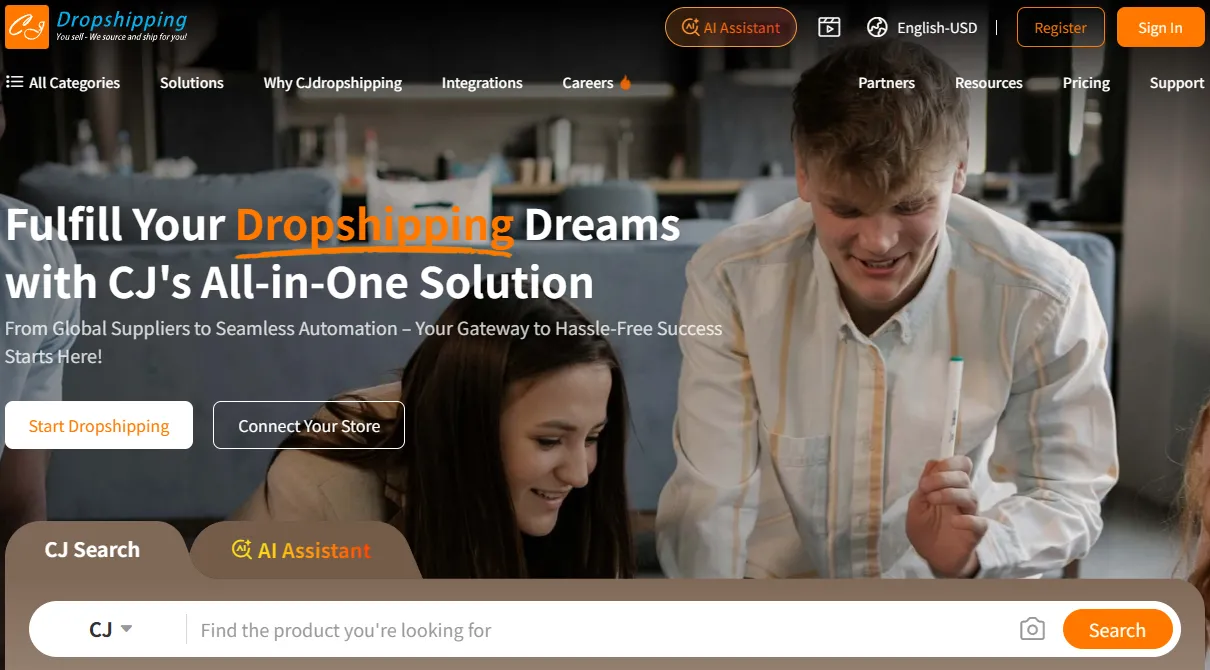
The reason people jump to CJdropshipping usually isn't warehouses or automation — it's the sourcing agents.
Send them a screenshot from TikTok, a 1688 link, or even a competitor's Shopify page, and within a day or two you'll get a quote with a real factory attached. That shortcut alone is worth the switch for stores hunting fresh products before the rest of the market catches on.
DHgate
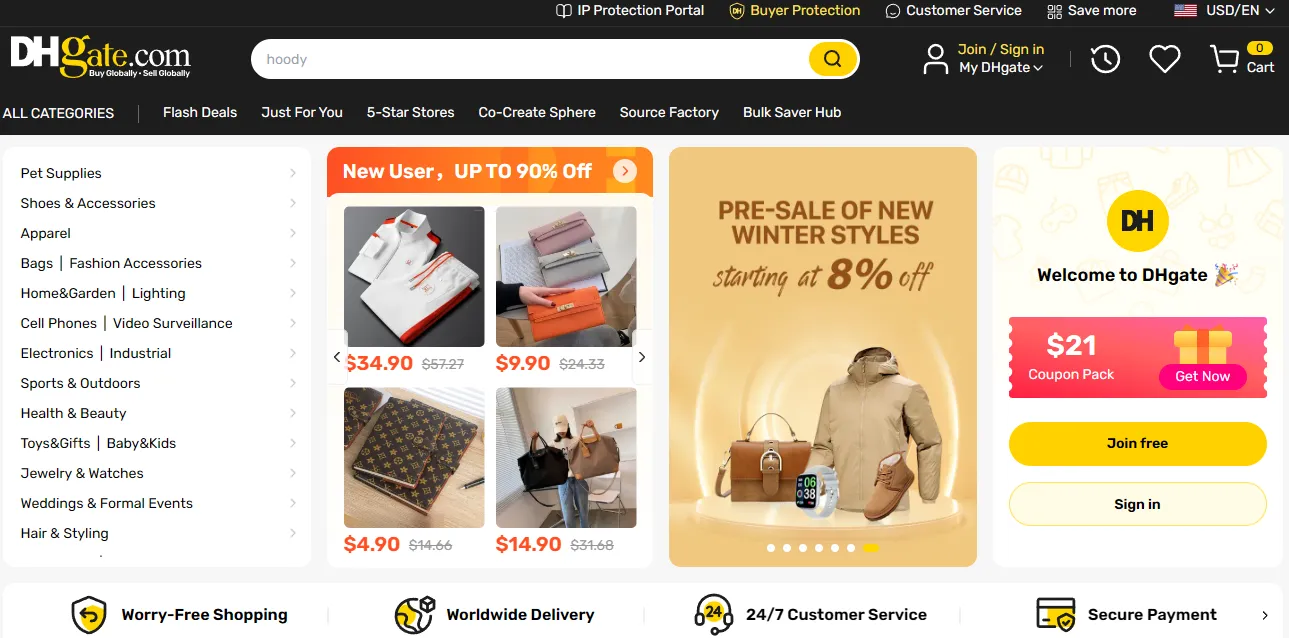
DHgate has a reputation problem — knockoffs, inflated reviews, and photos that don't match what shows up.
But once you learn to filter for sellers with 3+ years of history and 95%+ positive feedback, the pricing beats AliExpress on categories like wigs, wedding dresses, and small leather goods. Treat it like eBay in 2010: powerful for people who know how to vet listings, dangerous for those who don't.
1688
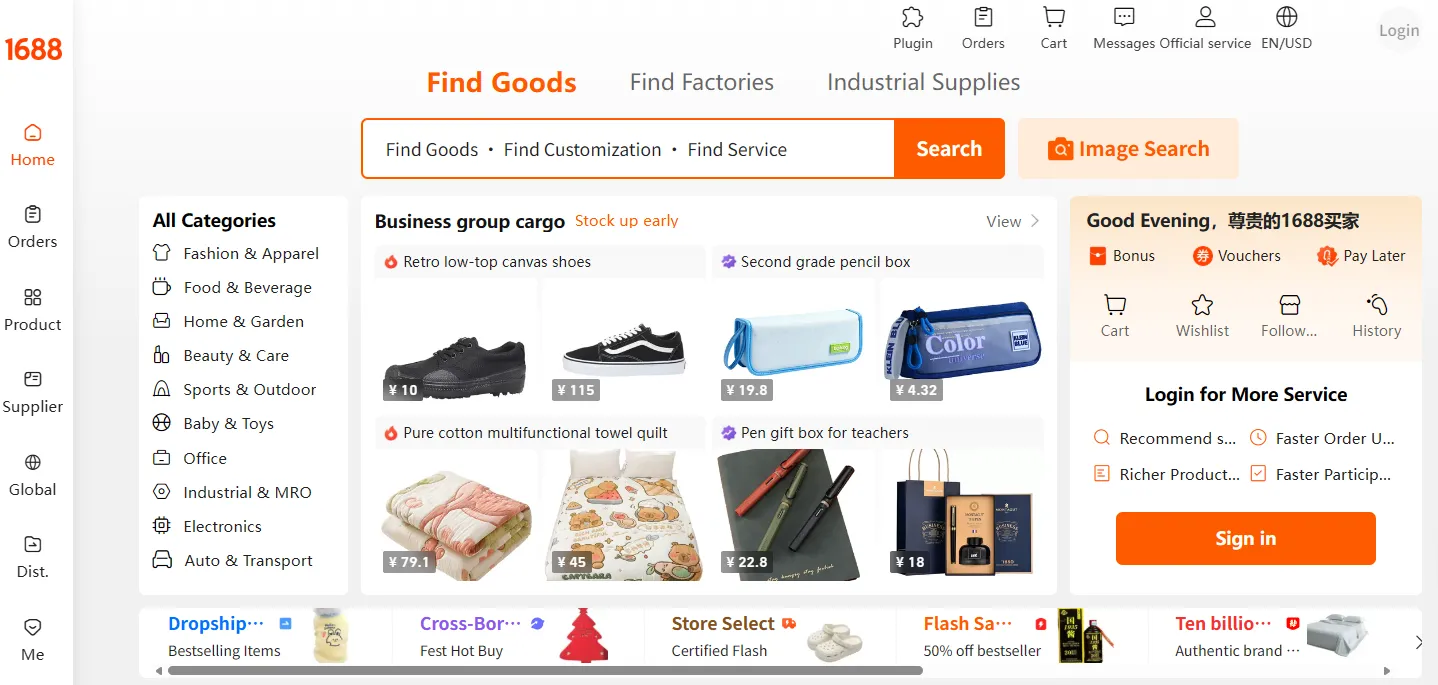
1688 is where the AliExpress sellers themselves buy inventory. You're one step closer to the factory, but there's no English, no PayPal, no international shipping, and no buyer protection for foreigners.
Working here means hiring a sourcing agent — expect to pay a 5-8% commission or a flat monthly fee. For sellers moving 50+ units a day of a single SKU, the math starts making sense fast.
Banggood
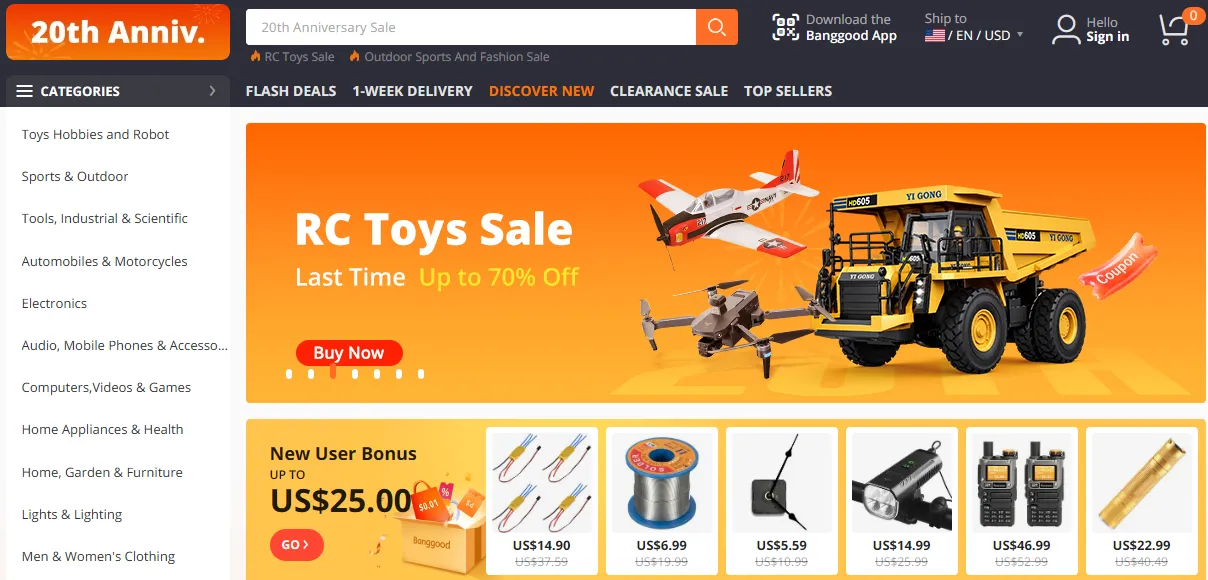
What separates Banggood from the rest is that it operates like a retailer, not a marketplace. Products are curated, warranties are honored, and returns actually work.
That matters in categories like drones, power tools, and RC gear, where a defective unit costs way more than a $5 phone case. Dropshippers selling higher-ticket electronics tend to stick with Banggood specifically because customer support won't ghost them.
Top 5 Dropshipping Suppliers in USA
BrandSKU
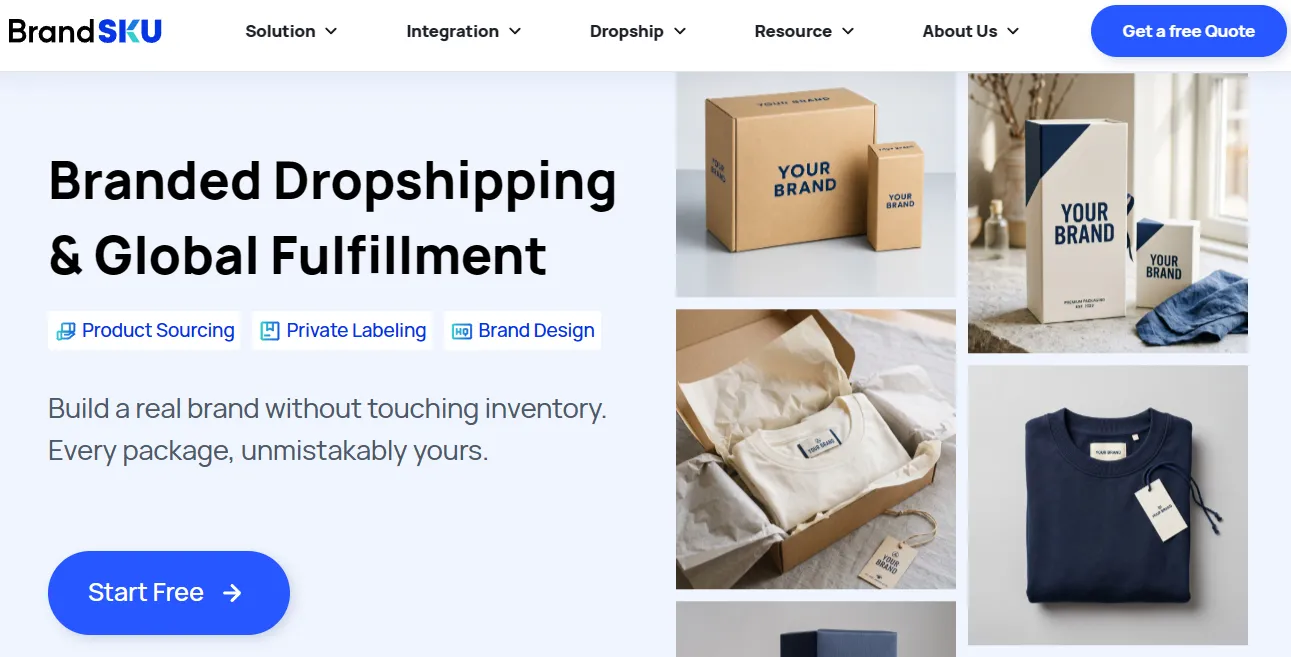
BrandSKU is built around branded dropshipping — the piece most platforms skip. Sellers submit a product idea or reference link and get sourcing, custom packaging, and fulfillment handled in one place.
It also covers categories others won't touch, like furniture and lighting. A strong fit for DTC founders building a real brand.
PrintKK
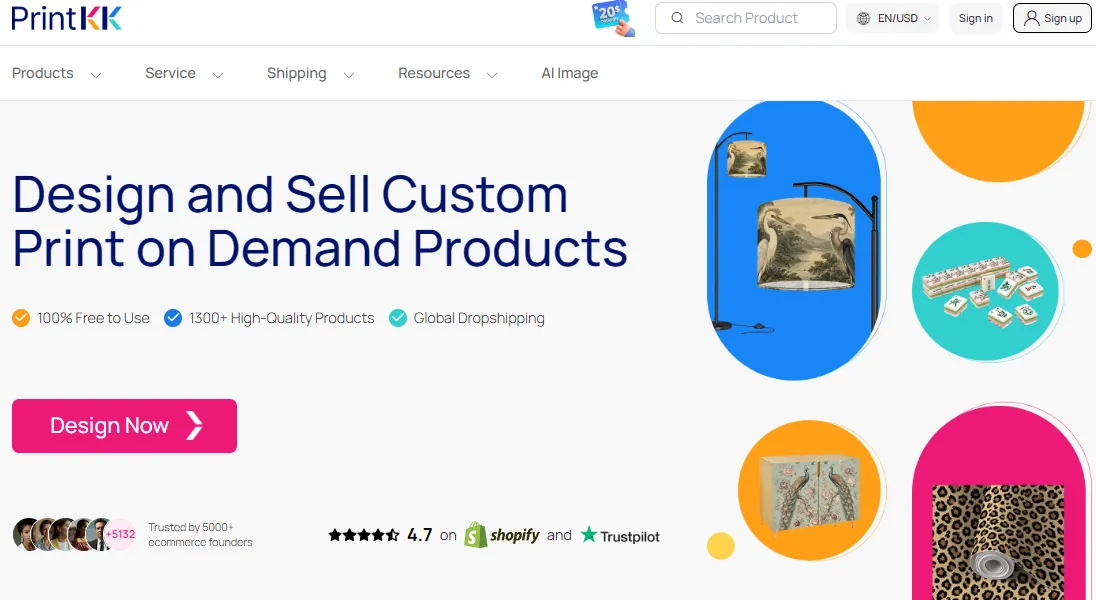
PrintKK focuses on print-on-demand across apparel, mugs, phone cases, and home decor. No minimums, no inventory, no setup fees — items print only when someone orders.
It also carries unusual products like mahjong tiles and mats, giving designers and creators an easy way to stand out from typical Printful-style stores.
Spocket
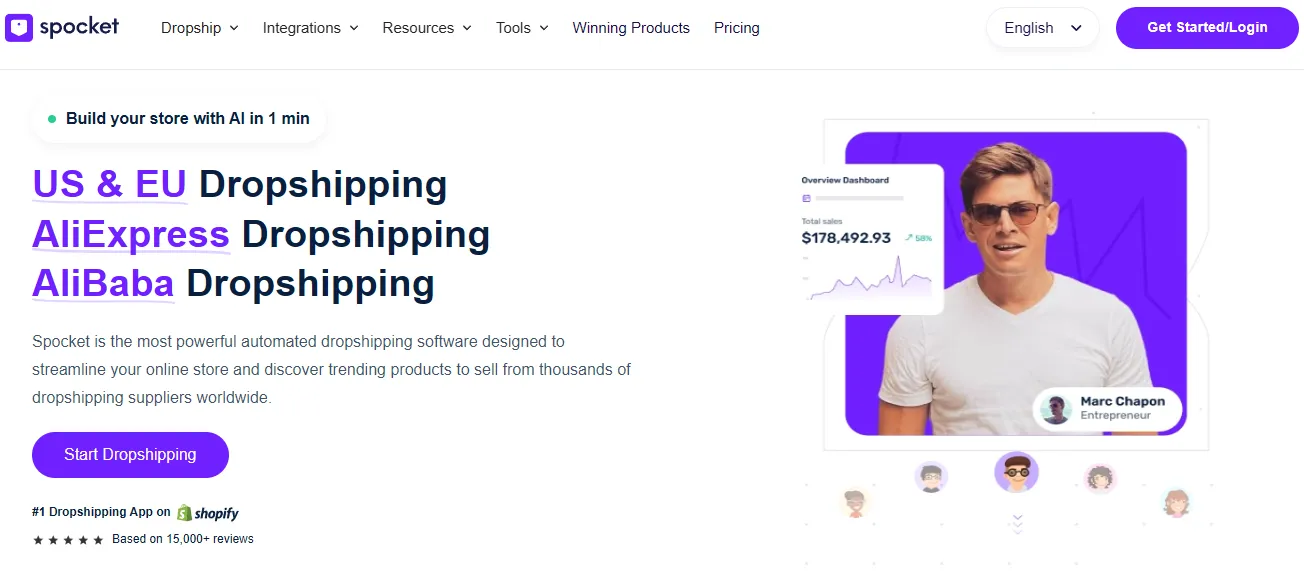
Spocket filters its supplier list so about 80% are based in the US or EU. Delivery usually lands in 2-5 days, and the platform plugs directly into Shopify, Wix, and BigCommerce.
Popular categories include beauty, jewelry, and pet products. Worth checking supplier reviews carefully — some listed vendors are middlemen, not true domestic warehouses.
Zendrop
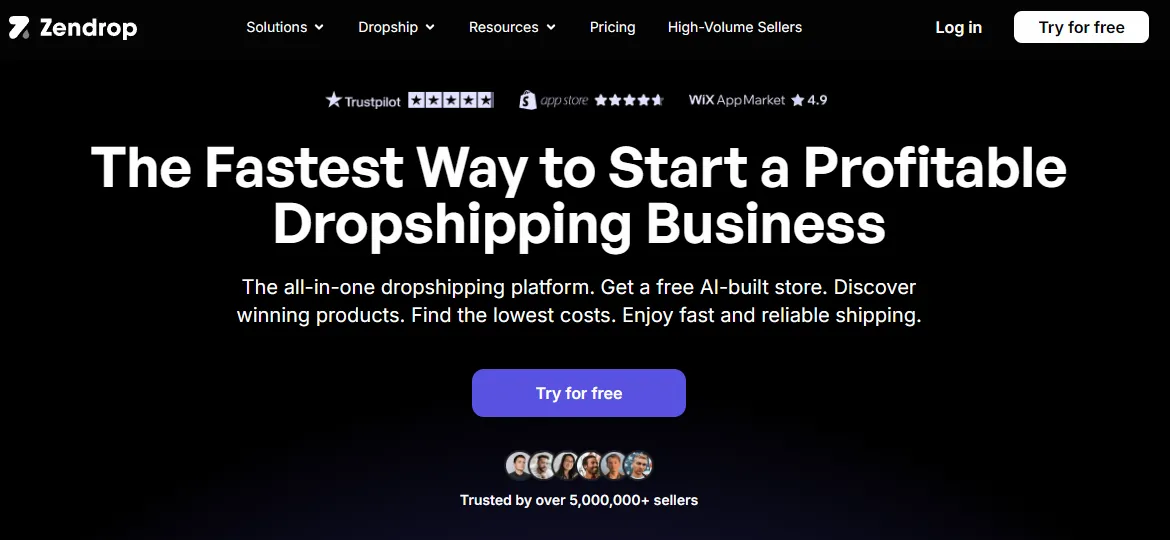
Zendrop markets itself around 3-5 day US shipping and a curated product list rather than an open marketplace. It's built for stores running paid ads that need consistent fulfillment times to keep return-on-ad-spend healthy.
Handy features include auto-fulfillment, custom thank-you cards, and a private product catalog for scaling proven winners quietly.
TopDawg
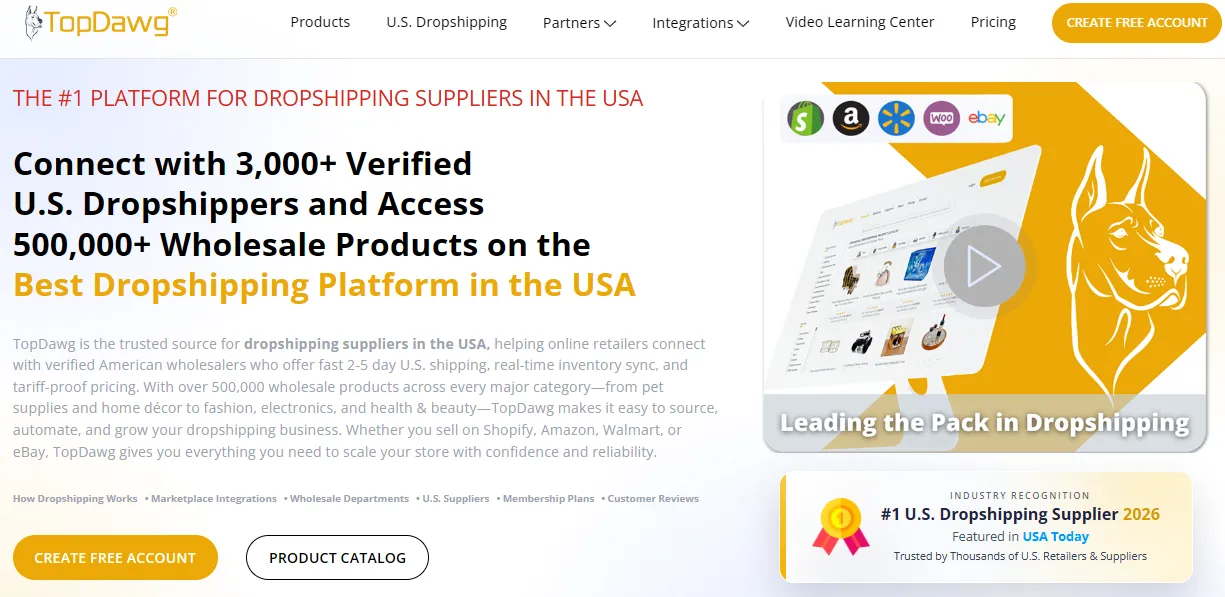
TopDawg connects sellers with 3,000+ verified suppliers and half a million wholesale products. Because everything ships from within the US, sellers dodge tariff surprises and long customs waits.
Categories run wide — pet supplies, home goods, apparel, outdoor gear — making it a strong pick for general stores rather than single-niche shops.
How to Identify Fake US Suppliers on Popular Platforms
Check the Tracking Carrier, Not Just the Location
If tracking starts with Pitney Bowes, YunExpress, or SFC, that's a red flag. These are cross-border shipping consolidators.
The package sits in China for a week, gets handed off to USPS or FedEx near the US border, and then shows a fake "domestic" first scan in California or New Jersey.
Ask for the Exact Warehouse Address
Real US suppliers will give you a physical address without hesitation. Fakes either dodge the question or send you a shared 3PL address that houses dozens of unrelated sellers.
Drop the address into Google Maps street view — if it's a residential unit or a strip mall, walk away.
Order a Sample and Time the Delivery
The fastest reality check costs $10. Order one unit shipped to yourself and measure how long it takes. Genuine US stock arrives in 2 to 5 business days.
Anything landing on day 8 or later almost certainly started its journey in Guangdong, not Georgia.
Look at the Product Photos and Listings
Fake domestic sellers often copy their photos straight from AliExpress or 1688 — same white backgrounds, same Chinese text on the packaging, same model.
Real US brands invest in their own product photography and lifestyle shots because they're selling to a domestic market that expects it.
Check English Fluency in Support Chats
Send a quick pre-sale question about materials, return policy, or lead time. Genuine US suppliers reply in fluent, casual English within business hours.
Middlemen usually respond with stiff, oddly formal English or delayed replies during US overnight hours, which is Chinese daytime.
Read Recent Reviews for Shipping Complaints
Sort reviews by newest and scan for phrases like "took forever," "came from China," or "wrong tracking."
One or two complaints could be flukes. A steady drip over the last 60 days means the supplier is misrepresenting warehouse location — and your customers will figure it out fast.
How to Combine US and China Suppliers in One Store
Test New Products With China Suppliers First
When launching a new SKU, keeping test costs low matters more than fast shipping. Source from AliExpress or CJdropshipping with no MOQ, run $50-100 in ads, and see what sticks. Losing on a $4 test unit stings way less than losing on $15 domestic stock sitting in a warehouse.
Know When to Move a Winner to a US 3PL
The switch usually makes sense once a product hits these signals:
- 15-20 orders per day consistently for two weeks
- Return rate under 5%
- Customer reviews mentioning "slow shipping" more than once a week
- Ad ROAS starting to dip as delivery complaints rise
At that point, bulk-ordering 300-500 units to a US 3PL like ShipBob or ShipMonk usually cuts per-unit shipping by 40% and drops delivery to 2-3 days.
Keep Long-Tail Products on China Suppliers
Not every SKU deserves domestic stock. Products selling fewer than 5 units a day tend to stay more profitable shipping from China, because US 3PL storage fees quickly eat into thin margins. Reserve local warehousing for your top 20% of revenue-generating items.
Set Separate Shipping Policies at Checkout
Create two clear shipping options in Shopify:
- Standard Shipping (7-15 days) — for China-fulfilled products
- Express US Shipping (2-5 days) — for domestic-stock SKUs
This keeps customer expectations aligned with reality and prevents complaints when a hybrid order splits into two packages arriving weeks apart.
Split Ad Campaigns by Fulfillment Source
Run separate Meta or TikTok ad sets for domestic-stock winners versus China-shipped tests. Domestic products can lean on "Ships from USA — arrives in 3 days" as a hook, boosting conversion rates. Test products stay on generic creative until they earn the upgrade to local fulfillment.
Use a Sourcing Agent to Manage the Transition
When you're ready to bulk-order a winner to the US, a sourcing agent handles factory negotiation, quality inspection, and freight forwarding.
Expect to pay 5-8% commission, but agents typically save more than that by cutting out AliExpress markups and catching defects before shipment.
Making Your Choice: Dropshipping From USA vs China
The dropshipping from USA vs China debate isn't really about picking a winner. It's about picking what fits your store right now.
Start in China when you're testing new products — low costs let you fail cheaply and learn fast. Once a SKU hits steady daily orders, shift it to a US 3PL to cut shipping times and protect your ad spend.
Watch out for fake domestic suppliers hiding behind re-shipped tracking numbers, and always order a sample before you commit. The smartest sellers don't choose sides — they build a hybrid supply chain that scales with the business.
Get this mix right, and your store ships faster, holds margins, and turns first-time buyers into repeat fans.
FAQs
Can I use both USA and China suppliers at the same time?
Yes, and most successful stores do. Test new products with China suppliers to keep costs low, then move bestsellers to US warehouses for faster delivery once orders grow steady.
Do I need a business license to dropship from China to the USA?
Technically no, but getting one is smart. A business license lets you open a bank account, register for sales tax, work with better suppliers, and stay protected if legal issues pop up later.
Who pays the import duties when dropshipping from China?
Every package from China now faces duties, regardless of order value. You can either build the extra cost into your product pricing or pass it to customers at checkout using Delivered Duty Paid shipping terms.
How long does it take to switch suppliers without disrupting my store?
Plan for about two to three weeks. That covers sample testing, product photo updates, integration setup, and running both suppliers side by side until the new one proves reliable enough to fully take over.
Share article


Written by

Small business consultant | Focused on online selling | Exploring dropshipping, marketing, and store-building from the ground up

 Early access

