




Ready to try BrandSKU?

Running a dropshipping store is tough. Ads eat your margins. Competitors copy your winning products fast. So how do you build traffic that lasts? The answer is dropshipping SEO.
Good SEO brings free buyers to your store every day. No ad spend. No auction wars. Just steady clicks from Google, ChatGPT, and other search tools.
This guide shows you how to rank higher and sell more. You'll learn keyword tricks, page fixes, backlink tips, and AI search moves. Ready to grow your store? Let's dig in.
What Is Dropshipping SEO and Why It Matters in 2026
What Is Dropshipping SEO
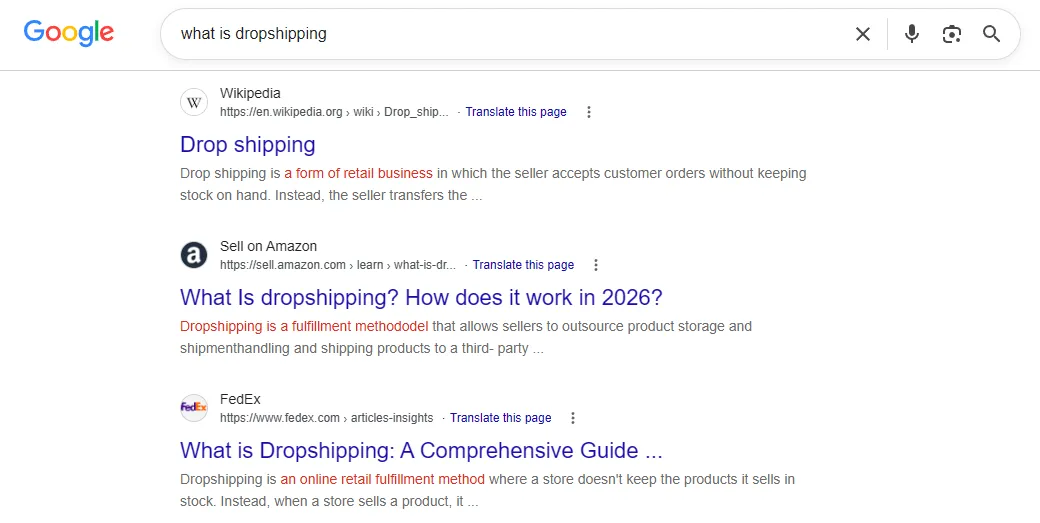
Dropshipping SEO is the work you do to help your store show up on Google when people search for the products you sell.
Think of it as making your site easier for search engines to read and easier for shoppers to trust.
That means picking the right keywords, writing your own product descriptions (not the ones from your supplier), speeding up your pages, and earning links from other sites.
Good SEO for dropshipping brings in free traffic that keeps working for you long after you hit publish.
Why It Matters in 2026
Ads keep getting more expensive, and organic search is still where most shoppers start.
According to statistics, organic search delivers about 41% of all traffic to retail sites—more than paid ads or any other channel. That's a huge slice of buyers you can reach without paying per click.
In 2026, AI answer boxes are also pulling in searches, so stores that skip SEO get squeezed out on two fronts. Investing now is cheaper than trying to catch up later.
How to Do Keyword Research and On-Page SEO
Start With Keyword Research
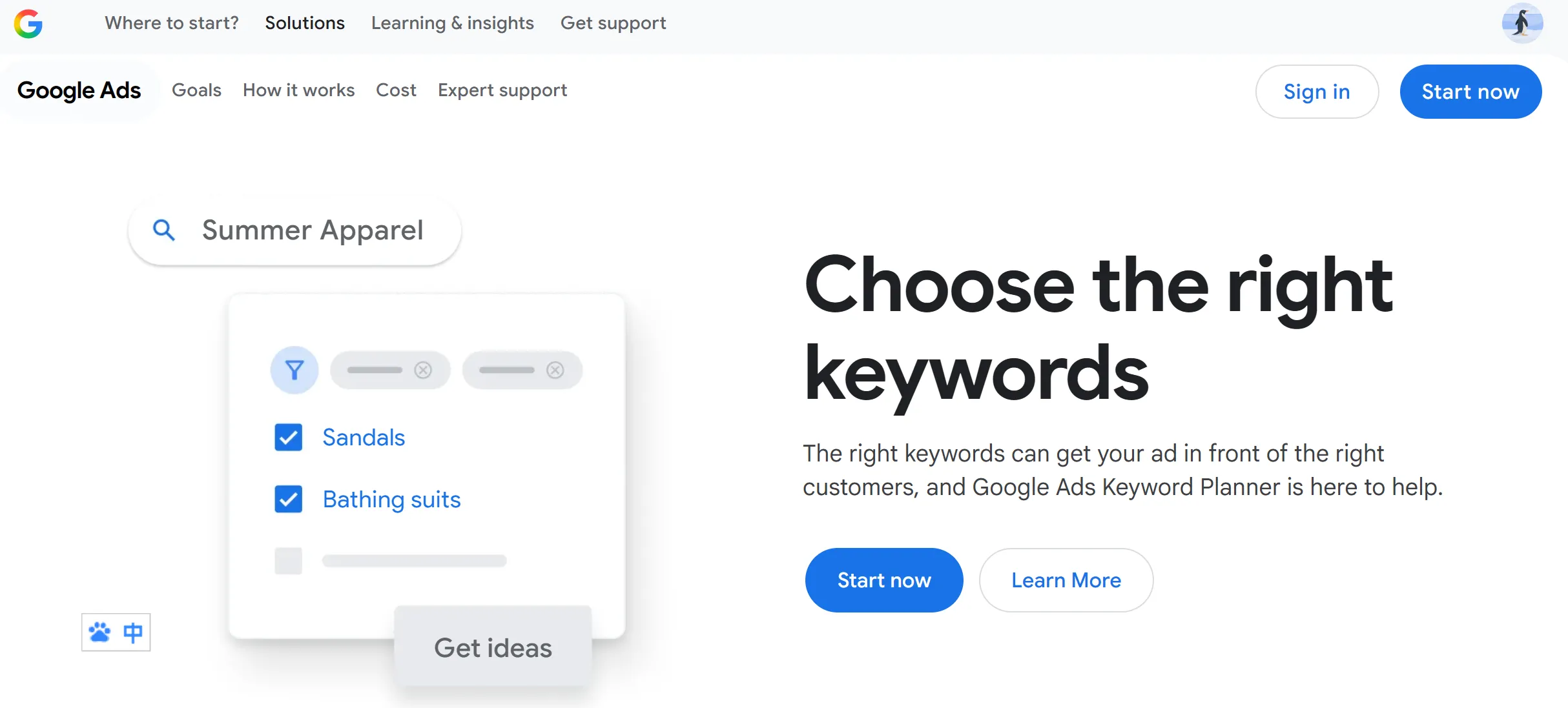
Keyword research is where dropshipping SEO starts. Pop open a free tool—Google Keyword Planner or Ahrefs' free generator work fine. Type in something you sell, say "yoga mat," and you'll see related searches plus how often people look them up.
Skip the huge numbers. A word like "shoes" gets millions of searches, and you won't rank for it. Go after long-tail keywords instead, like "non-slip yoga mat for beginners." Fewer searches, but the people typing them are usually ready to buy.
Search intent matters too. "What is a yoga mat" is someone learning. "Buy pink yoga mat" is someone shopping. Your page should answer one or the other, not both.
One main keyword per page. Cram in five and Google gets confused about what your page is even for.
Nail Your Titles and Meta Descriptions
Your product title is prime real estate. Keyword near the front, under 60 characters so Google doesn't chop it off. "Non-Slip Yoga Mat for Beginners – 6mm Thick, Pink" beats "Pink Mat – Great for Yoga."
The meta description is that little blurb under your title. It won't move rankings directly, but it decides who clicks. Around 150 characters, mention your keyword, toss in something tempting—free shipping, a discount, whatever gets people to tap.
Rewrite Your Product Descriptions
Here's where most dropshippers blow it. You paste the supplier's description, and so did the other 500 stores selling the same thing. One fix? Work with a supplier that offers private label products so your listings stay unique.
Google sees the duplicate copy and buries everyone.
Write your own. Two or three short paragraphs is plenty. Who's it for? What does it fix? What's one detail people actually care about? Drop your keyword in once, naturally.
Fix the Small Stuff
Little things that stack up:
- Clean URLs. Something like yourstore.com/pink-yoga-mat beats yourstore.com/product?id=8827.
- Alt text on every image—just describe what's in the photo.
- One H1 per page, H2s for the sections.
- Link between related products and blog posts.
None of this is exciting. But do it consistently and you'll climb.
How to Build a Content Strategy
Product pages alone won't get you far in search. To really pull in traffic, you need to write blog posts and articles that answer what your shoppers are Googling before they buy.
A content strategy is just your plan for what to write, when to publish, and how each post ties back to selling your products.
Start With Your Buyer's Questions
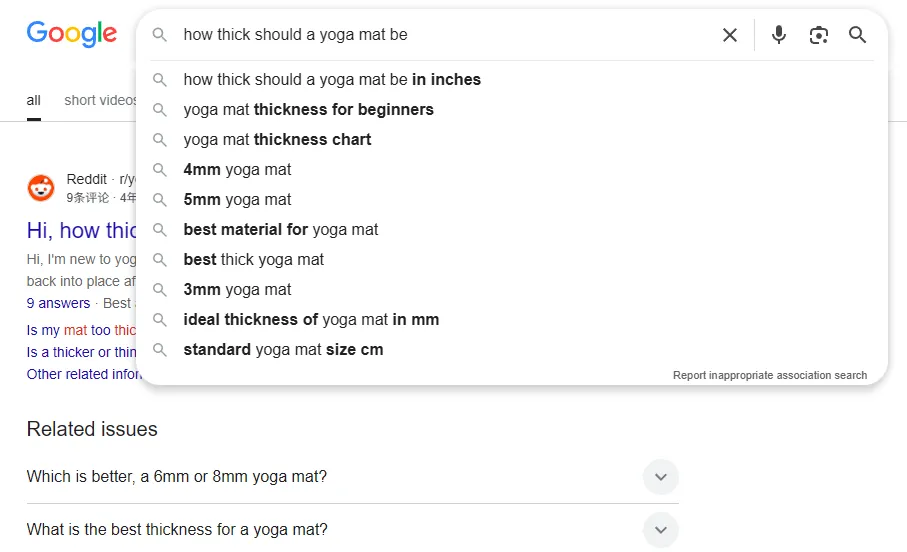
Before you type a single word, jot down what your customers actually wonder about. Sell yoga mats? They're probably Googling stuff like "how thick should a yoga mat be" or "cork or rubber mat—which is better." Those are your first blog topics, right there.
You can also let Google do the work. Type a keyword into the search bar and peek at the autocomplete drop-down. Scroll down to "People Also Ask" and the related searches at the bottom of the page. Free content ideas, no tools needed.
Cover the Whole Buying Journey
Not every visitor is ready to hit checkout. Split your posts into three buckets:
- Top of funnel: broad how-tos for beginners. "How to start yoga at home."
- Middle of funnel: buying guides and comparisons. "Cork vs. rubber yoga mats—which one wins."
- Bottom of funnel: reviews, alternatives, and "best of" lists. "Best yoga mats for sweaty hands."
Most dropshippers only crank out top-of-funnel stuff and then scratch their heads when nobody buys. The middle and bottom posts are where sales actually happen.
Build Content Clusters, Not Random Posts
Instead of writing random articles, pick one broad topic and build a long pillar page around it. Then add 5 to 10 shorter posts on smaller pieces of that topic, and link them all back to the pillar.
If your pillar is "yoga for beginners," supporting posts could cover:
- Best yoga mats for new practitioners
- Common mistakes beginners make
- 10 easy poses for the first week
- How often beginners should practice
This shows Google you have real depth in your niche, which is exactly what SEO for dropshipping needs to win in competitive spaces.
Post Consistently, Not Constantly
One well-written post a week is worth more than five rushed ones. Pick a schedule that fits your bandwidth—weekly, biweekly, or monthly—and don't disappear for months.
Refreshing old content matters just as much. Every six months, revisit your top articles and:
- Update outdated statistics
- Fix broken links
- Add new sections based on recent trends
- Improve weak intros or conclusions
A refreshed post often outranks a brand new one, and takes far less time.
Don't Ignore Video and Social
Written content isn't your only SEO option. Short videos on TikTok, YouTube Shorts, and Instagram Reels can drive traffic to your store and appear in Google's video results. If you're already filming a product demo, publish it on all three platforms.

How to Build Backlinks for Dropshipping
Backlinks are one of the biggest levers in dropshipping SEO. Google treats these links as votes of trust. More quality votes, higher rankings.
New stores start at zero. Getting the first ten backlinks matters far more than chasing hundreds later on.
Here are two methods that work without writing skills or a budget.
Method 1: Product Roundup Outreach
Bloggers publish "best of" lists constantly and need products to feature.
Search Google for "best [your product] 2026" or "top [your niche] gifts." Skip the huge sites. Blogs sitting on page two or three of the results are the target, since those writers actually reply to emails.
Find the writer's email on the contact page. Send something short:
- Mention their specific post
- Describe the product in one line
- Offer a free sample
That's it. No long pitch, no attachments.
Method 2: Supplier and Tool Partner Pages
Every app, theme, and supplier the store already uses is a potential backlink.
Shopify apps, Klaviyo, review tools like Judge.me. Many of them run customer showcase pages or partner directories that link back to featured stores.
Email their support team. Attach a screenshot of the store using their product. Ask to be featured.
Most say yes. It costs them nothing and gives them free social proof.
How to Rank in ChatGPT and Google AI Search
Write Answers, Not Just Descriptions
ChatGPT and Perplexity pull from pages that answer real questions clearly. Ditch fluffy product copy.
Add a short FAQ block on every product page hitting stuff like "Is this waterproof?" or "How long does shipping take?" AI models love scannable Q&A format.
Add Schema Markup Beyond the Basics
Most dropshipping stores stop at Product schema. Add FAQPage, HowTo, and Review schema too. AI crawlers use structured data to understand context fast.
Google's AI Overviews especially favor pages with rich schema because it removes guesswork about what your page actually offers.
Get Mentioned on Sites AI Trusts
ChatGPT weighs Reddit, Quora, YouTube comments, and forum threads heavily. Drop honest answers with your product link in relevant threads.
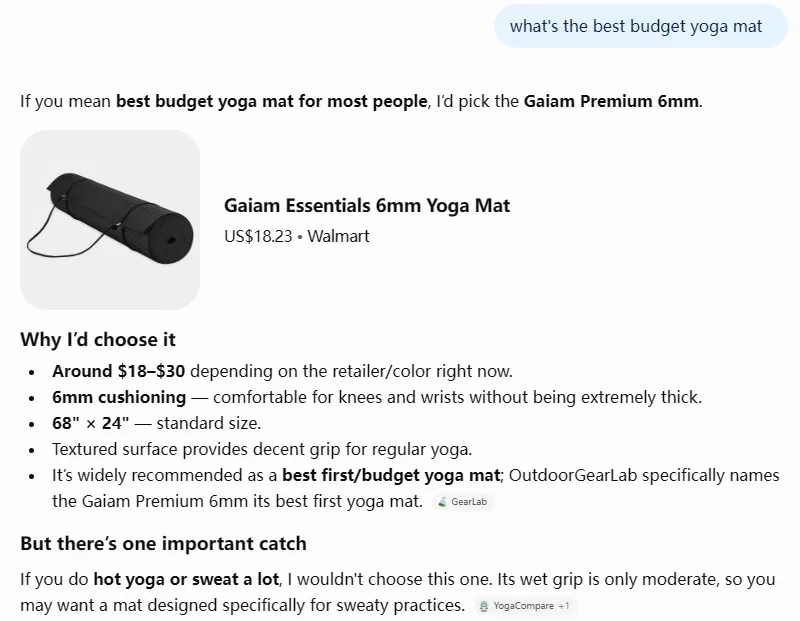
One helpful Reddit reply about "best budget yoga mats" can get you cited in AI answers for months without any backlink juice.
Use Clear Comparison Tables
AI loves lifting tables straight into answers. Build a "vs" table on your product pages, like "Our Mat vs Lululemon vs Manduka."
Compare price, thickness, grip, and warranty in plain rows. Perplexity and Google AI Overviews often quote these tables word-for-word.
Publish Content With Real Data and Dates
Vague blog posts get skipped. Include specific numbers, prices, and the current year in your headers. "Best Dog Harnesses Under $30 in 2026" beats "Top Dog Harnesses." AI models filter for freshness signals hard, so update your top pages every 90 days.
Write in Natural, Conversational Language
People ask AI full questions, not keywords. Match that. Write like you're texting a friend who asked for advice. Skip the SEO-stuffed intros. Sentences like "Honestly, this works best if you have short hair" get pulled into AI answers way more than robotic product specs.
Track Your AI Citations Weekly
You can't fix what you don't measure. Ask ChatGPT and Perplexity your target questions every week and log which sites get cited. Tools like Profound and Otterly.AI automate this tracking. If competitors keep showing up, reverse-engineer what makes their pages quotable.
SEO for Dead Product Pages: Redirect, Remove or Keep
301 Redirect When a Similar Product Exists
If your supplier drops a product but you sell something nearly identical, 301 redirect the old URL to the closest match.
This passes link equity and keeps returning customers from hitting a dead end. Don't redirect to your homepage though. Google treats that as a soft 404.
Use 410 Gone for Truly Dead SKUs
When a product is discontinued with no replacement and zero search traffic, serve a 410 status code instead of a 404. It tells Google "this is permanently gone, stop crawling it." Pages drop out of the index faster, which frees up crawl budget for products that actually make money.
Canonical to Category for Product Variants
Lost a specific color or size but still sell the base product? Set a canonical tag pointing to the parent category or main product page.
This consolidates ranking signals without breaking the URL. Works great for fashion stores where "Red Medium T-Shirt" disappears but "Cotton T-Shirt" stays live.
Keep the Page With "Notify Me" for Bestsellers
If a dead product still gets organic traffic or backlinks, don't touch the URL. Add a "notify me" email form and recommend 3-5 similar products below.
You capture leads, keep rankings, and build a waitlist your supplier can see as demand proof. This works especially well if you're using a print-on-demand setup where new designs launch fast.
Noindex Seasonal Products Between Seasons
Christmas trees in July? Add a noindex tag during the off-season but keep the URL live.
When December hits, remove the noindex and Google reindexes fast since the URL history is intact. Way better than deleting and rebuilding SEO from scratch every year.
Build a Monthly Dead SKU Audit
Suppliers drop products weekly, especially on AliExpress and CJ Dropshipping. Run a monthly crawl using Screaming Frog to catch 404s before Google does.
Sort by traffic and backlinks, then decide: redirect, 410, or keep. This one habit prevents slow SEO decay most stores never notice.
Never Redirect Everything to the Homepage
Bulk-redirecting dead pages to your homepage feels efficient but tanks rankings. Google flags mass homepage redirects as soft 404s and stops passing link equity.
Each dead URL needs a specific decision. Yes it takes longer, but it's the difference between a site that ranks and one that quietly dies.
Expert Tips
Dropshipping SEO is not a quick win. It's a steady game. Pick one tactic from this guide and start today. Fix your product pages. Build a few real backlinks. Get cited in AI search. Small steps stack up fast.
You don't need a huge budget or a team. You just need to stay consistent. Rankings grow when you show up every week. Your store can rank higher and sell more. Start now.
FAQs
How long does it take to see results from SEO?
Most stores notice small ranking changes in 3-4 months. Real traffic growth usually kicks in around month 6. Fresh domains take longer than aged ones, so patience pays off here.
Should I focus on local SEO for my dropshipping business?
Skip local SEO unless you serve a specific city or region. Most dropshipping stores ship nationwide or globally, so your effort belongs in product keywords and category pages instead.
How can I measure the success of my SEO efforts?
Track organic traffic in Google Analytics, keyword positions in Ahrefs or Semrush, and conversions from search in Shopify. Watch impressions in Google Search Console for early signals before clicks arrive.
Is SEO worth it on Shopify?
Yes. Shopify handles technical basics like site speed and mobile design well. Add solid content, product schema, and clean URLs, and your store can compete with much bigger brands.
What's the best SEO tool for dropshipping?
Ahrefs works best for keyword research and backlink checks. Semrush is great for competitor spying. On a budget? Try Ubersuggest or the free version of Google Search Console.
Can I do SEO myself?
Absolutely. SEO for dropshipping is beginner-friendly. Start with keyword research, write helpful content, and fix technical issues one by one. YouTube tutorials cover almost everything for free.
Share article


Written by

Online retail background | Covers dropshipping and suppliers | Writing about the daily grind of running a small store


 Early access

