






Ready to try BrandSKU?

Picking the right supplier can make or break your online store. Ship too slow, refunds pile up. Quality drops, reviews turn ugly.
The good news? The best dropshipping companies in 2026 have never been more capable — faster shipping, real branding tools, and cleaner integrations than anything the industry had five years ago.
This guide breaks down 13 suppliers actually worth working with this year. Some are built for Shopify beginners. Some ship exclusively from US warehouses. Others help you build a real brand instead of another lookalike store.
Each pick comes with what it does best, so you can skip the trial-and-error and find the right partner faster.
Key Takeaways
- Your supplier controls your shipping speed, product quality, and margins.
- BrandSKU runs its own factory and bundles sourcing, POD, packaging, and fulfillment together.
- Always order samples before listing a product to avoid ugly surprises.
- Line up a backup supplier before stockouts hit mid-campaign.
- US-based suppliers now beat overseas options on shipping speed and tariff risk.
What are Dropshipping Suppliers and How Do They Work?
What are Dropshipping Suppliers
A dropshipping supplier is the company that actually owns the product you're selling. You never touch it. When someone buys from your store, the supplier packs the box, slaps on a label, and ships it straight to your customer. Your job is picking what to sell and getting people to buy it.
Here's what most guides won't tell you: not all "suppliers" are the same thing. Some are real manufacturers or warehouses. Others are middlemen who mark up prices before passing orders down the chain. The closer you get to the actual source, the better your margins.
How Do They Work
The flow is simple. Customer orders from your store at retail price. You forward the order to your supplier and pay them the wholesale price. They ship it out under your brand (usually), and you pocket the difference.
The catch is timing. Your supplier's shipping speed is your shipping speed. If they take 20 days, so do you — and customers will blame you, not them.
Same with stock levels. If they run out and don't tell you, you're the one refunding angry buyers. Pick suppliers who communicate, not just ones with the cheapest prices.
Top 13 Dropshipping Companies Worth Partnering With
BrandSKU
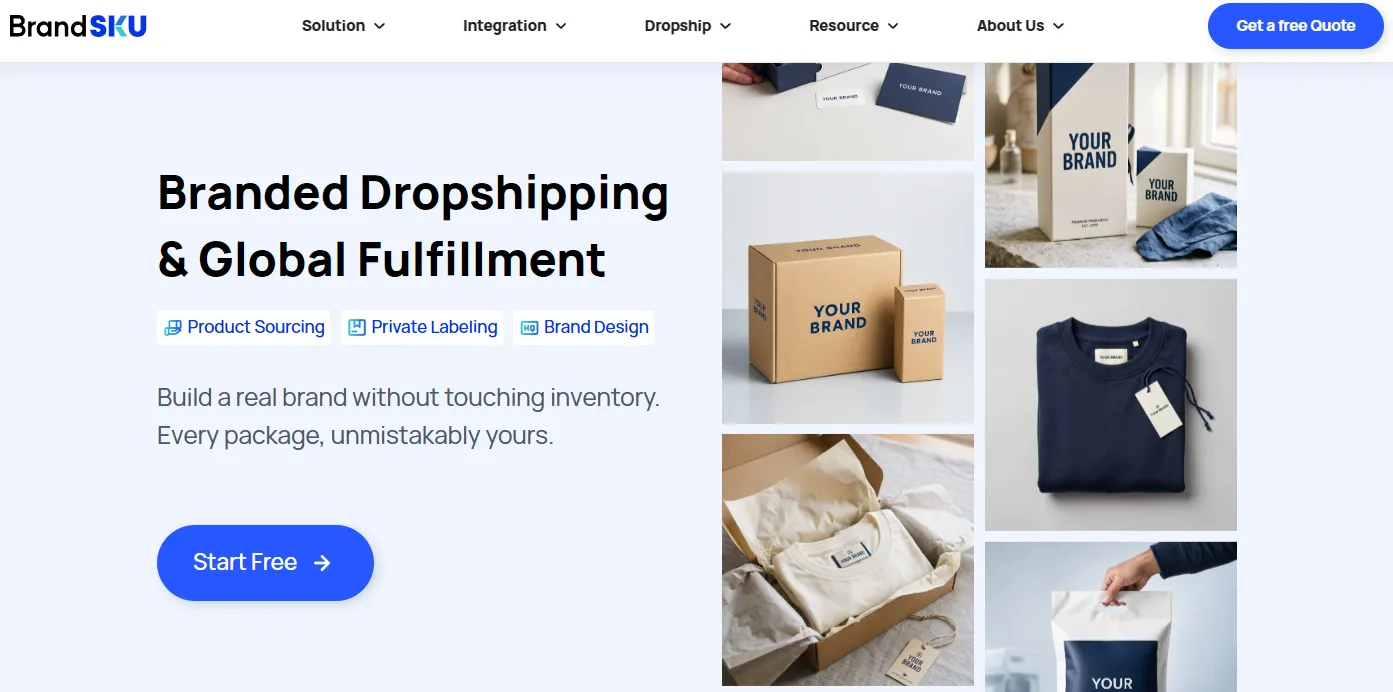
Most dropshipping platforms stop at connecting you with suppliers. BrandSKU goes a step further — sourcing, print-on-demand, custom packaging, and fulfillment all live in one place.
No more juggling five vendors just to launch a branded product. A solid pick if your unboxing experience actually matters to you.
PrintKK
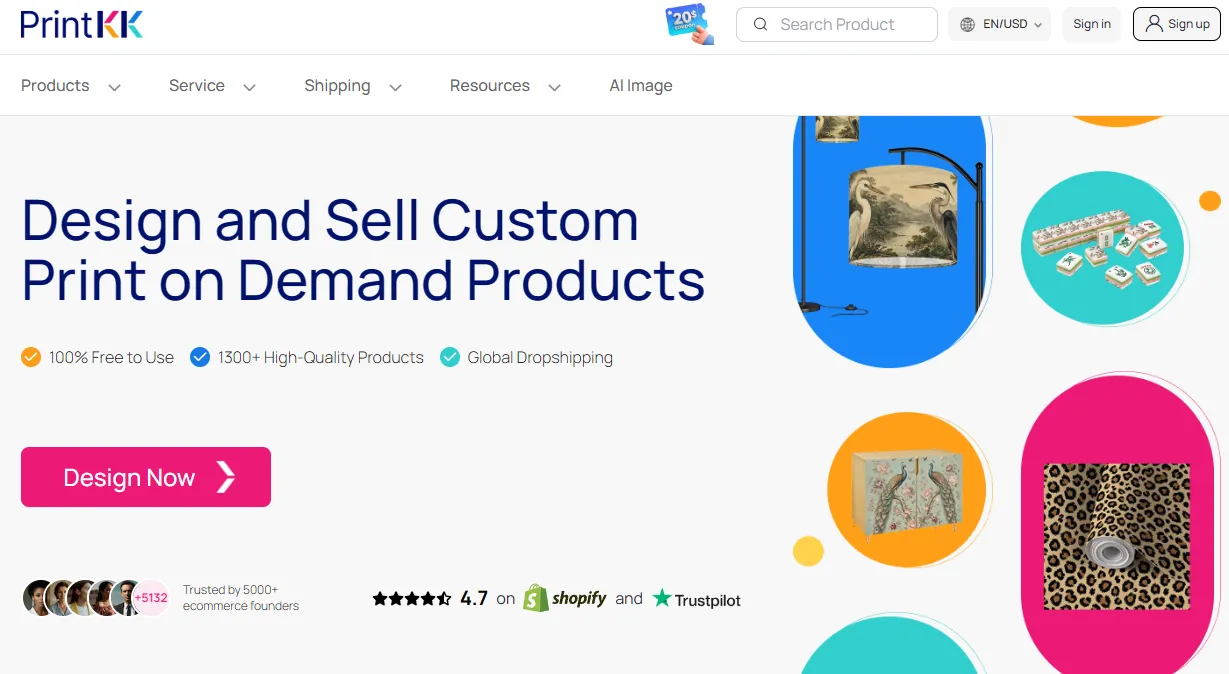
PrintKK runs a print-on-demand catalog of 1,300+ products out of an LA production center. Shirts, mugs, wallpaper, even skateboards.
It plugs into Shopify, Etsy, and Amazon in a few clicks, and there's nothing to pay upfront. Creators selling custom designs will feel right at home here.
SaleHoo
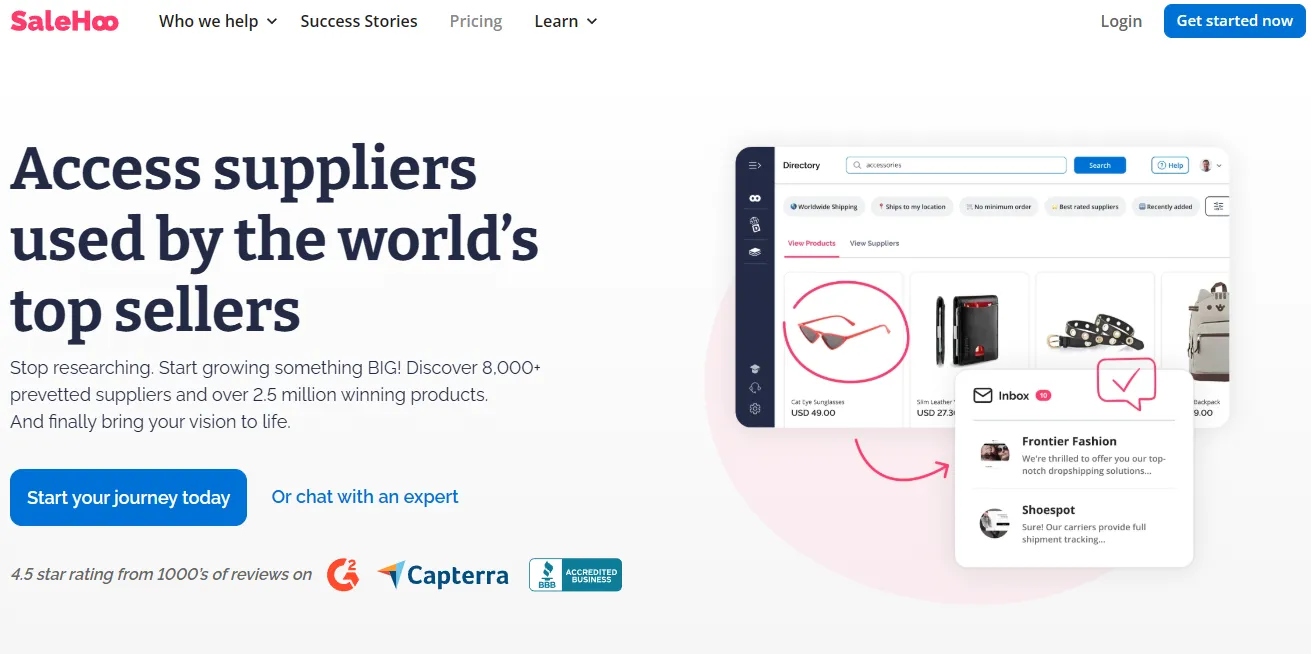
SaleHoo has been vetting suppliers since 2005, which in dropshipping years is basically ancient. Nine bucks a month gets you into a directory of 8,000+ screened businesses, plus a 60-day money-back guarantee.
It won't ship anything for you, but it saves you from getting scammed on your first try.
Zendrop
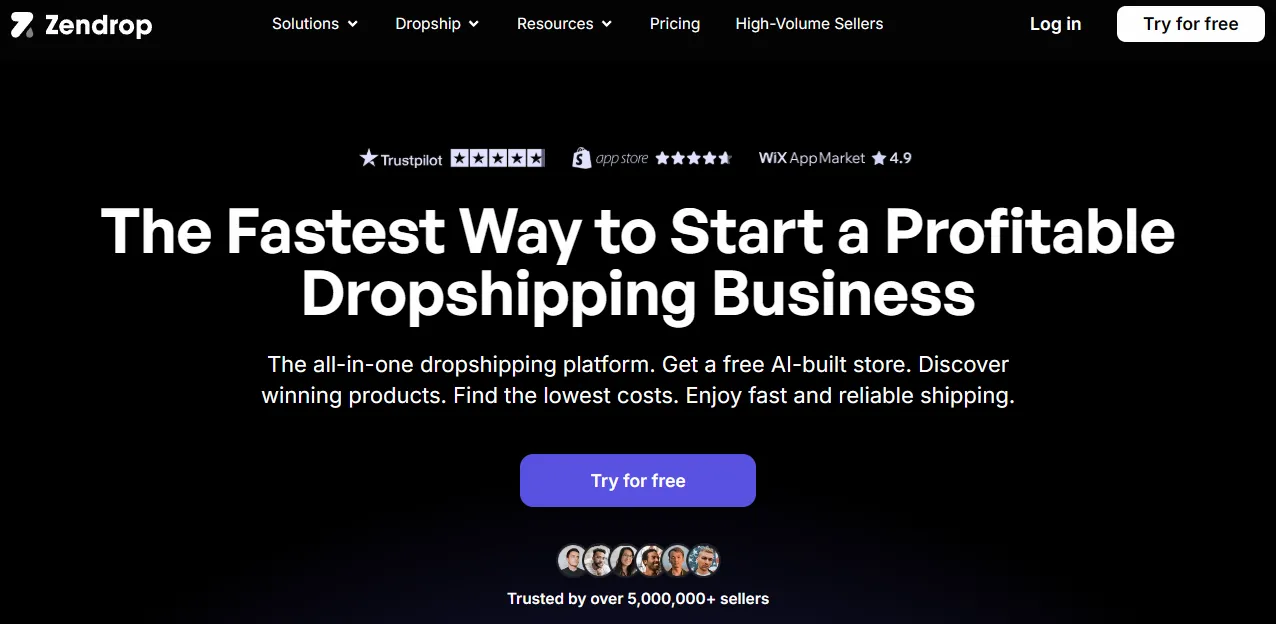
Zendrop is where a lot of Shopify beginners land, and for good reason. Over 3 million sellers use it. Some products ship from US warehouses in 1-3 days, which is a huge upgrade over the classic 30-day AliExpress wait. Branded packaging and thank-you cards are built in too.
Inventory Source
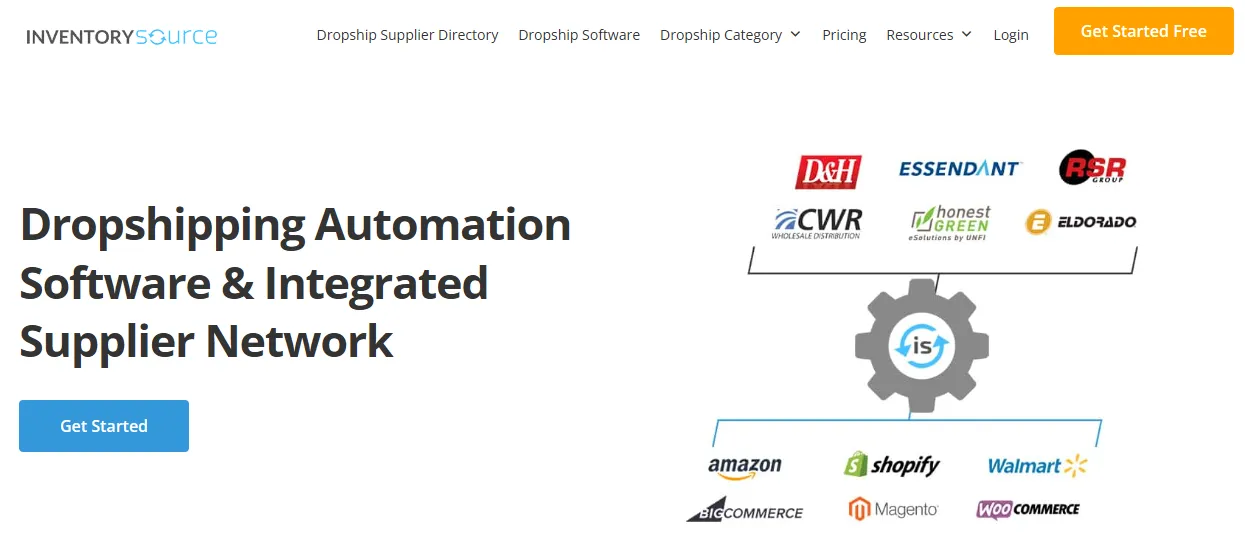
This one's not a supplier. It's plumbing. Inventory Source connects your store to 230+ dropship suppliers and keeps everything synced automatically.
Stock levels, product data, orders — all handled without you touching a spreadsheet. Not exciting, but if you're running a big catalog it saves your sanity.
AutoDS
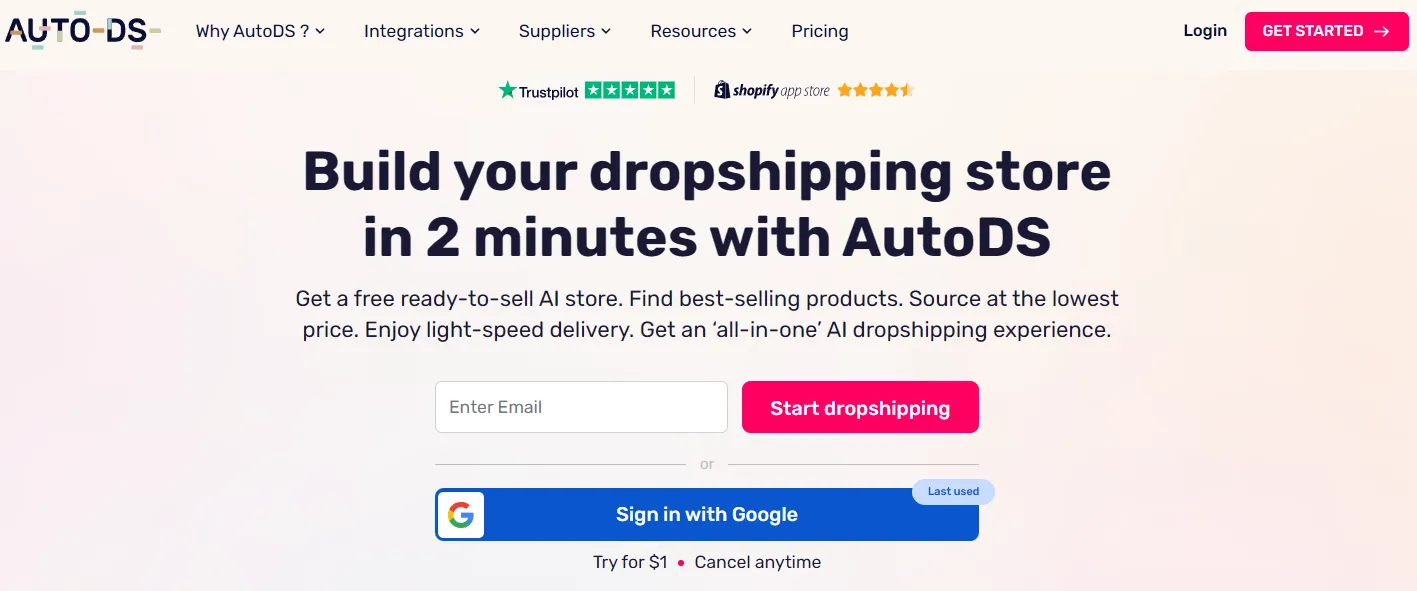
AutoDS is the automation layer that sits on top of everything else. Find products, import them, update prices, fulfill orders.
It works across Shopify, eBay, Amazon, Facebook, and TikTok Shop, so you're not stuck with one channel. Multi-channel sellers usually end up here eventually.
Syncee
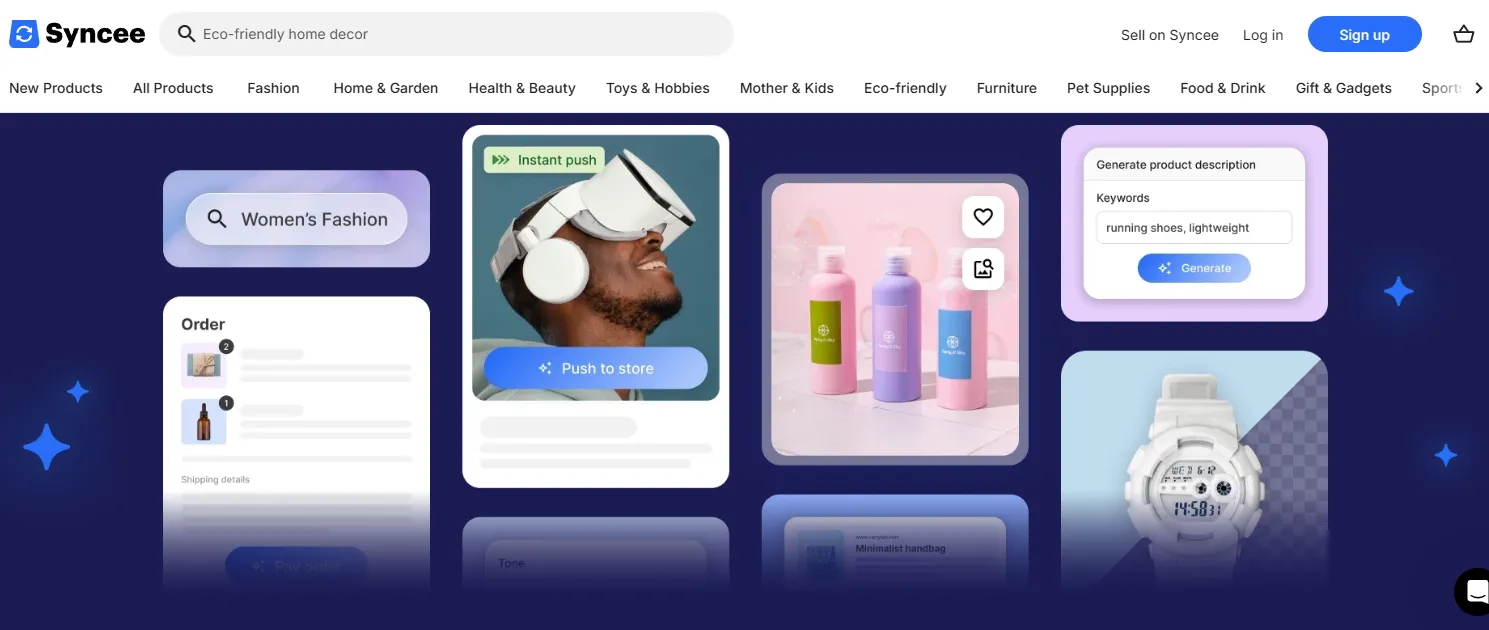
Syncee is a marketplace with millions of products from suppliers around the world. Its best trick isn't the catalog though.
You can actually message suppliers directly through the platform before you list their stuff — a rare feature. It plays nice with Shopify, Wix, and BigCommerce.
TopDawg
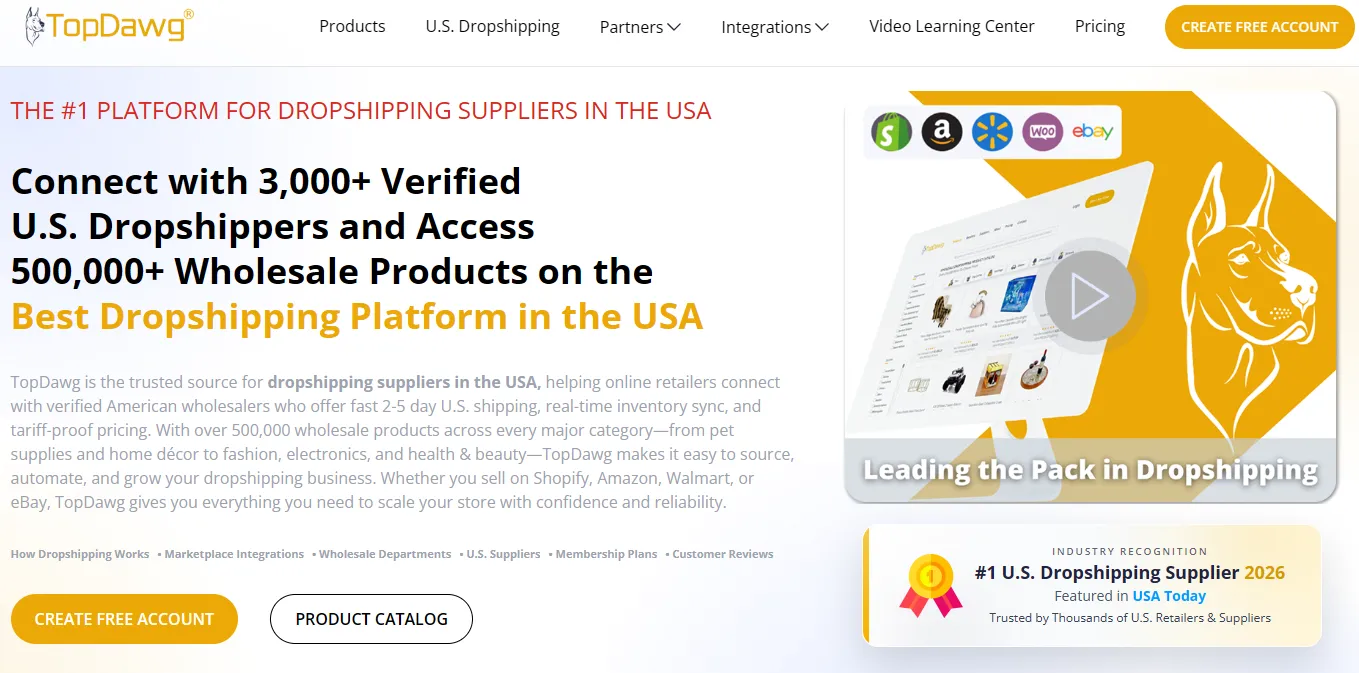
Every supplier on TopDawg is US-based. Every single one. That means 1-3 day domestic shipping and zero customs headaches, which matters more than ever with 2026's tariff mess.
The catalog covers 500,000+ products across pet supplies, home goods, electronics, apparel, you name it.
DropCommerce
DropCommerce keeps its supplier list small on purpose — around 400 vendors, mostly North American, mostly focused on ethical or sustainable stuff.
Shipping runs 2-7 days across the US and Canada with no transaction fees. Prices are higher than AliExpress, but that's kind of the point.
Trendsi
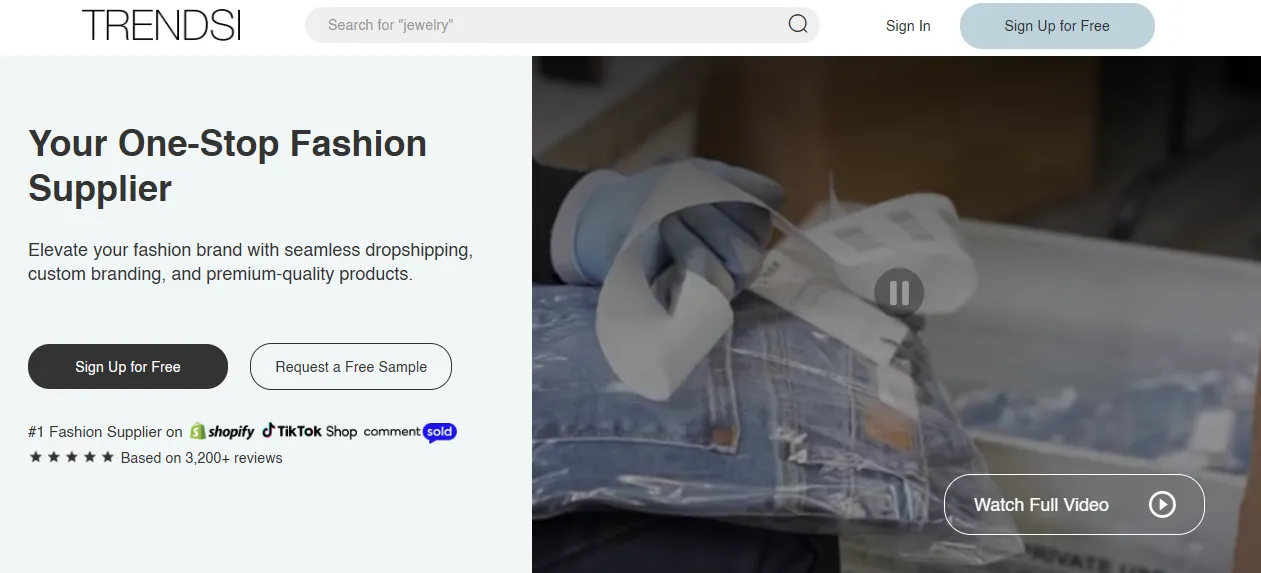
Trendsi is a US supplier that only does women's fashion. Over 100,000 items, 2-10 day delivery, branded invoices.
The free plan lets you list up to 500 products before you have to pay anything, which is generous. If your store isn't fashion, skip it. If it is, take a look.
Dripshipper
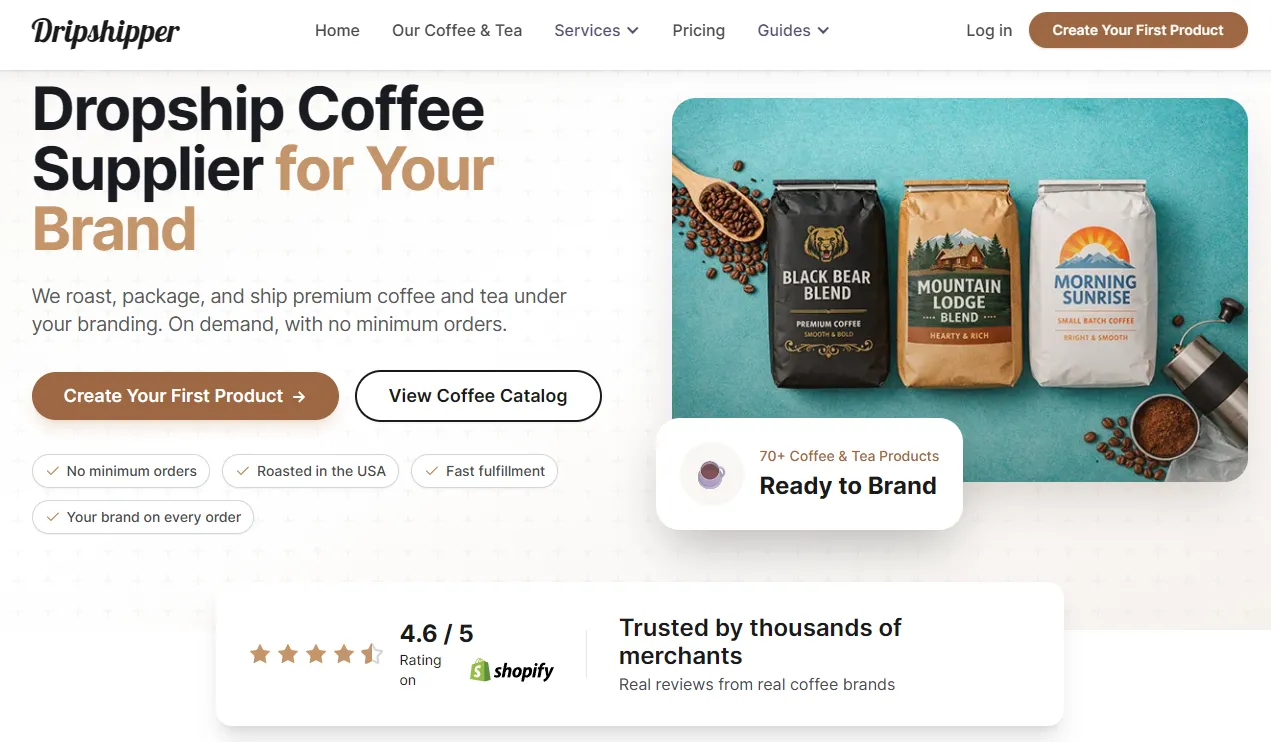
Dripshipper does one thing: private-label coffee, roasted and shipped from the US in 3-5 days. You put your logo on real coffee beans and sell them as your own brand.
Weirdly specific, but if you're building a lifestyle brand or an influencer store, it's genuinely useful.
CJ Dropshipping
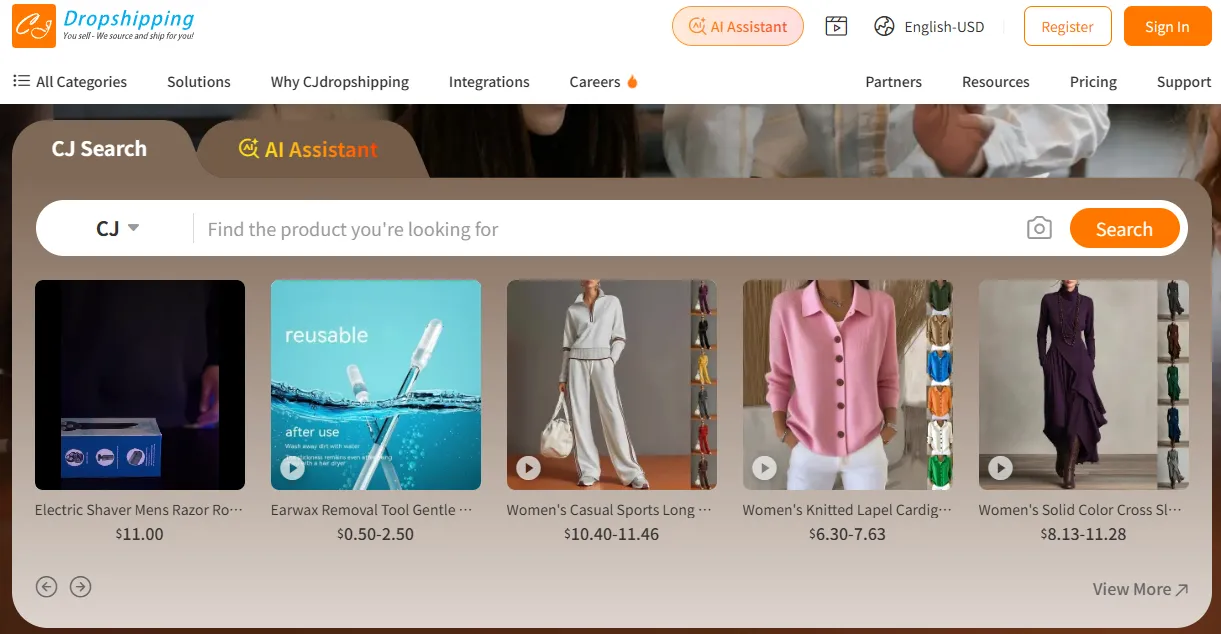
CJ Dropshipping is the big global sourcing player, with warehouses in the US, EU, and Asia. Free to use.
If a product isn't in the catalog, their sourcing agents will hunt it down for you, which almost no one else does. They also handle POD. Downside: quality varies by supplier.
Spocket
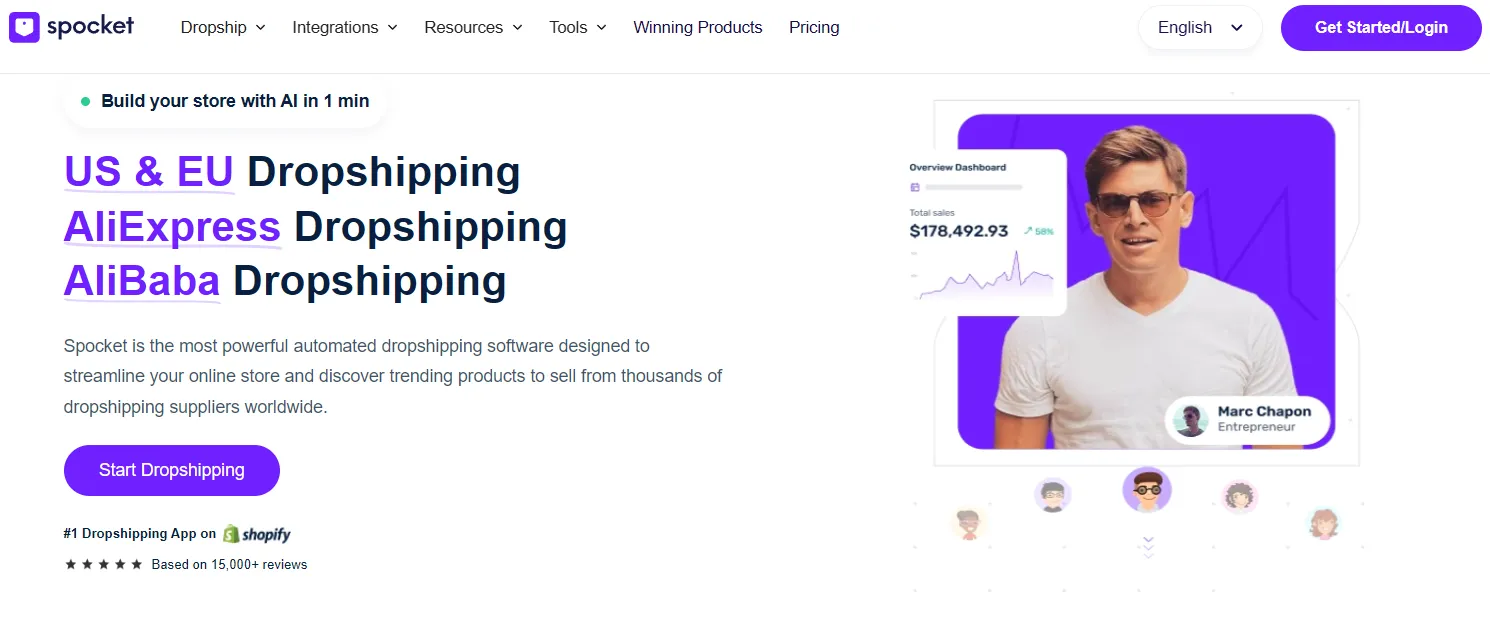
Spocket only lists suppliers in the US and EU, so shipping is measured in days, not weeks. Branded invoicing is included, which makes small stores look bigger than they are.
Prices run higher than the Chinese options — that's the tradeoff for not making customers wait a month.
How to Build Direct Relationships with Dropshipping Suppliers
Skip the Marketplaces
AliExpress isn't a supplier. It's a retailer, kind of like Walmart with a search bar. Every product there has already been marked up.
Dropshipping from AliExpress puts you third or fourth in the chain, which means thin margins and ugly shipping times.
Find Real Suppliers, Not Resellers
The goal is to reach the company that actually makes or warehouses the product. BrandSKU is a good example — it runs its own factory, so you're sourcing straight from the maker instead of a reseller.
Free USA dropship supplier lists work too as a starting point. Look for legit signs: a real address, a business phone number, wholesale pricing that requires an application.
Reach Out Like a Real Business
Suppliers get spammed constantly by people who won't last a week. Standing out means being professional from the first email. Keep it short and specific:
- Store name and what it sells
- Which of their products are interesting
- A quick question about their dropship program (fees, MOQs, shipping times)
Skip the fake urgency and the "huge volume" pitch. They've heard it a thousand times.
Ask the Right Questions Before Committing
Once someone replies, don't jump in. Get the boring details in writing first:
- Wholesale pricing and any per-order fees
- Average handling time and shipping speed
- How they handle returns and damages
- Whether they can add branding to packaging
- What happens when stock runs out
If they dodge these questions, that's your answer.
Order Samples Before Listing Anything
Always. Buy one of their products the way a customer would. Check the packaging, shipping speed, and product quality first-hand.
This is how problems get caught before customers find them — and it gives you real photos for your store instead of the same tired stock images everyone else uses.
Build the Relationship Over Time
The first order is a test, not a marriage. Start small, pay on time, communicate clearly. Once real volume is moving, ask about better pricing, custom packaging, or private label products.
Suppliers reward reliable partners with terms they won't give to random dropshippers churning through their catalog.

Common Mistakes to Avoid When Choosing Dropshipping Suppliers
Chasing the Cheapest Price
The lowest wholesale price almost never wins long-term. Cheap suppliers usually cut corners on packaging, shipping, or quality control, and those costs come back as refunds and bad reviews.
A supplier who charges a few dollars more but ships on time is worth every penny.
Skipping the Sample Order
Listing products without ordering one first is asking for trouble. Photos lie. Descriptions lie. The only way to know what a customer actually receives is to buy one first.
Check the packaging, the shipping speed, and whether the product matches the listing before it goes live.
Trusting a Middleman as a "Supplier"
Many so-called suppliers are just resellers who buy from someone else and mark it up. Every extra link in the chain eats your margin and slows down shipping.
Ask directly: do they manufacture or warehouse the products themselves? If the answer is vague, keep looking.
Relying on Only One Supplier
Putting your whole store behind one supplier is risky. If they run out of stock, raise prices, or shut down, your business goes with them.
Line up a backup supplier for your top products early, before anything actually goes wrong.
Skipping the Boring Questions
Returns, response times, restocking fees, handling times — nobody wants to ask, so most beginners don't. Then something breaks and there's no plan.
Get the boring details in writing upfront. A supplier who dodges these questions during vetting will dodge them when a real problem hits.
How to Handle Supplier Stockouts Mid-Campaign
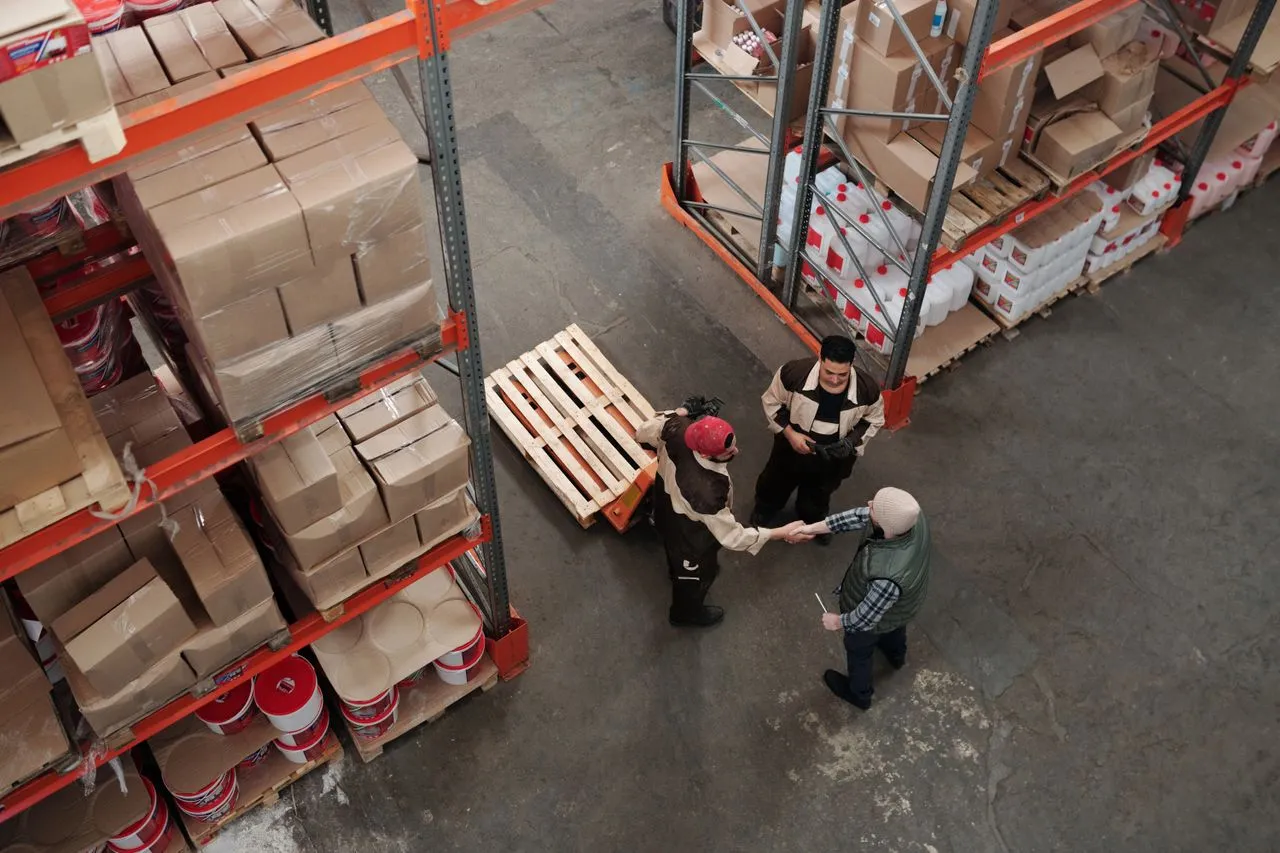
Stockouts always happen at the worst possible time — usually when a product is selling great and ads are running hot. Here's how to handle it without torching your store's reputation.
Pause the Ads Immediately
The first move is stopping the bleed. Every dollar spent driving traffic to an out-of-stock product is wasted, and every new order becomes a headache.
Pause the ads first, then figure out the rest. Don't let a bad situation get worse while sorting through supplier emails.
Contact the Supplier for a Real Timeline
Vague answers like "soon" don't help. Push for a specific restock date and get it in writing. Also ask:
- Is this a short delay or a discontinued product?
- Can they prioritize your orders when stock returns?
- Are similar products available under a different SKU?
The answers decide whether to wait it out or pivot fast.
Switch to a Backup Supplier
This is where having a second supplier lined up pays for itself. Even if pricing is slightly higher, keeping orders flowing beats refunding every customer.
Anyone without a backup should treat this stockout as the wake-up call to find one before the next campaign launches.
Communicate With Customers Fast
People forgive delays. They don't forgive silence. Send an honest email as soon as delays are confirmed — explain what happened, offer a real ETA, and give them a choice: wait for restock or get a full refund. Transparency now prevents chargebacks and bad reviews later.
Plan for the Predictable Chaos
Some stockouts are avoidable. Q4 (Black Friday, Cyber Monday) and Chinese New Year shut factories down every single year. Before those windows hit:
- Order backup stock of top sellers if possible
- Confirm cutoff dates with every supplier
- Warn customers on product pages about potential delays
- Shift ad budget to items with stable supply
Surprises during peak season are almost always self-inflicted.
Expert Tips
Picking the right supplier is the biggest decision you'll make in this business. Get it right, and everything else gets easier. Get it wrong, and no marketing budget will save you.
The 13 dropshipping companies above each have a clear strength. Some are built for beginners on Shopify. Some are made for US-only fast shipping. Others help you build a real brand instead of another generic store.
Start with one or two that fit your niche. Order samples. Test the shipping speed yourself. Then scale up with the ones that actually deliver.
FAQs
Which company is best for dropshipping?
There's no single winner. Shopify beginners tend to like Zendrop. Sellers chasing US shipping speed pick TopDawg or Spocket. Brand-builders go for BrandSKU. Match the supplier to your niche, not to a ranking.
Can I use multiple dropshipping suppliers for my store?
Yes, and most successful stores do. Different suppliers cover different products, price ranges, and shipping zones. Just keep your inventory synced with a tool like Inventory Source so nothing oversells or falls through the cracks.
How do dropship suppliers handle returns?
It varies wildly. Some accept returns to their warehouse, some charge restocking fees, and others make you eat the loss. Always confirm the return policy in writing before listing a product — surprises here cost real money.
Are there free dropshippers?
Yes. BrandSKU, CJ Dropshipping, and Syncee all let you start for free. Free doesn't mean lower quality either. Just expect to pay eventually if you want automation, faster shipping, or premium supplier access.
What legal agreements should I have in place with my dropshipping suppliers?
A basic supplier agreement covering pricing, shipping times, returns, and stock updates protects both sides. For larger orders or custom branding, add an NDA and clear terms on product liability. Don't skip this once volume grows.
Share article


Written by

E-commerce enthusiast | Focused on Shopify and small store growth | Breaking down complicated topics into something you can actually use

 Early access

