





Ready to try BrandSKU?

Choosing between dropshipping vs ecommerce is one of the first big decisions any online seller faces. Both can build real income.
Both have real trade-offs. And the right choice depends entirely on your budget, your goals, and how you like to work.
This guide breaks it all down for 2026 — what each model actually is, how they compare, who each one fits, and how to move from one to the other when you're ready.
No hype, no shortcuts. Just a clear look at both paths so you can pick with confidence.
What Is Ecommerce?
Ecommerce is any kind of buying and selling online.
- Run a Shopify store? That's ecommerce.
- Sell mugs on Etsy or books on Amazon? Also ecommerce.
The term covers Nike's global site and a teenager flipping thrifted jackets from their bedroom. In most cases, the seller keeps stock somewhere — a garage, a warehouse, a 3PL — and ships each order out when it comes in.
Worth knowing: dropshipping falls under ecommerce too. It's one way to run an online store, not a separate thing.
Pros
- You own the inventory, so margins are much better — often 40-60%
- Faster shipping since products are already at your warehouse or 3PL
- More control over quality, packaging, and the customer experience
- Easier to build a real brand people remember
Cons
- You need real money upfront to buy stock, sometimes thousands
- Unsold inventory ties up cash and takes up space
- You handle storage, packing, and returns yourself, or pay a 3PL to do it
- Slower to test new products since you have to commit to bulk orders
What Is Dropshipping?
Dropshipping lets you sell products online without buying stock first. You set up a store, list items from a supplier, and when a customer orders, the supplier ships it straight to them.
You never see the product. Your job is picking what to sell, running ads, and answering customer emails.
Everything else — storage, packing, shipping labels — happens on the supplier's end. Most people start with platforms like Shopify plus a supplier from AliExpress or Spocket.
Pros
- Cheap to start — often under $100, since you don't buy inventory
- Easy to test new products and drop the losers fast
- Works from anywhere with a laptop
Cons
- Margins are thin, sometimes 10-20% after ad costs
- Shipping can take 2-3 weeks from overseas suppliers
- You can't control product quality, and returns are your problem
- The market is crowded, so standing out gets harder every year
Dropshipping vs Ecommerce: A Complete Analysis
Startup Cost
With dropshipping, you can be live for under $100. That's a Shopify plan, a domain, and a small ad budget to see what sticks. No stock, no warehouse rent, no shipping supplies.
Traditional ecommerce is a different game — plan for $2,000 to $10,000 before your first sale. Bulk inventory alone can eat most of that, and private-label manufacturers usually want 500 units minimum. If cash is tight, dropshipping wins here without much debate.

Profit Margins
Dropshipping margins look okay on paper (10-30%) until ad costs hit. After Facebook or TikTok takes its cut, you're often keeping 5-15% per order. It's why so many dropshippers chase $80+ products — the math doesn't work on cheap stuff. Bulk buying flips this.
Traditional ecommerce sellers routinely see 40-60% margins because that $20 tee costs them $4, not $12. More margin means more room to run ads, offer discounts, and still profit.
Shipping Times
Cheap AliExpress suppliers ship from China. That means 2-3 weeks of waiting, tracking pages that don't update, and refund requests piling up. US-based dropshipping suppliers cut it to under a week but charge more per unit, which eats into your margin.
Traditional ecommerce sidesteps this entirely. Your stock sits at a 3PL near your customers, so orders leave the warehouse in a day and land within the week. Fast shipping is the single biggest reason people come back.
Control Over Quality
Here's the uncomfortable truth about dropshipping: you probably haven't seen the product. If it shows up cracked, off-color, or nothing like the listing photo, your customer finds out at the same moment you do.
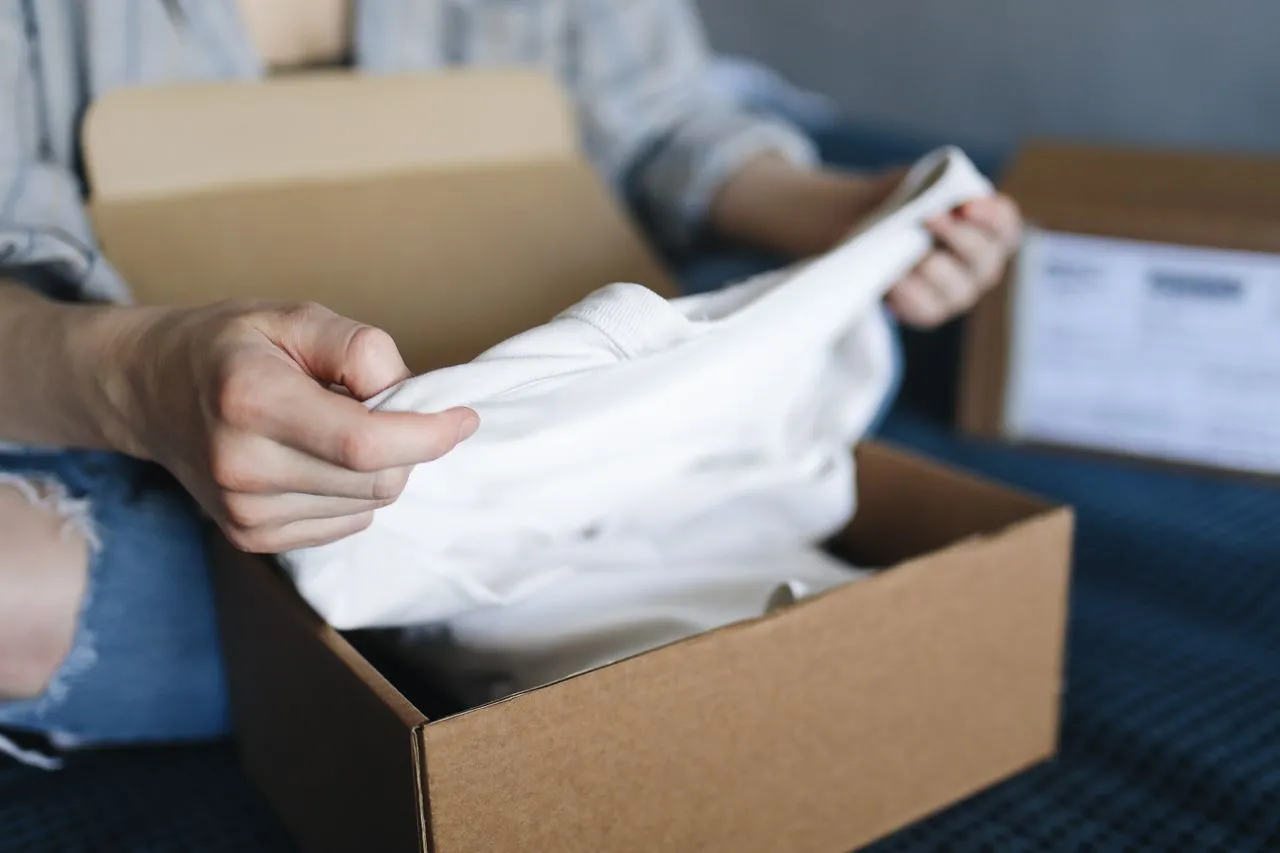
Traditional ecommerce lets you order samples, approve them, and control what goes in the box — including brand packaging, inserts, thank-you notes. When something breaks, you can actually fix it instead of forwarding an angry email to a supplier you've never met.
Scaling and Risk
Dropshipping scales without cash flow headaches — no reorders, no stock-outs, no warehouse expansion. The catch: your "winning product" is on AliExpress. Any competitor can find the same supplier and price you out within a week.
Traditional ecommerce needs more capital to grow, and a bad inventory bet hurts. But each unit sold builds something you own: repeat customers, brand recognition, a mailing list. One model is easy to start and easy to lose. The other is harder but compounds.
Time to First Sale
You can go from "idea" to live store in a weekend with dropshipping. Pick a product, import it, launch ads, done. Some people see their first sale within 48 hours (most don't, but it's possible).
Traditional ecommerce takes weeks or months — sourcing samples, waiting on production, shipping to your warehouse, then finally launching. Speed favors dropshipping, but speed alone doesn't equal a business. Fast starts often mean fast burnouts.
Customer Loyalty
Dropshipping stores rarely see repeat buyers. The product is generic, the branding is thin, and there's nothing on the box (or often no box at all) that reminds anyone where they bought it.
Traditional ecommerce brands play the long game. Custom packaging, follow-up emails, loyalty perks — all of it turns one-time buyers into repeat customers. In an industry where acquiring a new customer costs 5-7x more than keeping one, that gap adds up fast.
Legal and Tax Complexity
Dropshipping isn't as simple legally as YouTube makes it sound. You still need a business license in most places, a sales tax permit for states where you have "nexus," and a way to handle customer disputes and chargebacks.
Traditional ecommerce carries the same basics plus a few more: import duties, product liability insurance, warehouse compliance. Neither is a legal minefield if you set it up right, but "no inventory" doesn't mean "no responsibility." A lot of dropshippers learn this the expensive way.
Dropshipping vs Ecommerce: Which Model Is Right for You?
Both work. The question is which fits your situation. Five quick questions — answer honestly, not aspirationally.
1. What's Your Time Horizon?
Are you looking to make money in the next 3 months, or build something that lasts 3+ years?
- Next few months → Dropshipping
- Long-term business → Traditional ecommerce
2. What's Your Product Idea?
Do you have a specific product you're passionate about, or are you looking for whatever sells?
- Whatever sells → Dropshipping
- I have a specific product in mind → Traditional ecommerce
3. Which Failure Would Hurt More?
- Wasting $5,000 on stock nobody wants → Dropshipping
- Going nowhere → Traditional ecommerce
4. How Do You Feel About Customer Service?
Slow shipping and quality issues come with dropshipping. Ecommerce lets you control both — but you own every problem.
- I'd rather deal with supplier issues → Dropshipping
- I'd rather own the whole experience → Traditional ecommerce
5. What Excites You More?
- Finding winning products through ad testing → Dropshipping
- Building a brand people recognize → Traditional ecommerce
Mostly dropshipping? Good starting point. Just know it's usually a stepping stone, not a destination.
Mostly ecommerce? You're already thinking like a brand owner. Commit to the longer path.
How to Move From Dropshipping to Private Label
Every dropshipper eventually hits the same wall: ad costs climb, competitors copy your winners within a week, and the same product on AliExpress makes your "brand" look interchangeable.
The move to private label isn't about scaling — it's about owning something copies can't touch.
Step 1: Use Dropshipping as Cheap Market Research
Most people treat dropshipping as the business. Treat it as the R&D budget instead.
Every product you test is a $50 experiment that answers one question: will strangers pay for this? The failures aren't losses — they're the data your competitors will pay $500 in courses to guess at.
Step 2: Wait for the Signal, Not the Sale
One viral week means nothing. What matters is consistent demand — a product selling 50+ units a week for a full month, ideally without you tweaking ads daily.
That's a product with real pull, not one riding a TikTok algorithm spike. Most beginners jump too early and get burned on inventory nobody wanted next month.
Step 3: Skip AliExpress and Go to the Source
The supplier on AliExpress is a middleman. The real factory is on Alibaba, often at 40-60% lower cost per unit.
Order 500-1,000 units with your logo, your packaging, your inserts. This is the exact moment your product stops being findable by every competitor with a 10-second search.
Step 4: Move Fulfillment Close to Your Customer
12-day shipping isn't a delivery problem. It's a trust problem — every day of waiting is a day the customer wonders if they got scammed.
A 3PL in the customer's country drops shipping to 2 days, cuts refund requests by half, and makes repeat purchases actually possible. Dropshipping never gets this. Private label does.
Free vs Paid: Learning Dropshipping the Right Way
Every beginner asks the same question: should I buy that $997 dropshipping course?
Short answer: usually not — and here's what actually matters more.
Free Resources Are Better Than You Think
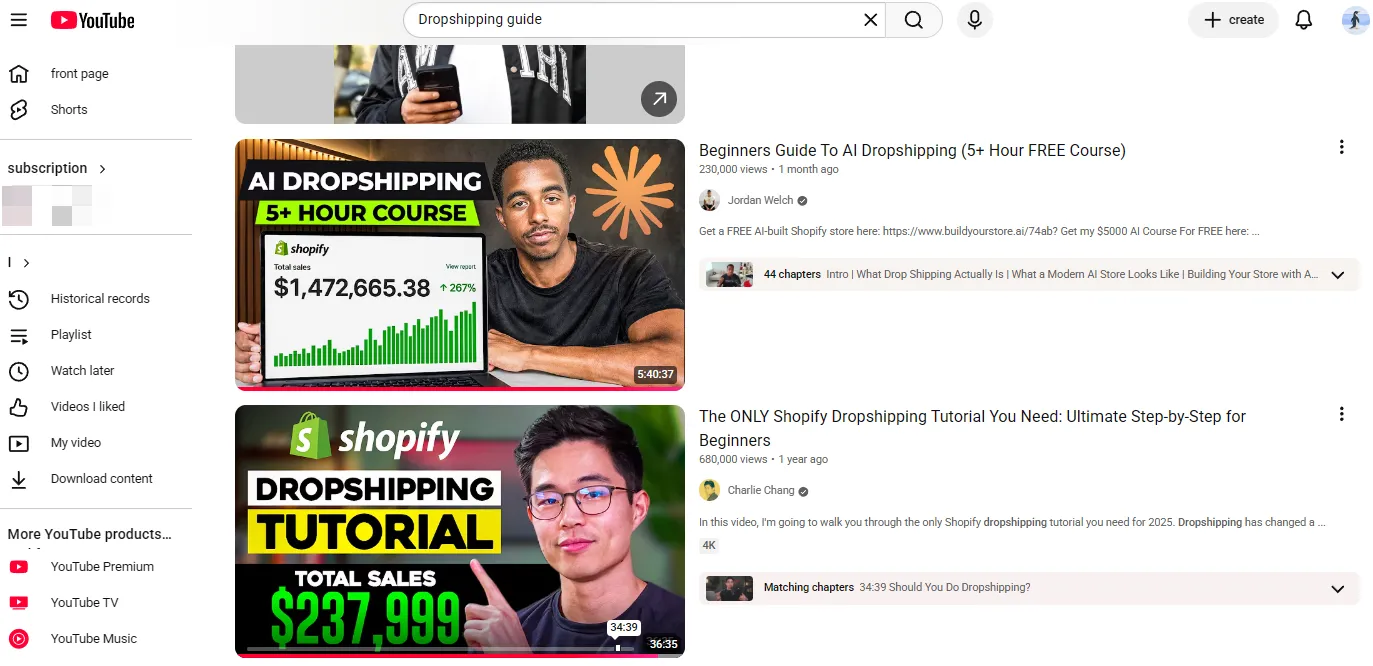
Almost everything a beginner course teaches is already on YouTube, Reddit, and Discord for free.
Shopify Academy, old Oberlo tutorials, and creators who share real store dashboards cover the fundamentals just fine.
Join a few Discord communities where store owners share what's working this week. That's usually more current than any pre-recorded course.
Paid Courses Aren't All Bad
A legitimate mentor with real experience can save you months of trial and error. The trick is judging by their free content first — if it's genuinely useful, the paid version probably is too.
What Actually Decides Whether You Make It
Here's the part most people skip: the course isn't what makes or breaks you. Discipline and curiosity do.
The people who succeed are the ones who genuinely enjoy the work — testing products at midnight, digging into why an ad flopped, reading every comment on a competitor's page.
Free or paid, the tools are the same. What separates the top 5% is showing up every day and actually caring about the craft.
Buy the course or don't. Just make sure you're building the habits either way.
Start Your Online Business With BrandSKU
Whether you land on dropshipping, private label, or somewhere in between, the hard part is finding a supplier that grows with you. That's where BrandSKU fits.
BrandSKU is a branded dropshipping platform built for sellers who want more than a generic store. Instead of shipping the same white-label products every other seller has, you get custom packaging, private labeling, and print-on-demand — the stuff that turns a shop into a brand people actually remember.
BrandSKU also handles the categories most dropshipping platforms can't: furniture, lighting, home décor, car accessories, and other larger or custom pieces. Fewer competitors on those products, better margins, and a real chance to stand out.
Signing up is free, and you can browse the full catalog before deciding if it's the right fit.
Expert Tips
The dropshipping vs ecommerce debate isn't really a debate. Both models work — just for different people, at different stages, with different goals.
Start where your budget and skills fit. If you're testing ideas fast, dropshipping is a smart entry point.
If you're building something to last, traditional ecommerce gives you the control and margins to grow. Most successful sellers end up using both — dropshipping to test, private label to scale.
Pick the model that matches where you are today. Then keep learning and keep testing.
FAQs
Is dropshipping the same as ecommerce?
No. Ecommerce covers every kind of online selling. Dropshipping is one method inside it — you sell products a supplier ships directly to your customer, so you never handle inventory yourself.
Is dropshipping legal?
Yes, in most countries. You still need a registered business, a sales tax permit where required, and honest product listings. Age matters too — many places require you to be 18 before running a store.
Is Shopify for dropshipping or ecommerce?
Both. Shopify is a store-building platform that works for any online business. You can plug in dropshipping apps like DSers, or use it to sell your own inventory shipped from your warehouse.
Is dropshipping just reselling?
In a way, yes. You resell someone else's products under your store's name. The difference is you never touch the stock. Your value comes from marketing, curation, and customer experience.
Can I make $10,000 per month dropshipping?
It's possible but rare, especially for beginners. Hitting that number usually takes strong ad skills, winning products, and months of testing. Most stores earn far less or break even before scaling up.
Share article


Written by

Small business consultant | Focused on online selling | Exploring dropshipping, marketing, and store-building from the ground up

 Early access

