






Ready to try BrandSKU?

So is dropshipping worth it now? For some people, yeah. For others, it's a fast way to burn $1,000 and a few weekends.
This guide covers the real margins, the risks, and the skills you'll need, so you can decide if it fits you.
Dropshipping Trends and Market Outlook for 2026
Dropshipping is still growing—fast. The data shows the global market is on track to hit $1.25 trillion by 2030, growing at about 22% a year.
That's faster than most other retail channels right now, which means new sellers are stepping into a market that's still expanding, not shrinking.
As for what actually sells, fashion still takes the biggest slice—over a third of the whole market. It moves with trends and works well on social media, so you can test new products fast without sitting on stock.
Food and personal care is the fastest-growing category at 23.6% a year, mostly because more shoppers want organic and natural options. Both are solid picks if you're still deciding on a niche.
One more shift worth knowing: AI tools are changing how the daily work gets done. Product research, pricing, and writing product descriptions used to eat up a full week.
Now a lot of that runs on autopilot, and the sellers who pick up these tools early usually move faster than the ones who don't.
The Advantages and Disadvantages of Dropshipping
Advantages
- Low startup cost. You don't buy stock upfront, so a domain, a Shopify plan, and a small ad budget can open the doors. Just remember you'll also need a cash cushion to cover orders before payouts clear.
- No inventory risk. If a product flops, you're not stuck with 500 units in your garage. Drop it, list something new, and test again the same week.
- Easy to test ideas. Since nothing sits in a warehouse, you can run a few product ads, watch the numbers for a week, and let real buyers tell you what works.
Disadvantages
- Thin or negative margins at first. Once ads, fees, and supplier costs come out, most new sellers earn very little in month one, and many spend more than they make while learning. Healthy 10 to 20 percent margins usually show up later, after you know which products and ads actually work.
- Learning costs real money. The ad platforms are your classroom, and every test costs cash. Expect to spend a few hundred dollars just figuring out what your audience clicks on before a single sale turns profitable.
- Slow shipping frustrates buyers. Many suppliers ship from overseas, so a 10 to 20-day wait is common. That feels normal to you, but a buyer used to two-day delivery will hit the refund button fast.
Is Dropshipping Worth It for Beginners in 2026?
The Short Answer
Mostly yes, with a few caveats. If you're picturing the version from YouTube ads where someone buys a Lambo after three months, that's gone.
What's left is a decent way to learn how online selling actually works. You'll pick up ads, copy, customer service, and store building in about six months of trying. Some people find a product that clicks in year one. Plenty don't, and move on with useful skills anyway.
What's Changed
Ad costs are roughly 2-3x what they were five years ago. Customers can also smell a sketchy store from a mile away now, so the lazy "general store with 200 random products" approach is basically dead.
The trade-off is that AI does a lot of the boring work for you. Writing product descriptions used to take an afternoon. Now it's ten minutes. That helps beginners more than it helps the veterans, honestly.
Who Should Actually Try It
You'll probably enjoy this if you already like tinkering with ads, spreadsheets, or building things online. You'll hate it if you need next month's rent to come from it.
Budget-wise, having $1,000 you can afford to lose is the realistic floor. Less than that and you'll run out of testing money before you learn anything. More than that doesn't speed things up as much as beginners think.

The 5 Core Skills Every Dropshipper Needs
Dropshipping isn't one skill, it's five. You don't have to master each one, but you should understand them well enough to tell when something's actually working.
AI tools help with most of the grunt work in 2026, so lean on them. Just plan for 3-6 months of flat or negative results while you figure things out.
1. Media Buying
Running paid ads on Meta, TikTok, or Google is where most of your budget goes and where most beginners get wrecked. The platforms have gotten better at auto-optimizing campaigns, so setup is less painful than it used to be.
Reading the data is the harder part. You'll stare at dashboards wondering why a $3 cost-per-click on Tuesday became $8 on Wednesday, and nobody will give you a clean answer.
2. Copywriting
Words sell products. Your ad hook, product page, and email subject lines all need to make someone stop scrolling. ChatGPT can spit out twenty versions of a headline in a minute.
Picking the one that doesn't sound robotic is the actual job, and that judgment only comes from reading a lot of ads and noticing which ones made you personally want to buy something.
3. Video Editing for Ads
Short-form video is doing most of the heavy lifting on TikTok and Reels right now. CapCut handles the editing side without much of a learning curve. The harder question is what makes an ad worth editing in the first place:
- A hook in the first 2 seconds
- Cuts every 1-2 seconds
- Captions for muted viewers
- A clear ask at the end
4. Web Design
Your store gets maybe 3 seconds before someone decides whether it looks legit. Shopify's builder plus a decent theme covers most of what you need.
Focus on clean product pages, fast load times, and a checkout with no weird surprises like shipping fees appearing at the last step.
5. Customer Service
Orders get lost, packages show up late, and some percentage of your inbox will always be a little angry.
Helpdesk tools like Gorgias can draft replies automatically for the easy questions. You'll still handle the messy ones yourself. Worth setting up on day one:
- A helpdesk with AI drafting turned on
- Saved replies for the questions you'll get 50 times
- Refund and shipping policies visible on the site

The Honest Timeline
Give yourself 3-6 months of learning all five at once before expecting anything repeatable. AI shortens the curve but doesn't remove it.
Most people who quit do it around month two, right when the losses feel real and the wins haven't shown up yet.
How to Start a Dropshipping Business Step by Step
1. Pick a Niche You Actually Understand
Skip the "trending products" lists everyone else is copying. Pick something you already know — a hobby, a job you used to have, a community you're part of.
Insider knowledge helps you write better ads and spot which products people actually complain about lacking. Generic niches like phone cases are brutal to compete in.
2. Validate Before You Build
Before spending a dollar on a store, check if people are actively buying in your niche.
Search TikTok and Meta ad libraries for competitors running ads for 30+ days. If nobody's advertising, that's usually a bad sign, not an opening. Steady ad spend from competitors means the math works.
3. Find a Reliable Supplier
Shipping times and product quality kill more stores than bad ads do. AliExpress works but shipping can drag past two weeks.
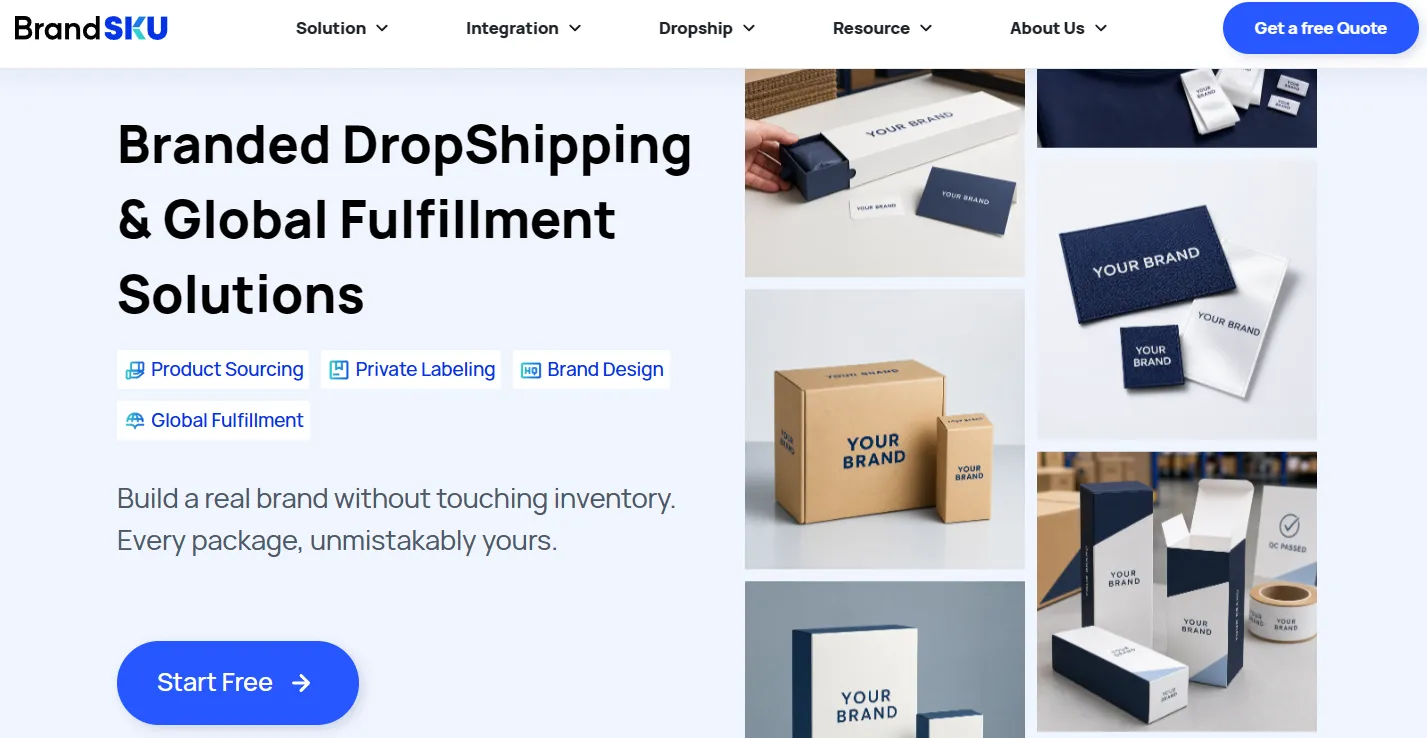
Suppliers like BrandSKU offer faster fulfillment from US warehouses, plus custom packaging so your product doesn't show up in a random plastic bag with Chinese customs stickers.
4. Order Samples First
Always buy the product yourself before selling it. Photos lie, listings exaggerate, and some suppliers ship a different version than what's pictured.
Sample testing also gives you real footage to shoot ads with, honest measurements for your product page, and a chance to catch defects before your customers do.
5. Build the Store
Shopify remains the default for good reason. Grab a clean theme, set up your product pages, and add the standard trust pages: shipping, returns, contact, FAQ.
Skip the fancy animations. Load speed and a checkout that works on mobile matter way more than any custom design touches.
6. Set Up Payments and Legal Stuff
Register a business entity (an LLC in the US costs around $50-$300 depending on the state). Connect Shopify Payments or Stripe. Add a real return policy, not a copy-pasted one.
Payment processors freeze accounts fast if refund rates spike, so having clean policies protects you from getting shut down mid-launch.
7. Launch With a Small Ad Budget
Start with $20-$50 per day on Meta or TikTok, not $500. You're testing whether the product, ad, and page work together, not scaling yet.
Expect to lose money for the first 2-4 weeks while you find a winning combo. Kill anything that doesn't hit breakeven after a few days.
8. Track the Numbers That Matter
Revenue means nothing without profit. Watch cost per acquisition, average order value, and gross margin daily.
If your product sells for $40, your ad cost is $25, and the product plus shipping is $12, you're making $3 per order before Shopify fees, apps, and refunds. Do that math before scaling anything.
9. Scale Only What's Working
Once an ad hits profitable numbers for 5-7 days straight, then you increase spend, slowly. Bumping budgets 20% every couple days works better than doubling overnight, which usually breaks the algorithm.
Steady scaling also gives your supplier and customer service setup time to keep up with volume.

How Much Profit Does Dropshipping Make on Average?
The Real Average
Honest answer: most dropshippers make nothing. Industry data floating around suggests something like 80-90% of stores never turn a real profit, and a chunk of the ones that do are barely covering the operator's time.
The average successful store runs on net margins of 10-20% after ads, product cost, shipping, apps, transaction fees, and refunds.
That's thinner than most beginners expect. A store doing $10,000 a month in revenue is usually taking home $1,000-$2,000, not $5,000.
Anyone showing you screenshots of $50k months without breaking down the ad spend is selling you a course, not running a real business.
Top Performers vs Beginners
The gap between top performers and everyone else is huge. A skilled operator running a proven product with tight ad creative might pull 30-40% margins for a few months during a hot streak, then watch it drop as competitors jump in and ad costs climb.
Meanwhile a beginner testing their first product is usually losing money for weeks before anything works.
Realistic take-home for someone in year one, working part-time and learning as they go, is somewhere between $0 and $500 a month. Some months you'll pay yourself nothing so you can reinvest in testing more ads.
How Product Price Changes the Math
Product price also changes the math in ways beginners underestimate. Selling $20 items means your ad cost has to be under $6 or you're dead. Selling $80 items gives you more room to breathe on customer acquisition cost, but returns hurt more when they happen.
The sweet spot most experienced sellers land on is products in the $40-$70 range with strong margins from the supplier side.
Working with fulfillment partners like BrandSKU that offer better wholesale pricing on quality products can push your gross margin from 50% to 65%, which is often the difference between a store that survives and one that quietly dies.
Why Cash Flow Matters More Than Margin
Most guides say you don't pay for inventory until the customer pays you. That's only half true, and the missing half trips up plenty of new sellers.
The payout delay no one warns you about. Shopify Payments, Stripe, and PayPal usually hold your money for 2 to 7 business days when your account is new. Some holds stretch longer.
Suppliers won't wait. They charge your card the moment an order comes in. So the money leaves your account days before it arrives.
You need a cash cushion. Keep a few hundred dollars of your own money (or a credit card) ready to cover orders during the wait. Without it, unfulfilled orders pile up, and your store can freeze before it ever gets going.
Expert Tips
So, is dropshipping worth it in 2026? For most beginners, yes, but only if you go in with clear eyes.
You won't get rich in 90 days. You will lose money at first. That's normal, not failure.
The people who make it treat the first six months as training. They learn the five core skills. They test small. They stick around long enough for the math to click.
If you want a side income and don't mind putting in real work, dropshipping still holds up. If you want passive money without effort, pick something else.
Your first store probably won't be your winner. Your third might be. Keep going, keep learning, and you'll figure out whether this path fits you.
FAQs
Is dropshipping legit?
Yes, it's a legal retail model used by plenty of real businesses. You sell products, a supplier ships them. The only shady versions are stores that mislead customers on shipping times or product quality.
Is dropshipping still profitable in 2026?
It can be, though margins are tighter than a few years back. Ad costs went up, competition is heavier, and customers expect faster shipping. Operators who pick smart niches and control costs still pull decent profit.
Is dropshipping worth it for beginners?
If you're willing to treat the first months as learning and can handle losing some money early, yes. If you're hoping for quick cash without effort, look somewhere else. Patience matters more than talent here.
How much money do I need to start dropshipping?
Plan on $500 to $1,500 to start. That covers your Shopify plan, a domain, product samples, some apps, and enough ad budget to actually test a few products without running dry in week one.
Which dropshipping model is best for your business?
Depends on your goal. General stores let you test fast but rarely scale. Niche stores build trust and repeat buyers. One-product stores work great for viral items. Most beginners do best starting with a focused niche.
Do dropshipping stores ship internationally?
Many do, but it adds friction. Longer delivery, customs headaches, and higher return rates come with the territory. Starting with one or two strong markets, usually your home country plus one nearby, keeps things manageable.
Share article


Written by

Small business consultant | Focused on online selling | Exploring dropshipping, marketing, and store-building from the ground up

 Early access

