






Ready to try BrandSKU?

Building a Shopify store from scratch takes weeks. Most beginners burn out before the first sale.
Buying a store skips that grind. Some come with real revenue. Others come prebuilt, ready to launch in 24 hours.
But not every listing is worth the money. This guide covers the 8 best places to find dropshipping stores for sale in 2026 — and everything worth knowing before you buy.
Established vs Premade Stores: Which Is Right for You?
What Each One Actually Is
An established store is a real, running business — real customers, real revenue, real ad spend. You're buying something that already works.
A premade store is a fresh Shopify template with products loaded in. Nothing has ever sold. You're buying a starting point, not a business.
Price Range
The gap is huge. Established stores usually cost $5K to $500K+, priced as a multiple of monthly profit.
Premade stores run $49 to $500 — flat fee, no revenue history behind the number. Bigger price, bigger asset. Small price, small starting kit.
Time to First Sale
An established store can generate revenue on day one because the ads and traffic are already flowing. A premade store starts at zero visitors. Expect to spend weeks and a real ad budget before the first order comes in.
Risk Profile
Established stores carry data-verification risk — sellers can fake numbers, inflate traffic, or hide problems. Do the homework and the risk drops fast.
Premade stores carry a different risk: the template and products are sold to hundreds of other buyers. Competition is baked in from day one.
Who Should Buy Which
Not every dropship store for sale fits every buyer. A quick match:
- Established store — has budget ($5K+), wants a working business, ready to run something serious
- Premade store — new to dropshipping, small budget, wants to learn the model without big risk
- Neither — wants to build a unique brand from scratch (start your own Shopify store instead)
The Honest Trade-Off
Most dropshipping stores for sale fall into one of these two camps. Established stores cost more but skip the hardest part — getting the first sale.
Premade stores are cheap but the real work (ads, product testing, brand building) still lands on you. Buying a store saves time. It never saves the work.
Dropshipping Stores for Sale: 8 Best Platforms in 2026
Empire Flippers
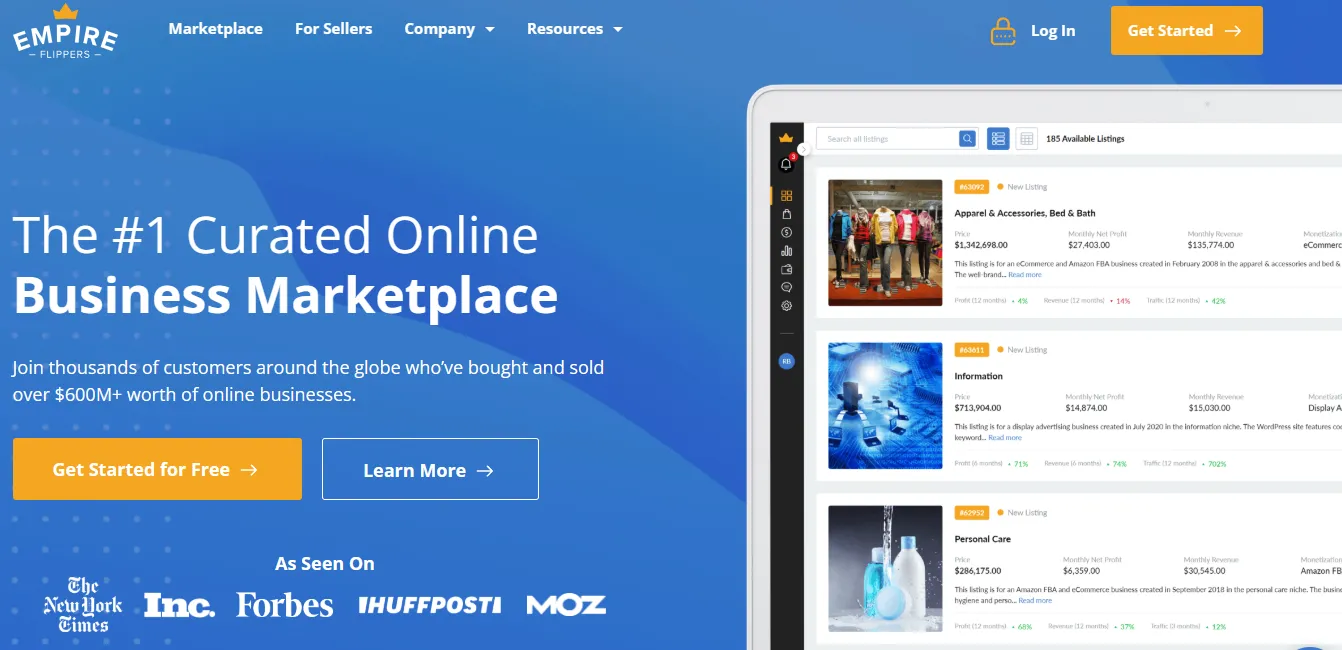
Empire Flippers has been vetting online businesses since 2012, and every listing on their marketplace is a real, running store with verified revenue.
Dropshipping deals usually sit between $15K and $500K. The tradeoff: they take a 15% commission from sellers, so listing prices run higher than on open marketplaces. If you're new and broke, look elsewhere.
Flippa
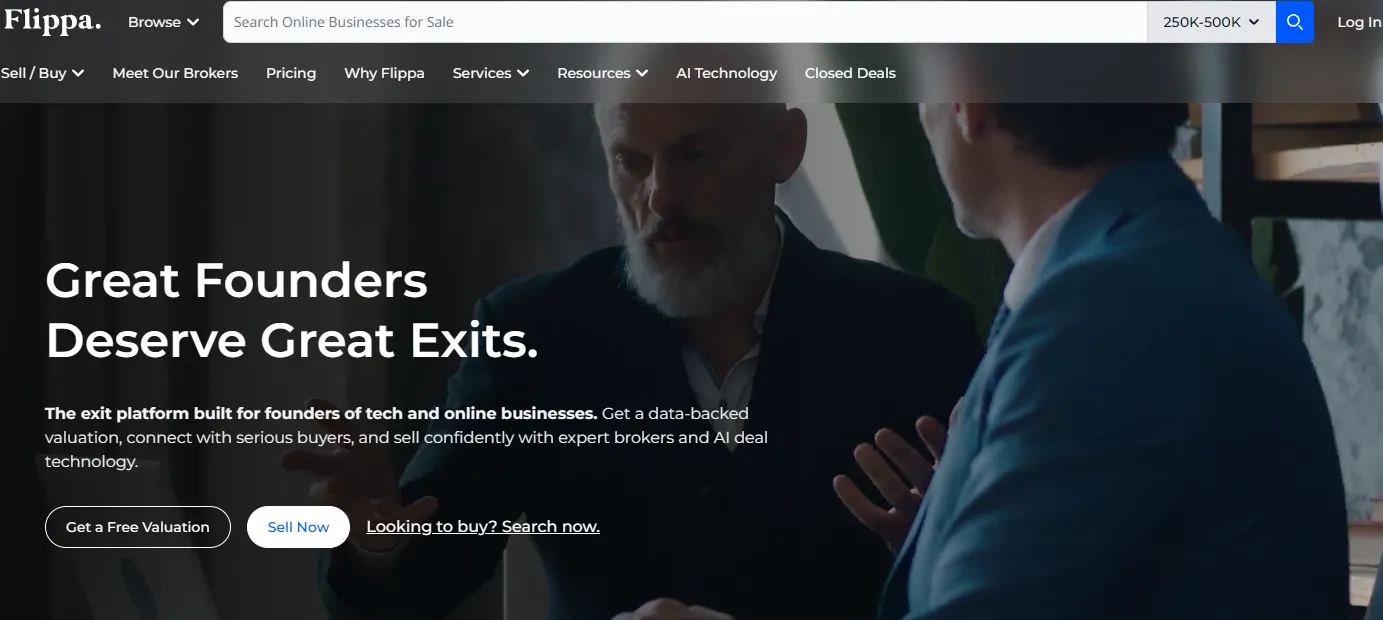
Flippa is the biggest marketplace for dropshipping stores for sale, and their dropshipping section is massive — listings start around $400 and go into six figures.
The catch is quality control. Sellers list themselves, so plenty of the numbers are inflated or outright fake. Budget a few hours to filter. Their SEMrush and Google Ads integrations do help you verify traffic claims before you make an offer.
Investors Club
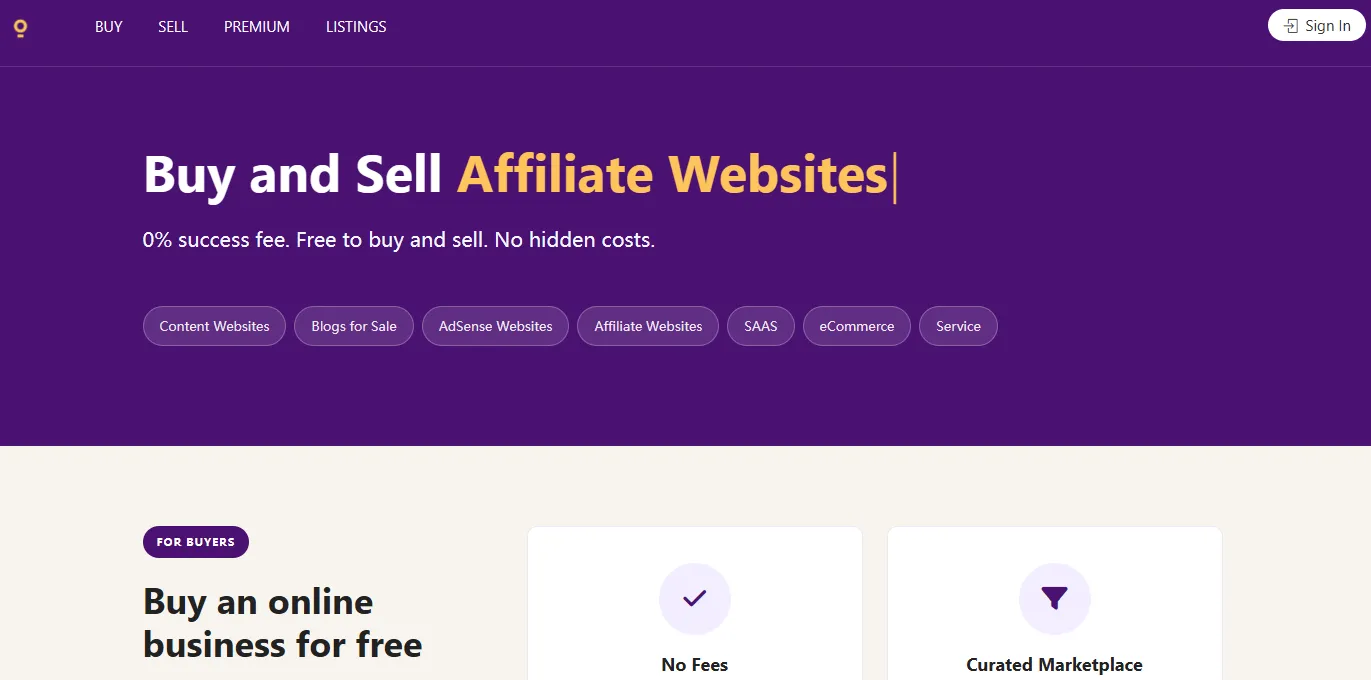
Investors Club is an invite-only marketplace for dropship stores for sale that already turn a profit. Membership costs money, and dropshipping deals typically fall in the $10K–$500K range.
The vetting is stricter than Flippa's, so fewer listings, but the ones that make it through tend to be cleaner. Good fit if you're tired of scrolling past junk.
Acquire
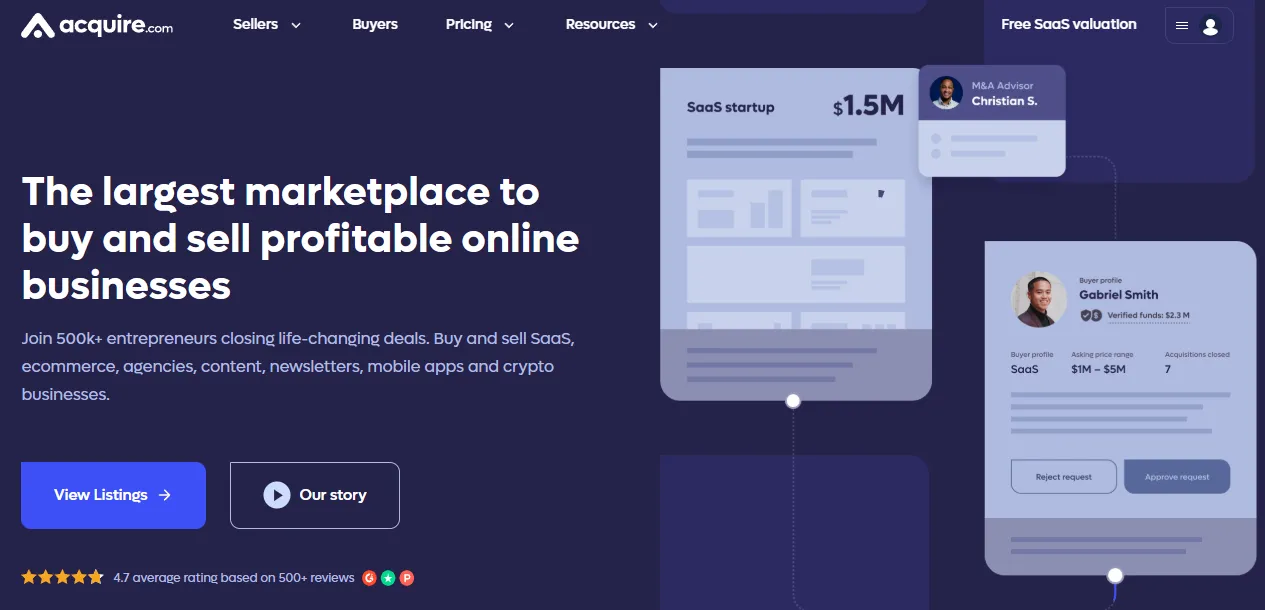
Formerly MicroAcquire, Acquire skips the broker middleman and connects you directly with founders selling their businesses. Everything listed is an operational business, not a template.
Free to browse, prices start around $5K, and the mix includes ecommerce, SaaS, and dropshipping. Faster negotiations, but you handle more of the due diligence yourself.
BizBuySell
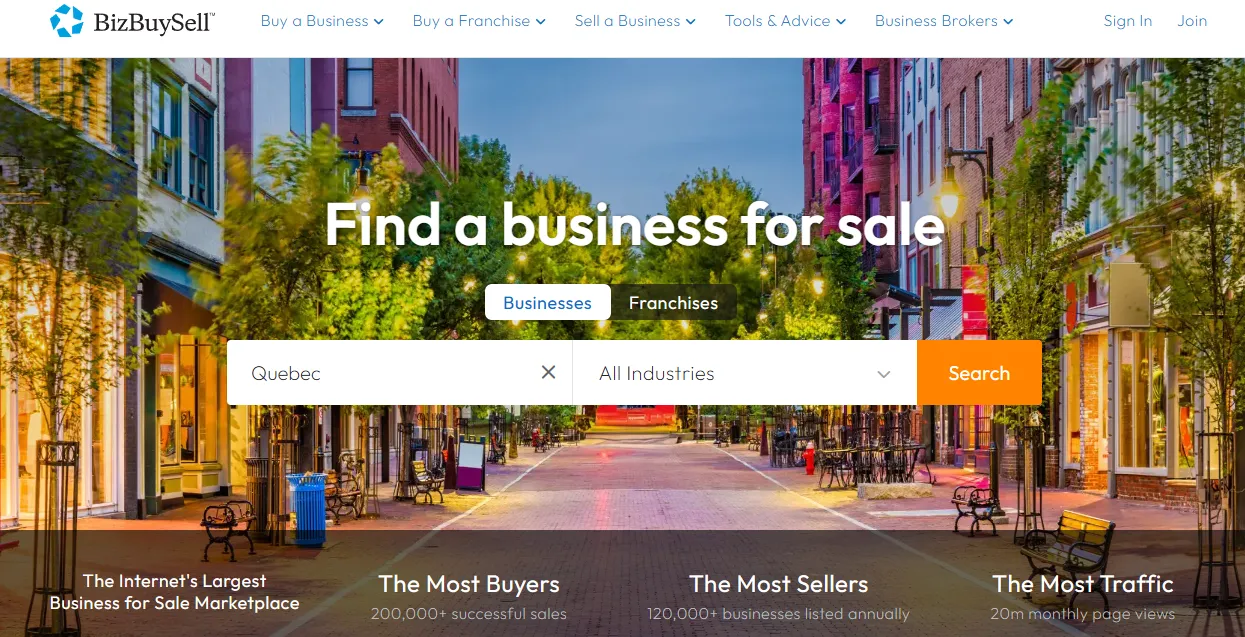
BizBuySell has been listing established businesses since 1996 — mostly offline stuff like restaurants and laundromats, with a smaller dropshipping section tucked inside.
The buyers here are traditional small business buyers, not ecommerce hunters, so competition can be lower for good listings. Worth a look if you don't mind an older interface.
BusinessesForSale
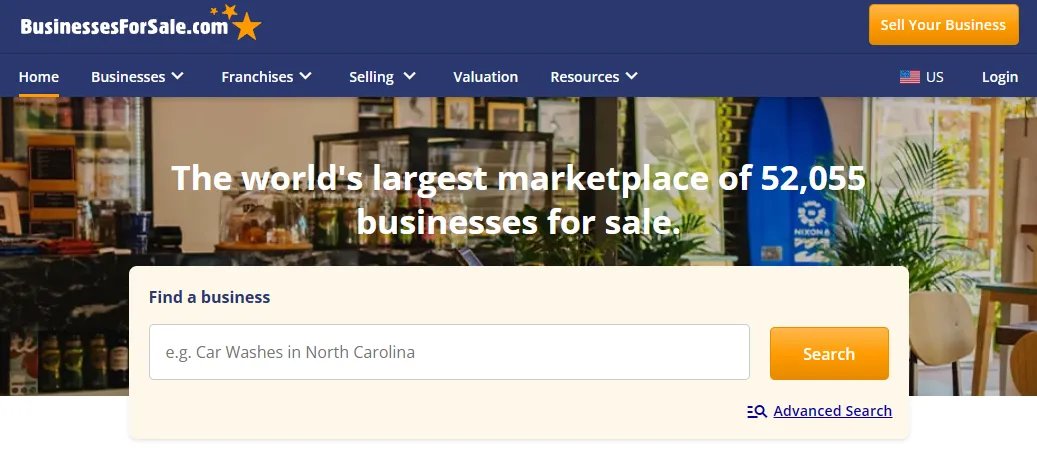
BusinessesForSale covers established businesses across 130+ countries, with around 70+ dropshipping listings in the US at any time.
Not the deepest catalog, but if you're outside the US or want a store in a specific country, this is one of the few platforms that makes that easy.
BeBiggy
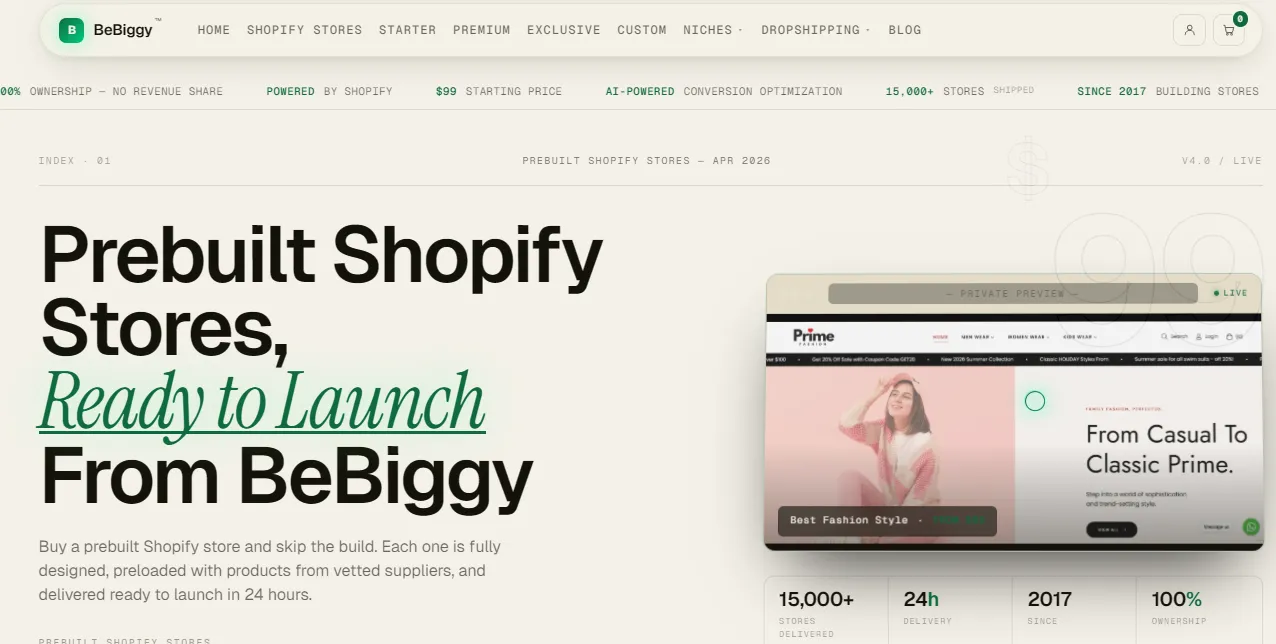
BeBiggy doesn't sell running businesses — it builds brand-new Shopify stores from scratch and delivers them in 24 hours, starting at $99. They claim over 15,000 stores shipped since 2017, which is a lot.
What they don't advertise: the same template gets sold to hundreds of buyers, so your "unique store" is competing with 200 identical ones. Fine for testing the model, but not the same asset as an established dropshipping store for sale with real customers.
WooDropship
WooDropship is another store-builder rather than a marketplace — pay a flat $49 and they hand you a fresh Shopify store in 7 days, preloaded with 30 AliExpress products, a premium theme, and legal pages.
Cheapest option on this list. There's a money-back guarantee tied to hitting 100 orders in 45 days, though the fine print matters — read it before you buy.
5 Types of Dropshipping Stores You Should Never Buy
One-Product Trend Stores
Every year, a few products go viral — fidget spinners, LED shower heads, standing desk converters. Sellers build a single-product store around the hype, then list it for sale right as demand collapses.
Signs to watch for:
- The store sells only one product or heavy variations of it
- Revenue shows a sharp spike then a steady drop
- The niche matches whatever trended on TikTok 6–12 months ago
By the time it's listed, the seller knows the party is over. You're being handed the bill.
Amazon Affiliate Sites Disguised as Dropshipping
Some listings marked "dropshipping" are actually Amazon affiliate sites — blogs that earn commission when readers click through to Amazon. There's no store, no supplier, no fulfillment.
Red flags:
- Revenue labeled as "commission" or "affiliate income"
- No Shopify backend, just a WordPress blog
- Traffic is almost entirely Google organic
Nothing wrong with owning an affiliate site — but don't pay dropshipping multiples for one.
Stores That Rely on a Single Influencer
A store doing $50K/month sounds great until you realize 90% of the traffic comes from one TikTok creator. If that person stops posting or raises their rates, the store dies overnight.
Watch for:
- Traffic dominated by a single referral source
- Social proof is mostly one person's videos
- The influencer is not included in the sale
You're not buying a business. You're buying a rented audience.
Stores With Fake Reviews and Bought Followers
The TikTok fake-engagement industry is huge, and premade sellers use it heavily. Fake UGC videos, bought followers, and imported five-star reviews make a store look profitable when it isn't.
How to spot it:
- Reviews all posted within the same week before listing
- 50K followers but posts get 20 likes — a classic engagement mismatch
- Same three actors across "different" customer reviews
If the social proof is fake, assume the revenue is too.
Print-on-Demand Stores Sold as Dropshipping
Print-on-demand (POD) and dropshipping are different models, but some sellers list POD stores under "dropshipping" to attract more buyers.
POD's value sits in original design and brand. Dropshipping's value sits in ad performance and suppliers. Buy one thinking it's the other, and you're paying the wrong price for a business you don't know how to run.
What to check:
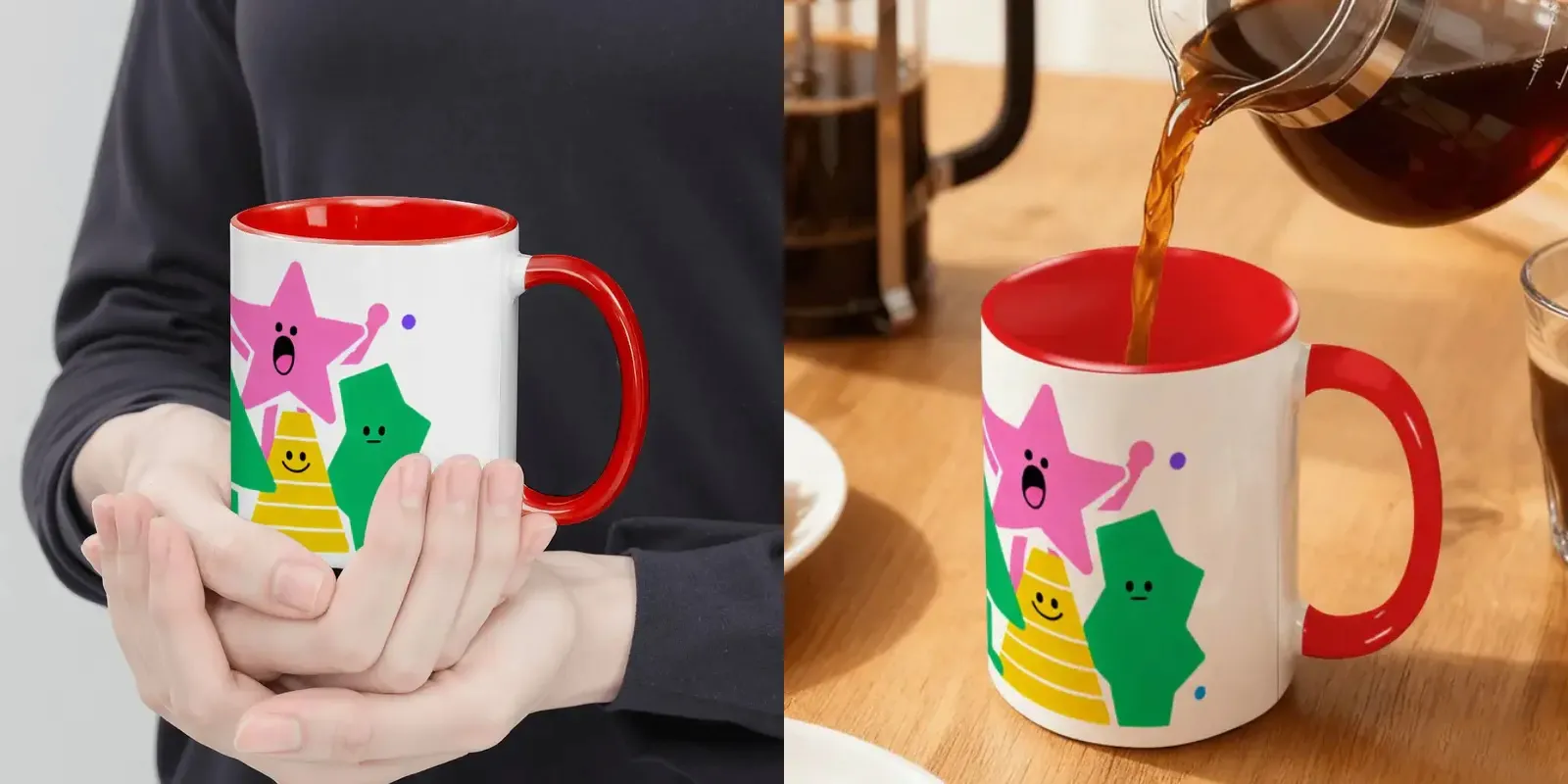
- Products are t-shirts, mugs, hoodies, or wall art
- Supplier is PrintKK or Gelato
- The value lives in designs, not ad accounts
POD can be a great business. Just make sure that's what you're buying.
3 Transfer Traps to Avoid After You Buy
Payment Processors Can Freeze Your Money
Many dropshipping stores for sale rely on Stripe and PayPal for payments — and both processors treat ownership changes as risk events. Money can get held up for months.
What to watch for:
- Stripe may put the account on reserve, holding a portion of daily sales for weeks or months
- PayPal often applies a 180-day holdback on new accounts
- Chargebacks from old customers still hit the new account, even for sales the new owner didn't make
How to protect yourself:
- Ask the seller for the store's chargeback rate from the last 12 months — anything above 1% is a warning
- Keep at least 3 months of operating cash in reserve so a freeze doesn't kill the business
Ad Accounts Don't Actually Transfer
Meta's rules ban selling ad accounts, and Google Ads has similar limits. What you're really buying is the strategy, not the account. The pixel data and custom audiences the previous owner built up stay with them.
What you get:
- Ad creatives and campaign structure
- Audience insights and targeting notes
- Winning product angles
What you don't get:
- Pixel history and algorithm learning
- Custom audiences and lookalikes
- The account itself
Expect your CPM to jump 30–50% in the first month as a new pixel starts from zero. To offset this, ask the seller in writing for 30 days of consulting after the sale, plus permission to use their creatives.
The Legal Transfer Has Hidden Waiting Periods
Buying a dropshipping store for sale isn't done the moment payment clears. The actual transfer of ownership takes days, and things can go wrong in between.
Key steps to know:
- Use Escrow.com to hold your money until the transfer is complete — Flippa and Empire Flippers require this by default
- Sign an Asset Purchase Agreement that lists exactly what's included: Shopify store, domain, email list, social accounts, supplier contacts
- Domain transfer takes 5–7 days — your money is already gone during this window
- Add a non-compete clause so the seller can't open a copycat store next month
Skip the paperwork and you have no legal ground to stand on if something's missing after the sale.
The 90-Day Plan for New Store Owners
Week 1: Lock It Down
The first week is about security and control, not growth. Every login the previous owner still has is a risk.
Do this in the first 7 days:
- Change all passwords — Shopify admin, email, domain registrar, supplier accounts, social media
- Enable two-factor authentication on every account
- Audit every installed app — cancel trials, cut anything unnecessary
- Contact suppliers directly and confirm the ownership change
Skip this week and month two becomes a cleanup job.
Days 8–30: Watch, Don't Touch
The store is already converting. The reasons aren't obvious yet. Change the wrong thing and the exact detail that's making sales might break.
Focus on observation, not action:
- Read the last 90 days of customer support tickets to learn what buyers complain about
- Track daily traffic and conversion rate to build a baseline
- Fulfill a few orders manually to see where the process breaks
- Note things worth changing — but don't change them yet
Understand the business before editing it.
Days 31–60: Small Tests Only
Now testing can start, but keep changes small and isolated. One variable at a time. Never touch the winning product page in the first round.
Safe first tests:
- A/B test one email subject line or one popup headline
- Try a new ad creative while keeping the winning one running
- Test a small upsell offer on a low-traffic product page
If a test hurts sales, roll it back the same day. This month is for learning what the store responds to — not overhauling it.
Days 61–90: Bigger Moves
By now the store makes sense. Customer complaints, top sellers, weak spots — all visible. This is when real changes are safe.
Now you can:
- Redesign underperforming product pages
- Swap out weak suppliers for ones with faster shipping
- Launch new products in the same niche
- Rebuild the ad account using the creative and audience data from the previous owner
Big changes made before day 60 are gambling. Made after day 60, they're informed decisions.
Expert Tips
Buying a store is faster than building one — if it's the right store.
Pick the platform that fits your budget. Empire Flippers and Investors Club suit serious buyers. Flippa and Acquire.com offer wider selection. BeBiggy and WooDropship work for small budgets.
Check the numbers. Watch for payment holds, ad limits, and messy transfers. Then follow the 90-day plan.
The best dropshipping stores for sale go to buyers who do their homework. Ask hard questions, and you'll walk away with a real business.
FAQs
How much money can I make with a prebuilt store?
hundred dollars a month, others break past five figures. The store is just the starting line — ad skill decides the finish.
Do I need to purchase inventory upfront?
No. Dropshipping means the supplier ships each order after a customer buys. Zero stock, zero warehouse. Product costs only leave your pocket after a sale lands.
How much should I pay for a dropshipping store?
Prebuilt stores fairly sit at $49–$500. Established ones price at 30–45 times monthly profit. A $1,000/month store usually sells between $30,000 and $45,000.
Can non-US buyers purchase US-based dropshipping stores?
Yes, but expect friction. Stripe rarely approves non-US accounts, so many international owners route payments through Wise, Payoneer, or a registered US LLC.
How long does it take to make the first sale after buying?
Established stores can convert within hours since traffic already flows. Prebuilt stores usually need two to six weeks of ad testing before the first order arrives.
Share article


Written by

E-commerce enthusiast | Focused on Shopify and small store growth | Breaking down complicated topics into something you can actually use

 Early access

