






Ready to try BrandSKU?

Dropshipping in 2026 is not the easy side hustle it used to be. Ads cost more, shoppers want faster shipping, and platforms like TikTok Shop and Amazon punish sellers who cut corners.
The right dropshipping software handles the hard parts—sourcing products, automating orders, and keeping your store compliant.
But there are hundreds of tools out there, and the wrong pick burns your budget fast. Below are the 16 best options for 2026, with real prices and honest notes on who each one fits.
Minimalist vs Full-Stack Dropshipping Software: Which Fits You?
Two camps dominate dropshipping software users in 2026. Minimalists run stores with three tools — a storefront, one supplier app, and basic order emails — usually under $50 a month. Full-stack sellers layer on more tools and often spend $300+ monthly, including:
- Upsell and cross-sell popups
- Ad spy tools
- Email and SMS automation flows
- Heatmaps and session recording
- Premium sourcing or product discovery platforms
Neither camp is wrong. They fit different stages.
Why Minimalists Win Early
Minimalists win on speed and cash flow. Fewer tools mean fewer subscriptions, fewer billing surprises (some platforms quietly switch to $400 yearly plans after a 7-day trial), and less setup time.
New sellers get to launch, test products, and learn customer behavior without drowning in dashboards.
Why Full-Stack Wins at Scale
Full-stack sellers win on margin and defensibility. Once a store passes 100 paid orders, the extra tools start paying for themselves:
- Upsell popups lift average order value
- Ad spy tools sharpen creative and cut wasted spend
- Premium sourcing unlocks products competitors cannot easily copy
- Email flows recover abandoned carts on autopilot
At that stage, the extra $250 a month pays for itself many times over.
The 100-Order Rule
The honest answer to "which fits you" comes down to one number: monthly orders.
- Under 100 orders/month → stay minimalist. Every extra tool is a distraction.
- Past 100 and growing → start adding the full stack, one tool at a time, only where a real bottleneck justifies it.
16 Best Dropshipping Software to Grow Your Store
BrandSKU
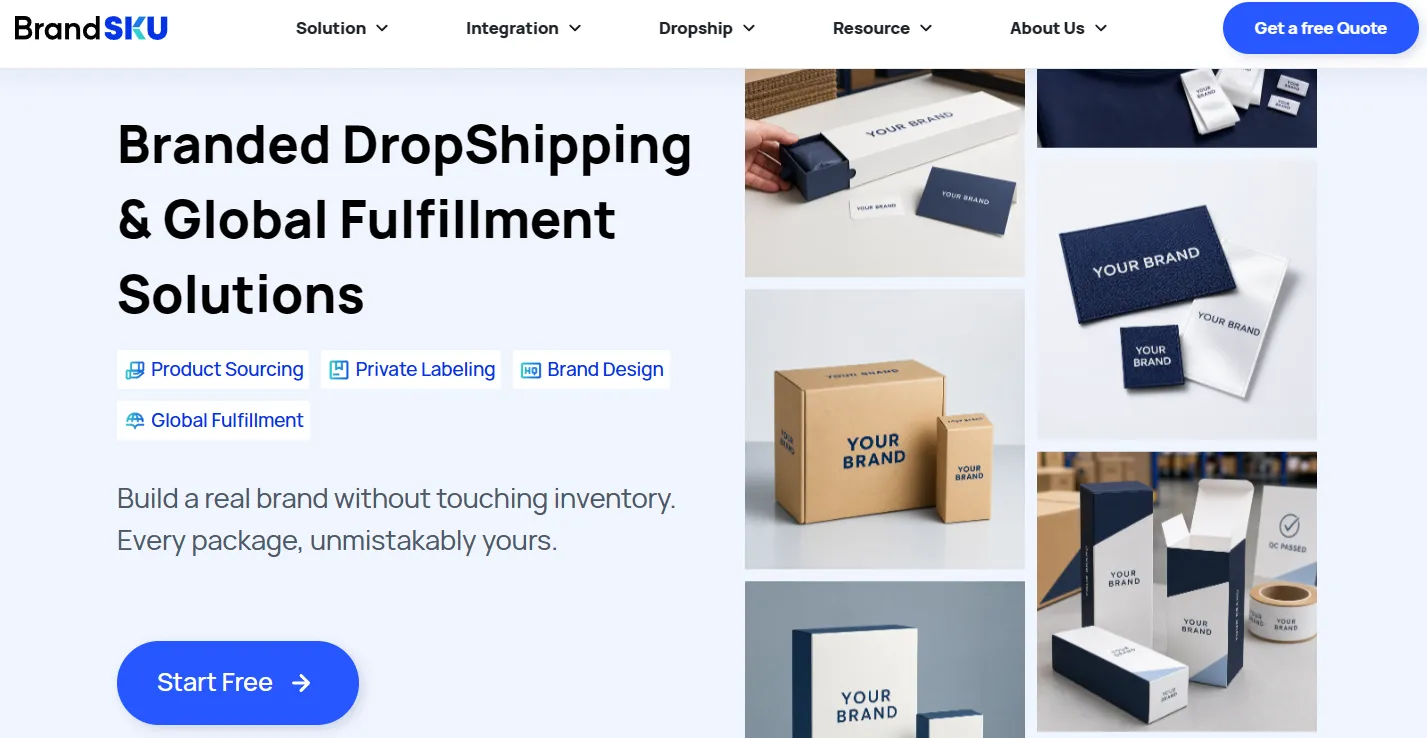
Most dropshipping platforms stop at generic product listings. BrandSKU is built for branded dropshipping — every order ships with custom packaging and private-label details that make the product feel like yours, not a reseller's.
Its supply chain also unlocks oversized categories like furniture and lighting that Spocket and Zendrop can't handle. Best for DTC sellers building a real brand.
Spocket
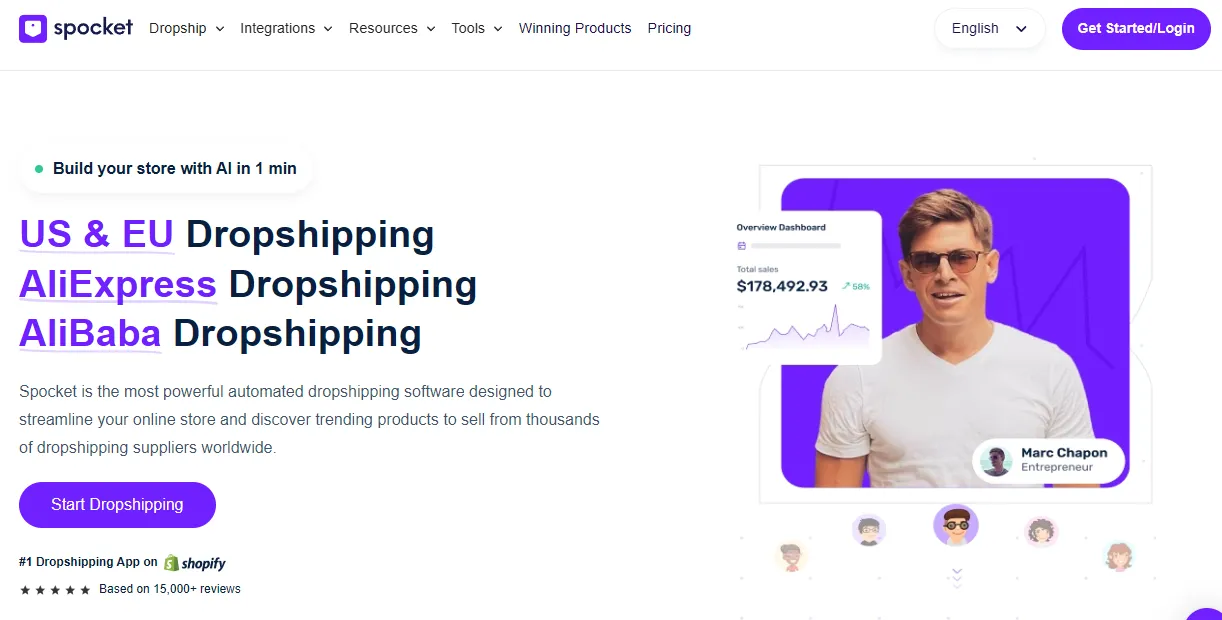
Slow shipping kills conversion rates. Spocket fixes that with a supplier network heavily concentrated in the US and EU, cutting delivery from three weeks to a few days.
Faster arrivals mean fewer refund requests, better reviews, and repeat buyers — three levers that compound growth.
AutoDS
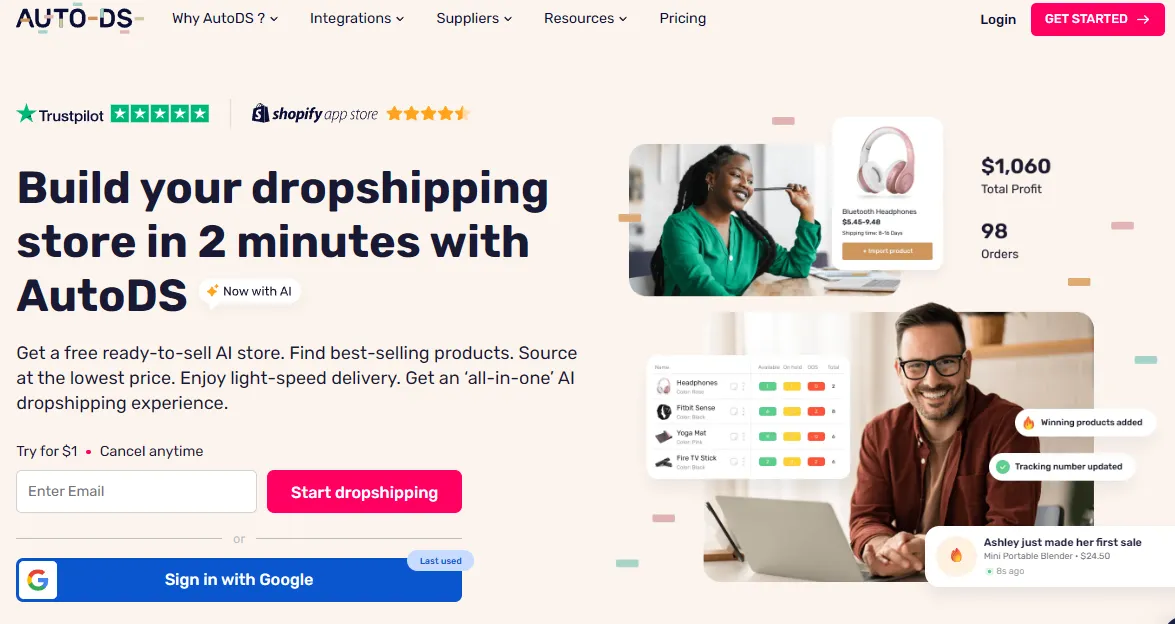
AutoDS is the automation layer for sellers past manual work. It handles product imports, price monitoring, and order fulfillment across 25+ suppliers from one dashboard.
Growth here means reclaiming hours: sellers stop processing orders one by one and start pouring that time into ads and product research.
Zendrop
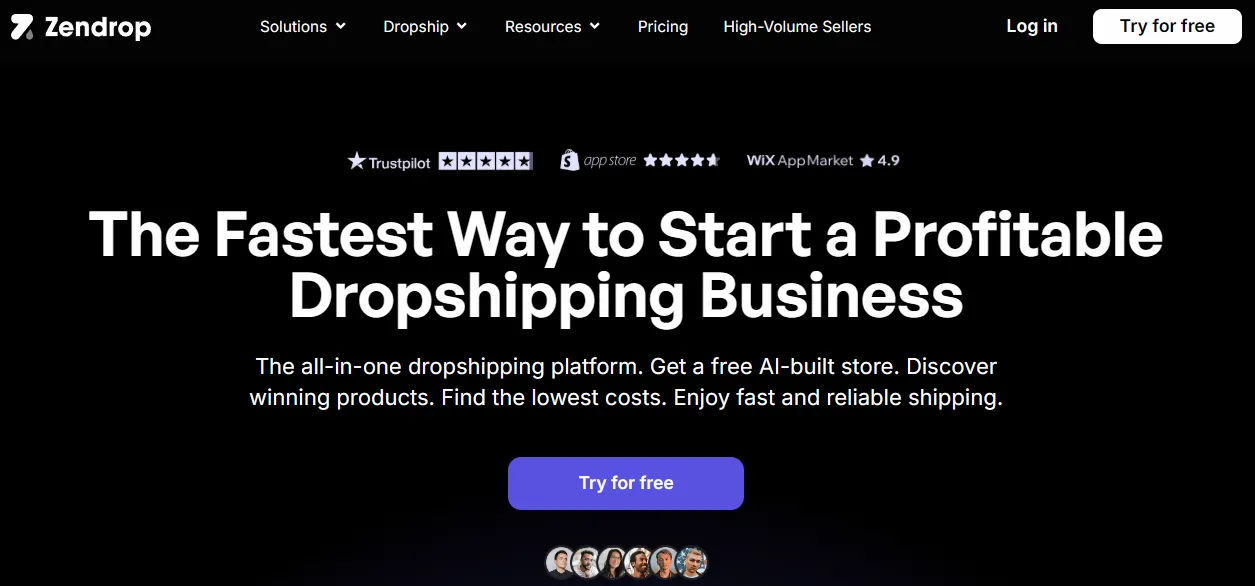
Zendrop wraps sourcing, fulfillment, and store building into one Shopify-friendly app, with US warehouses trimming shipping times.
Its AI store builder gets first-time sellers live in hours instead of weeks. Growth advantage: launch speed. The faster a product gets tested, the faster the next one can be tried.
PrintKK
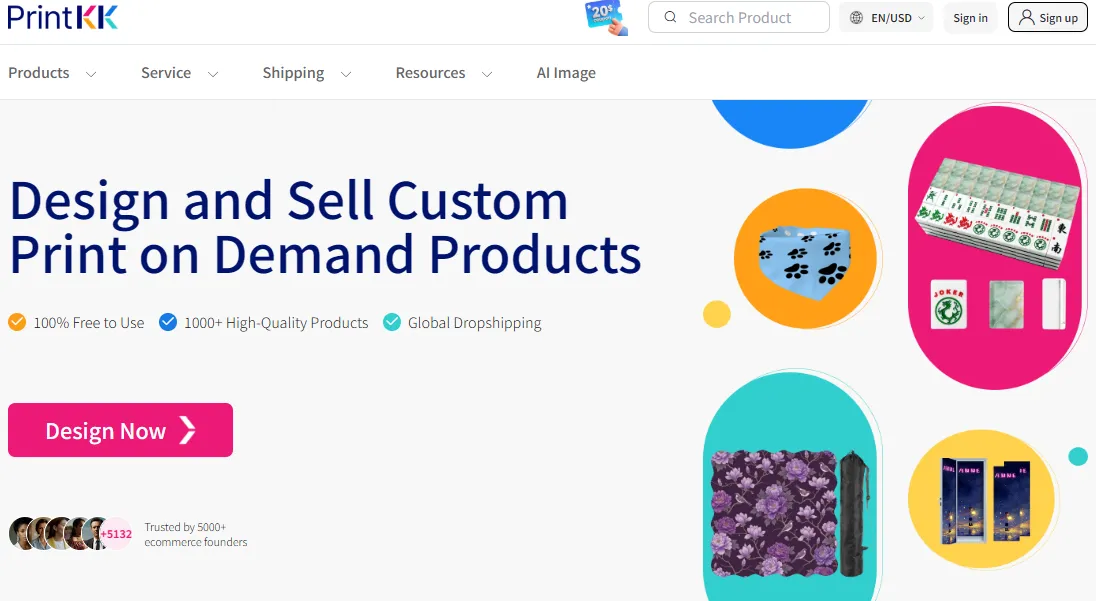
Every print-on-demand store hits the same wall: same suppliers, same designs, same everything.
PrintKK breaks that mold with exclusive product lines most POD platforms don't carry — custom lamps, mahjong sets, and other specialty items alongside standard apparel and accessories.
That's how stores stop competing on the same t-shirts and start owning categories nobody else can copy.
Dropship.io
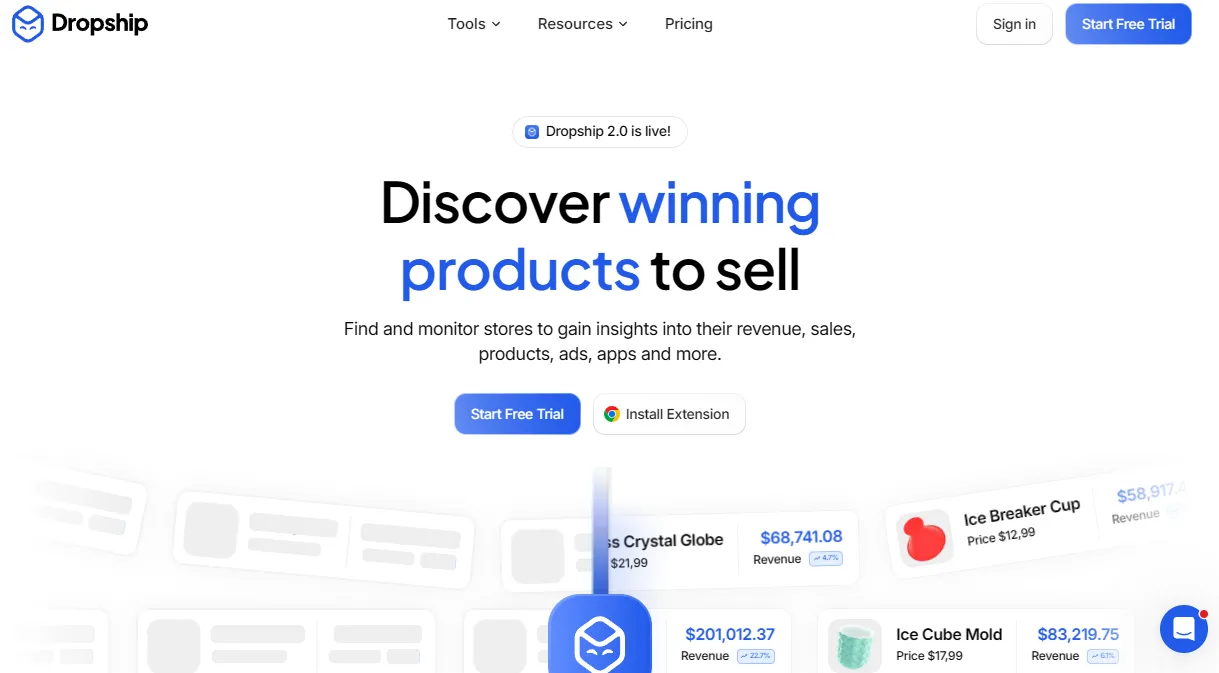
Guessing which products will sell is the fastest way to burn ad budget. Dropship.io is a competitor research tool that tracks live Shopify stores, revenue estimates, and rising products.
Sellers spot winners while they're still climbing, not after every dropshipper on TikTok is already running them.
HyperSKU
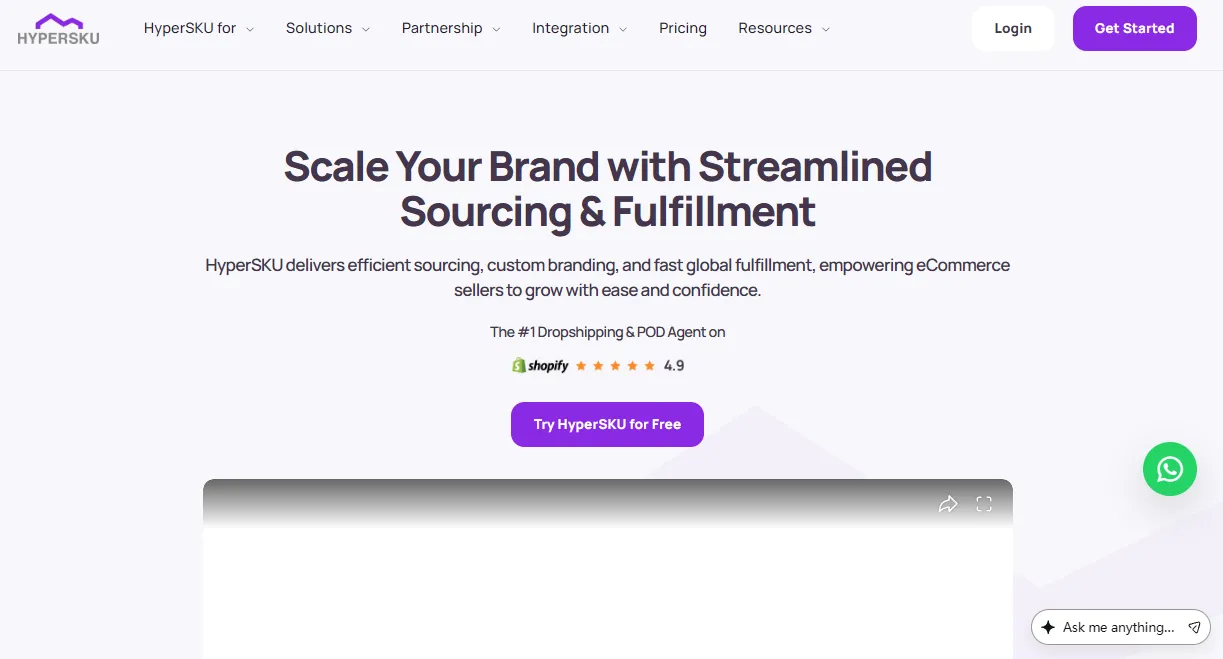
HyperSKU targets sellers shipping into the UK and Europe, with a per-order pricing model and no monthly fee.
That keeps overhead flat during slow months. Growth benefit: stores can test European markets without committing to another subscription until sales prove the region is worth scaling into.
CJ Dropshipping
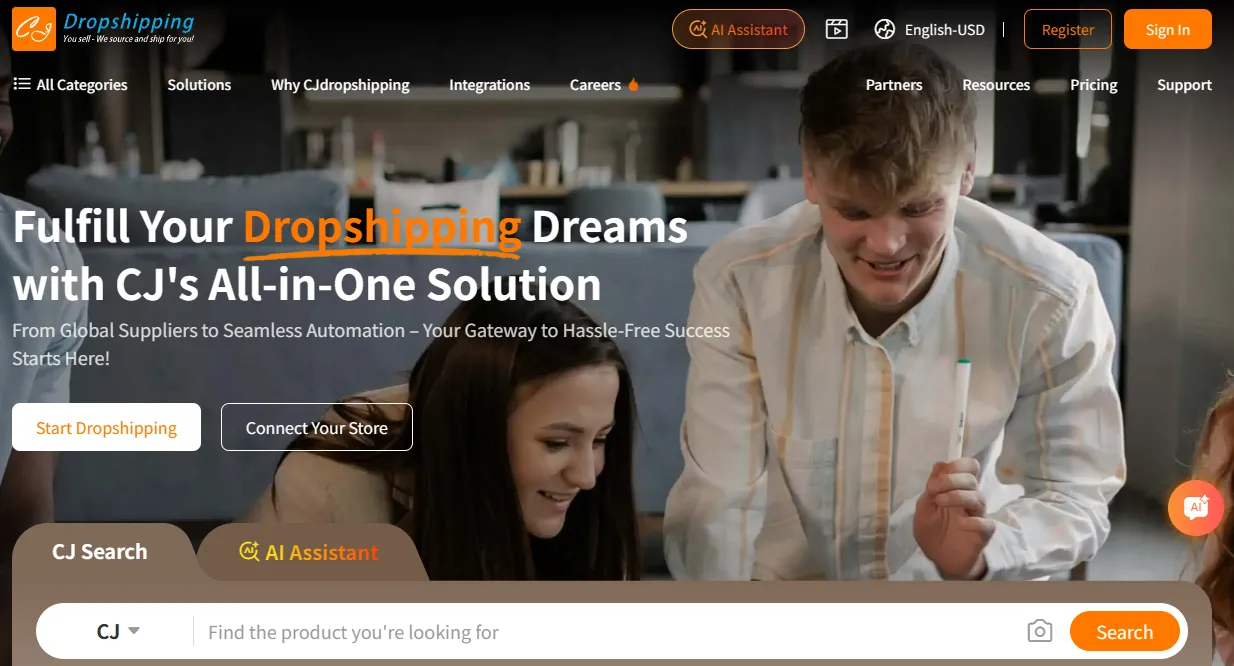
CJ Dropshipping bundles global warehouses, custom packaging, sourcing on request, and print-on-demand into one platform.
That last part matters most for growth — sellers can ask CJ to find products AliExpress doesn't carry, which is how competitors get locked out of a niche instead of copying it overnight.
Syncee
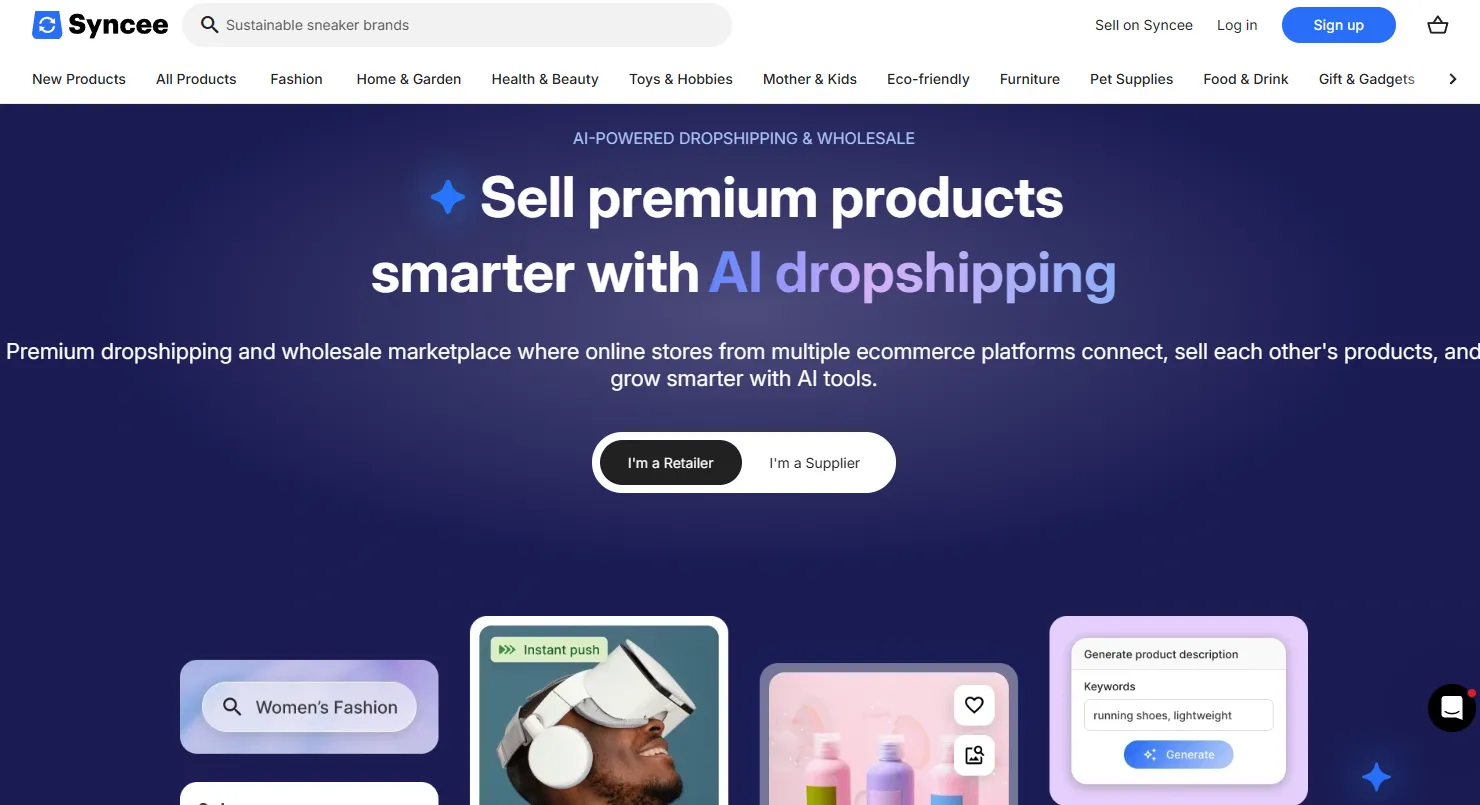
Syncee is a branded product marketplace connecting stores to vetted B2B suppliers worldwide, integrated with Shopify, WooCommerce, BigCommerce, and Wix.
Selling recognizable brands lifts trust and average order value — two things generic AliExpress catalogs can't deliver, no matter how good the ad creative is.
SaleHoo
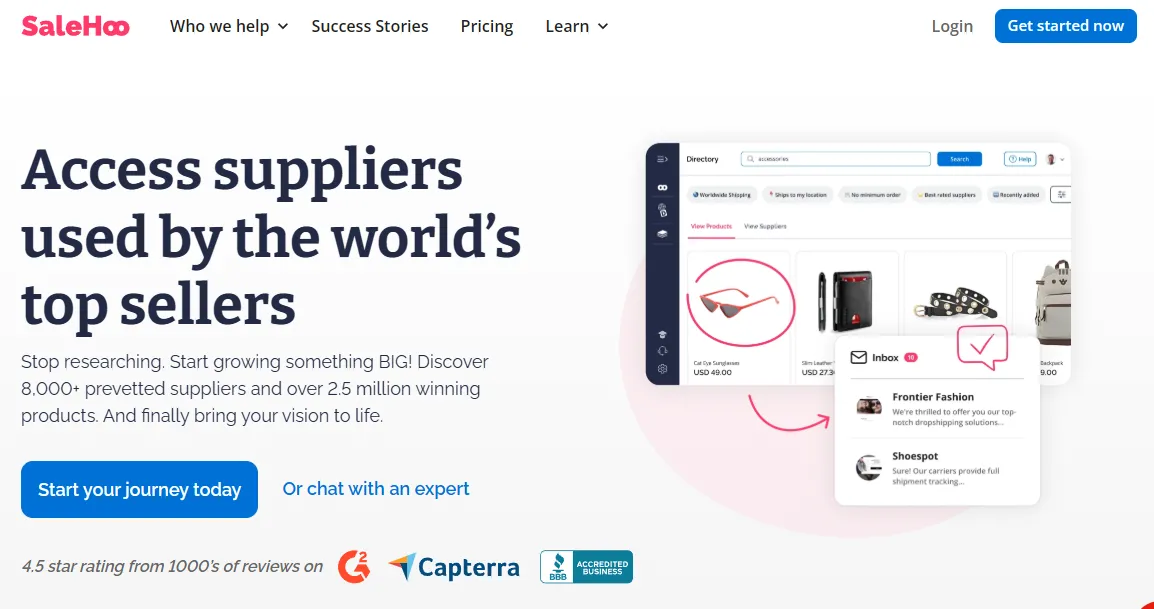
SaleHoo is a supplier directory, not a fulfillment tool. It pre-vets thousands of wholesalers and dropshippers so sellers don't waste weeks vetting sketchy Alibaba contacts themselves.
Growth angle: stores that build direct supplier relationships early tend to negotiate better margins later, when volume finally justifies the conversation.
Inventory Source
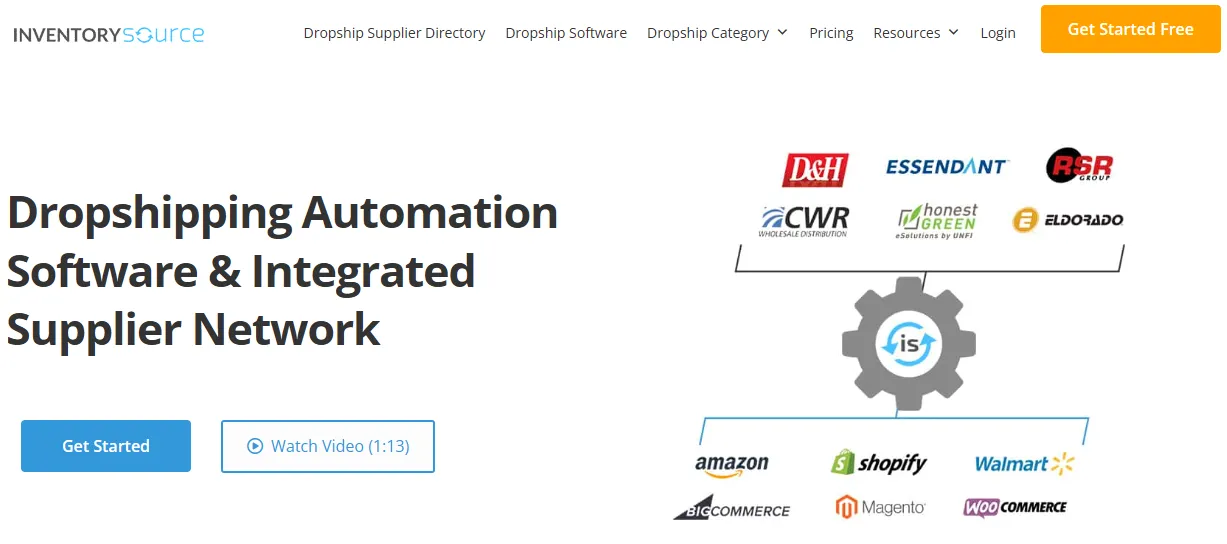
Inventory Source connects stores to real wholesale supplier feeds with automated inventory and order syncing across a large network of pre-integrated suppliers.
This is the tool for sellers ready to move past dropshipping app catalogs into actual wholesale relationships — where margins get healthier and product exclusivity becomes possible.
Dropified
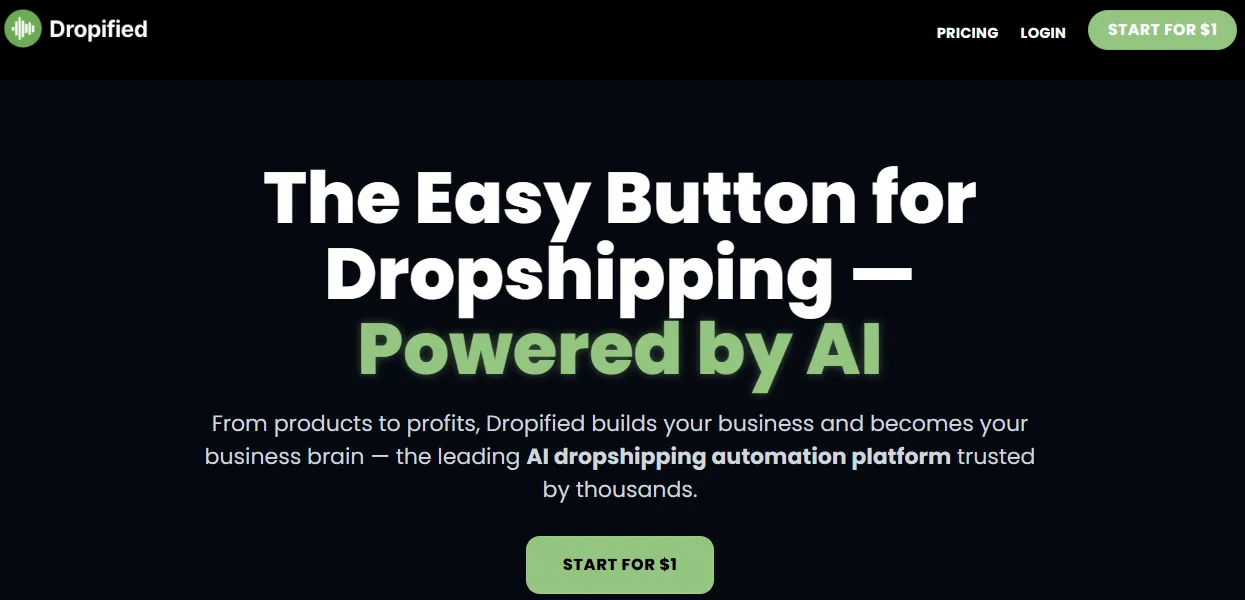
Sourcing across AliExpress, eBay, and other platforms usually means juggling tabs and copy-paste chaos.
Dropified is a multi-platform product importer that pulls everything into Shopify, WooCommerce, or CommerceHQ from one interface. Faster imports mean more products tested per week, which is how winning items get found faster.
AliDropship
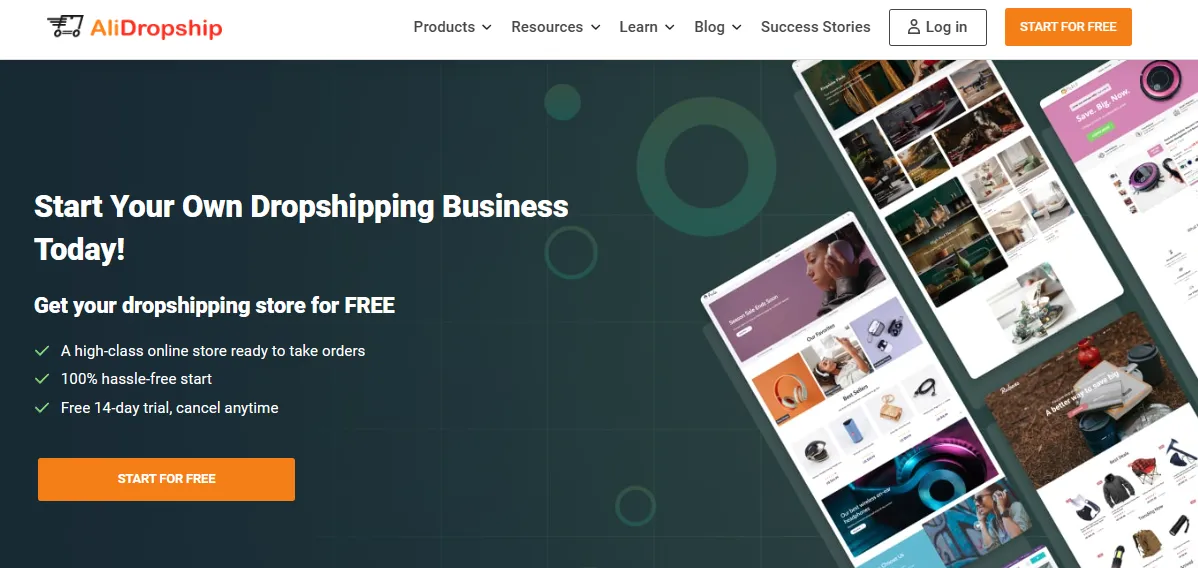
AliDropship is a one-time purchase plugin for WordPress and WooCommerce, not a monthly subscription.
That flat-cost model saves growing stores hundreds a year compared to SaaS competitors. Best fit: sellers who want ownership over their setup and prefer building on WordPress rather than the Shopify ecosystem.
Easync
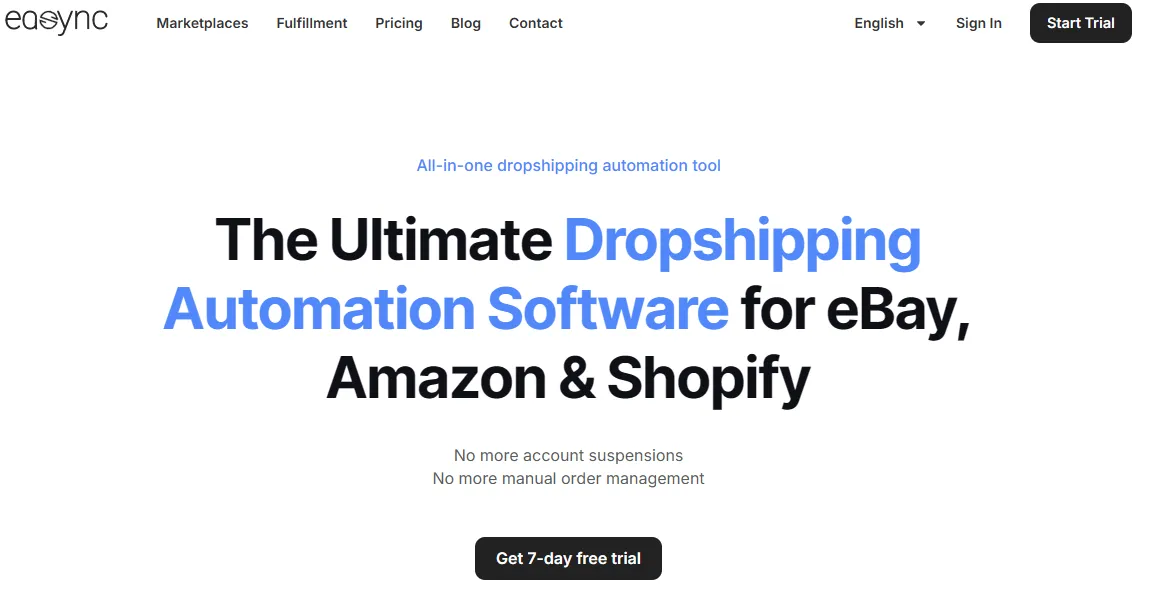
Easync handles automation for eBay and Amazon dropshipping — listings, order routing, tracking — sourcing from Amazon, Walmart, and other US retailers.
Growth here depends on tight compliance with marketplace rules, since both platforms enforce dropshipping policies strictly. Best for sellers who understand the risk and margin trade-off.
AppScenic
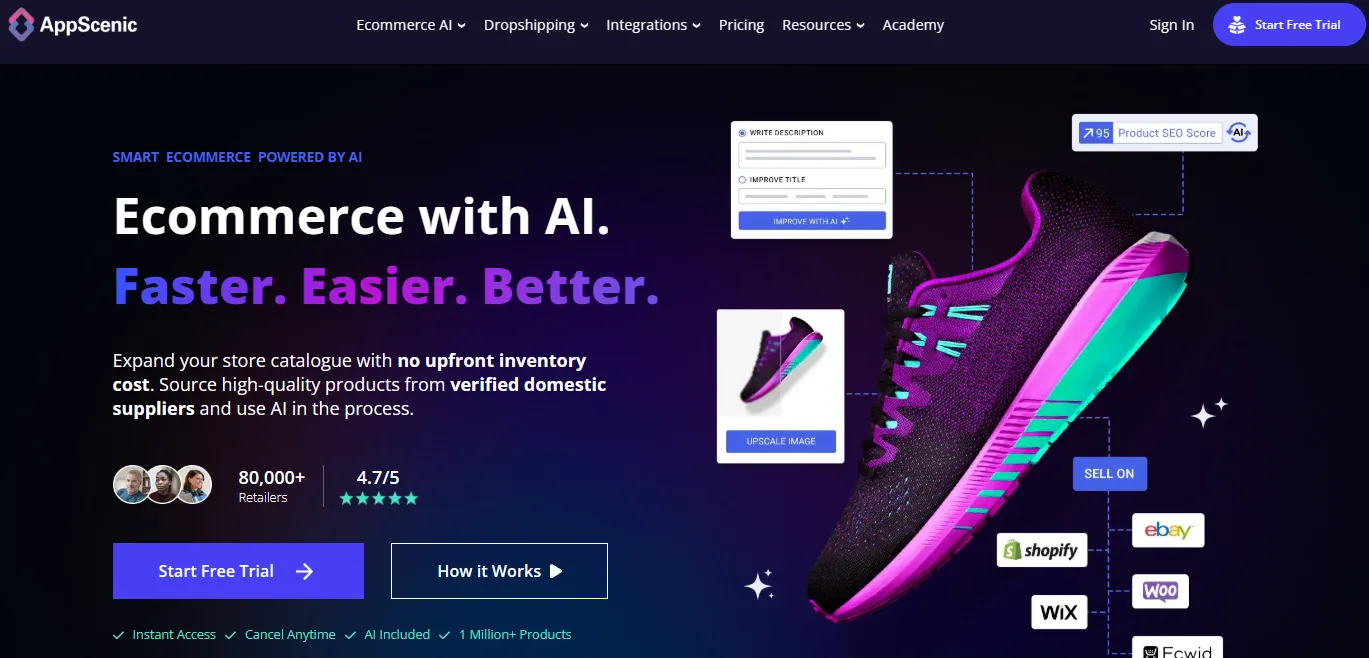
AppScenic is a B2B network with suppliers concentrated in the US, EU, UK, and Australia, plus AI-powered product recommendations.
Faster shipping from tier-one countries plus curated sourcing means fewer refunds and higher repeat orders — two quiet growth levers that most AliExpress-first stores never unlock.
DSers
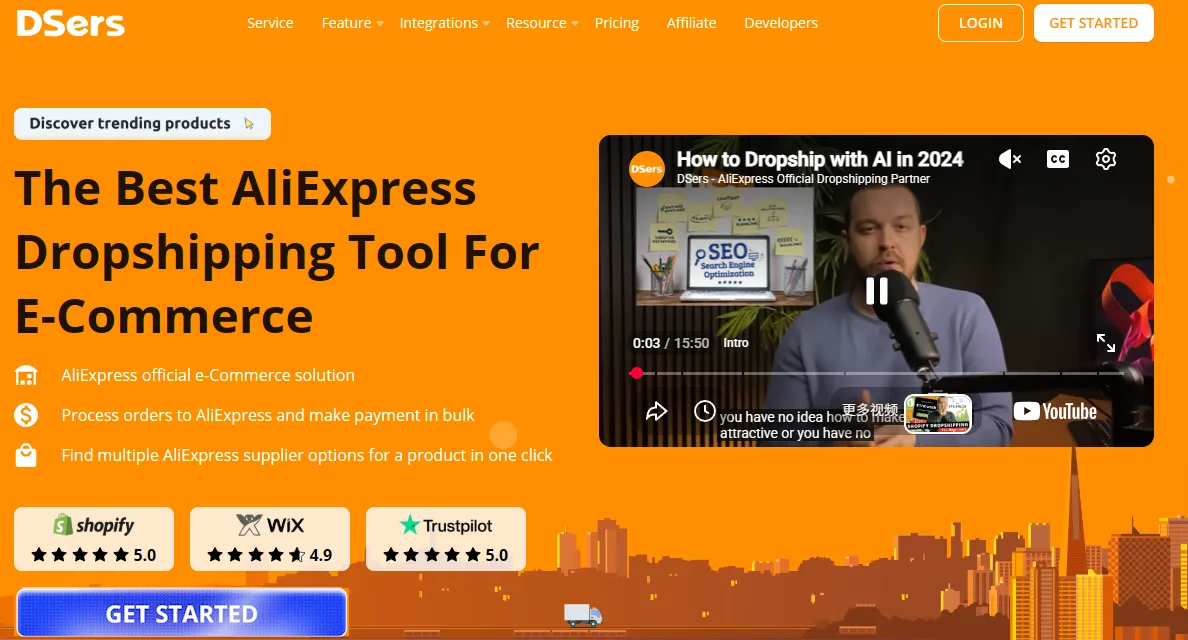
DSers is the official AliExpress partner that replaced Oberlo when Shopify shut it down.
Bulk order processing, supplier switching, and inventory sync run directly through AliExpress, without middleware fees eating into margins. For stores built on AliExpress sourcing, this is the cleanest, cheapest way to scale up.
How to Tell If Your Dropshipping Software Is Multi-Channel Compliant
Check the Amazon Packing Slip Rule
Amazon doesn't play around with its dropshipping policy. If a package ships with a third-party retailer's packing slip inside, your account can get suspended fast. Good software strips that out and replaces it with your own branding automatically.
Look for white-label packaging support:
- Removes supplier invoices
- Works with AliExpress and CJ suppliers
Watch the TikTok Shop Tracking Window
TikTok Shop is strict about upload speed. You have to submit tracking IDs within 24–48 hours or your store gets penalty points—enough points and you're banned. Your software should push tracking to TikTok the moment a supplier ships.
Key features for auto-sync tracking:
- Real-time supplier updates
- Direct TikTok Shop API connection
- Late shipment alerts
Avoid eBay's Tracking Number Trap
eBay flags sellers who reuse Amazon logistics tracking numbers on their listings. It looks lazy, and eBay treats it like fraud. Solid software routes each order through the correct carrier and generates unique, marketplace-approved tracking.
The magic phrase here is compliant-routed tracking—if the tool can't do it, skip it.
Test the Cross-Platform Sync
Before you commit, run a small sync stress test: place one order per channel and watch how the tool handles tracking, packing slips, and status updates. If anything feels manual or slow, that's a red flag that the software wasn't built for juggling multiple marketplaces at once.
The Real Cost of Running a Dropshipping Business in 2026
The "$29/Month" Lie
Most blog posts show you one tool's base price and call it a day. Real dropshippers know better. You actually need a full stack—storefront, sourcing app, order automation, analytics, and spy tools—and those small monthly fees add up fast into your real monthly burn.
Beginner Stage: Around $80–$150/Month
Just starting out? Your setup will be lean but not free. Expect a basic Shopify plan, one sourcing app, and maybe a free analytics tool. This is your starter stack:
- Shopify Basic: $39/mo
- Sourcing tool (DSers, Zendrop free tier): $0–$30/mo
- Domain and email: $15/mo
- Basic ad spy tool: $0–$30/mo
Scaling Stage: $300–$800/Month
Once orders pick up, so does your bill. You'll upgrade plans, add automation, and probably grab a paid spy tool to find winning products faster. This is where most sellers get hit by surprise fees they didn't budget for—your scaling stack gets pricey.
- Shopify + premium theme
- AutoDS or Spocket paid plan
- Minea or PPSPY for research
- Email marketing tool like Klaviyo
Enterprise Stage: $1,500+/Month
Running multiple stores or hitting six figures a month? You're now paying for advanced everything—custom apps, multi-store dashboards, dedicated support, and heavier API limits.
At this level, dropship tools are an investment, not an expense, and your enterprise stack should pay for itself.
The Hidden Fees Nobody Warns You About
Base prices are just the sticker. The real damage comes from extras that quietly show up on your invoice each month. Always read the fine print before signing up for any tool, because these hidden charges stack up quickly.
- API call overage fees
- Per-order auto-fulfillment surcharges
- Currency conversion markups (usually 2–4%)
- Multi-store add-on pricing
- Extra user seat costs
Budget for the Whole Stack, Not One Tool
The smartest move in 2026 is planning your dropshipping software budget as one big number, not tool by tool. Add 20% on top for surprise fees and price hikes. That way your true TCO matches reality, and you won't panic when the credit card bill arrives.

How to Choose the Right Dropshipping Software for Your Business
Match the Tool to Your Sales Channel
Not every dropshipping tool works on every platform. DSers is built for Shopify + AliExpress. AutoDS covers eBay, Amazon, and TikTok Shop. Zendrop leans hard into Shopify.
Pick software that natively supports where you actually sell, not just where you plan to sell someday.
Check Supplier Location Before Anything Else
If your customers are in the US, don't pick a tool that only ships from China. Spocket and Zendrop have US/EU warehouses with 2–7 day delivery. DSers and CJdropshipping are cheaper but rely on 15–30 day AliExpress shipping.
Know Your Real Monthly Budget
Don't just look at the base plan. Add sourcing fees, payment processing (2.9% + 30¢), and per-order surcharges. A $19/mo tool can easily cost $200/mo once you're doing volume. Calculate your true cost before signing up.
Test the Automation Depth
Some tools import products but leave you to fulfill manually. Others handle everything from order placement to tracking uploads. If you're processing 20+ orders a day, prioritize software with real auto-fulfillment, not buttons that still need clicking.
Start Small, Then Scale Up
You don't need the Advanced plan on day one. Begin with the cheapest tier that fits your channel, run 30–60 days of real orders, then upgrade based on actual bottlenecks. Buying big early is the fastest way to waste your starting capital.
Expert Tips
Picking the right dropshipping software comes down to knowing where you are today. Starting out? Keep the stack lean and let early sales guide your next move. Already scaling? Add tools only where a real bottleneck slows you down.
Every option on this list solves a specific problem. Match the tool to your stage, watch the true cost, and stay compliant across every platform you sell on.
Pick one, launch fast, and let your store teach you the rest. Growth follows action, not a perfect setup.
FAQs
Can I dropship for free?
Technically yes, but not for long. A free Shopify trial plus a no-fee supplier app gets a store live. Real growth needs paid ads, which quickly eats any zero-cost head start.
How much does dropshipping software cost?
A lean setup runs around $50 monthly. Fuller stacks with automation, analytics, and premium sourcing climb past $300. Watch for yearly billing traps that hit right after short free trials end.
Should I use Amazon or Shopify for dropshipping?
Shopify gives control over branding, pricing, and customer data. Amazon offers built-in traffic but strict rules and thin margins. Most long-term brands lean Shopify; quick-cash sellers often pick Amazon.
Which software is best for dropshipping?
There's no single winner. AutoDS suits automation, Spocket wins on fast shipping, CJ Dropshipping fits custom sourcing, and BrandSKU handles branded orders. Pick based on the bottleneck slowing your store down right now.
Can I make $10,000 per month dropshipping?
Yes, but not overnight. Reaching that mark usually takes months of testing, a proven product, and tight ad management. Most sellers who hit it treat dropshipping as a real business, not a side hustle.
Share article


Written by

Supply chain background | Covers sourcing and cross-border logistics | Curious about what works in dropshipping and what doesn't

 Early access

