






Ready to try BrandSKU?

Furniture is one of the biggest opportunities in eCommerce right now. Buyers are spending more on sofas, beds, patio sets, and modular pieces. But furniture is heavy and expensive to store — which makes dropship furniture the smart way to sell it.
The hard part is picking the right supplier. This guide breaks down 14 of the best furniture dropshipping suppliers to work with in 2026 — what they sell, who they fit, and why they made the list.
Why Dropshipping Furniture Is a Smart Business
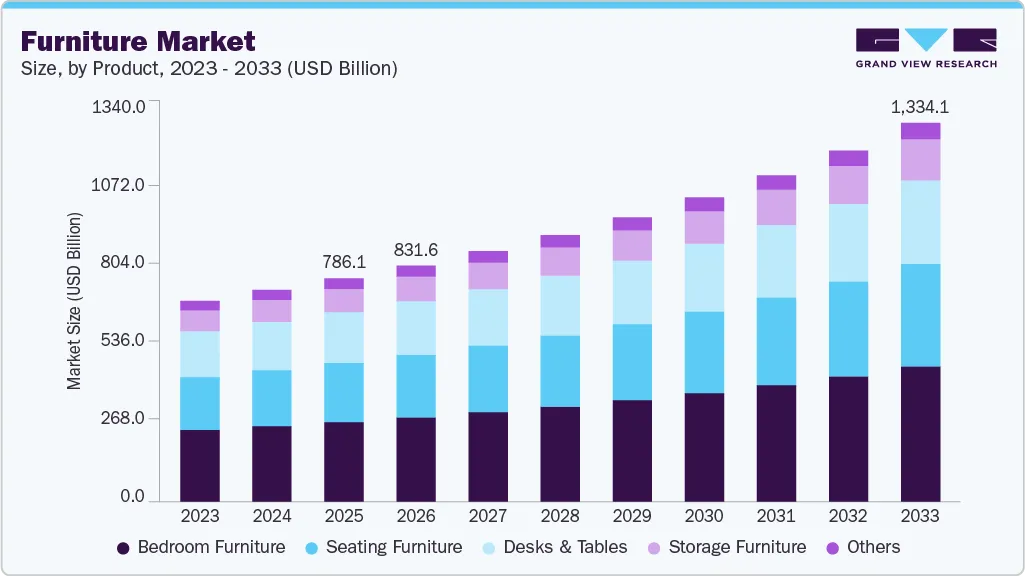
The global furniture market is on track to hit $1.33 trillion by 2033, growing at 7% a year. That's a healthy runway for anyone entering now.
But the number that matters more is what shoppers are actually buying: modular pieces, sustainable materials, and furniture with built-in tech. Those are the categories pulling the market up.
That shift plays to a dropshipper's strengths. You can test which trend your audience responds to without committing to inventory.
Suppliers handle the bulky storage and freight — the hardest part of selling furniture — while you focus on picking the right products and reaching the right buyers.
How Does Dropshipping Furniture Work?
Listing Without Stocking
Retailers add furniture products to their store — sofas, desks, patio sets — using supplier-provided images and descriptions. No inventory sits in a garage or warehouse.
The work is choosing what to sell and marketing it, not managing physical stock or lifting heavy boxes.
The Order Triggers the Chain
Once a customer buys, the order gets forwarded to the supplier at the wholesale price. The markup becomes profit.
Most suppliers only charge after the sale, so cash flow stays healthy — no money is fronted for products that might not sell.
The Supplier Ships Direct
The supplier packs the item and ships it straight to the customer, often with blind shipping so no branding gives the source away.
Furniture usually moves by freight or LTL rather than standard parcel, with lead times running 3–14 days depending on the piece.
Customer Service Stays With the Store
Returns, questions, and reviews land with the storefront, not the supplier.
Strong suppliers back things up with tracking updates and damage claims, but the customer relationship belongs to the seller. This is where good supplier choice pays off most.
14 Reliable Dropshipping Furniture Suppliers for Your Store
PrintKK

PrintKK is a print-on-demand platform with custom furniture-style pieces like lamps, shoe cabinets, coffee tables.
Sellers upload their own designs, and PrintKK prints and ships each order. It suits creators, artists, and brands that want unique home décor without holding stock.
Wayfair Partner Home

Want to reach millions of furniture shoppers without building traffic? Wayfair Partner Home plugs suppliers into one of the largest home goods marketplaces in North America.
It works best for sellers who already have a warehouse or 3PL partner and want an established buyer base from day one.
Vaughan-Bassett Furniture

Since 1919, Vaughan-Bassett has built wooden bedroom furniture in Galax, Virginia. Their catalog covers beds, dressers, nightstands, and dining pieces — all made in the USA with sustainably sourced hardwoods.
A strong pick for stores selling to buyers who care about American manufacturing and long-lasting solid wood.
Costway
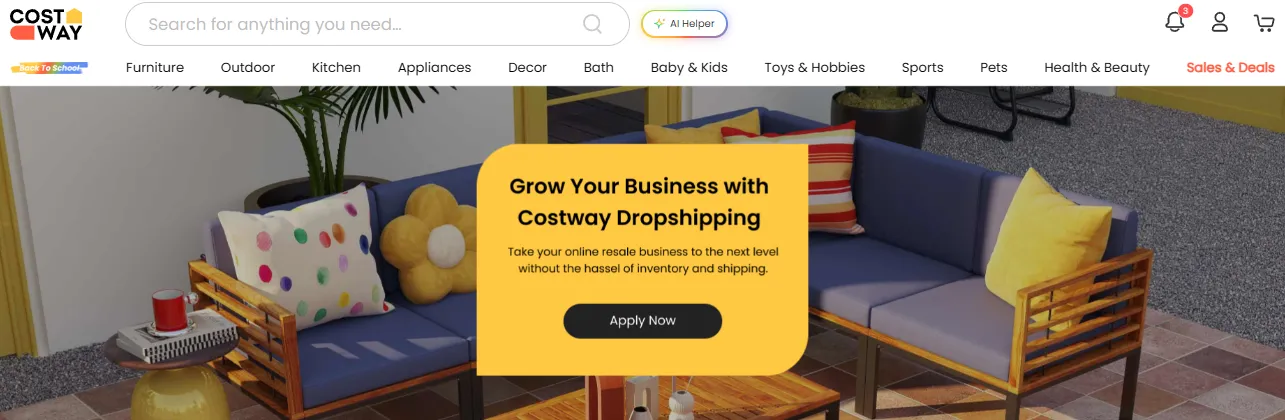
For stores testing many categories at once, Costway is a flexible option. Their catalog ships more than 8,000 home and lifestyle products, with a big share in furniture and patio.
The dropship program offers tiered discounts, no minimum orders, and 2–7 day US delivery.
Tortuga Outdoor

Tortuga Outdoor focuses on weather-resistant patio furniture — wicker seating, dining sets, teak pieces, and fire tables.
Their Drop Ship Dealer Program includes domestically warehoused inventory and fast shipping. Best for stores targeting backyard, deck, and outdoor living niches during peak seasonal demand.
BrandSKU

Want to dropship home goods and slap your own logo on them? BrandSKU lets sellers do both — no stock, no minimums.
The catalog covers throw pillows, blankets, décor, and furniture-adjacent pieces. A solid pick for small brands that want their store to feel like theirs, not a generic reseller.
Simpli Home
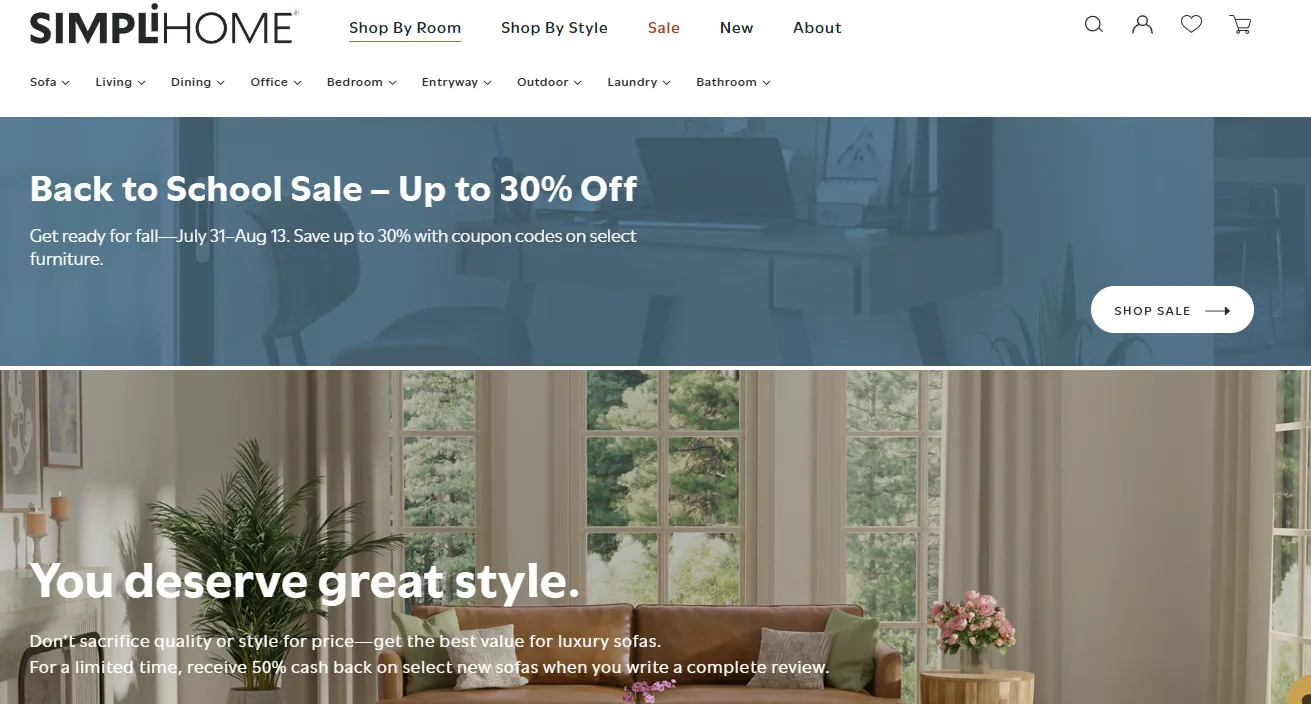
Simpli Home makes handcrafted solid wood furniture — storage benches, cabinets, tables, and seating with a clean, transitional look.
There's no minimum order for resellers, and shipping runs 1–2 weeks. Good for stores selling to buyers who want quality wood pieces at mid-range prices.
HomeRoots
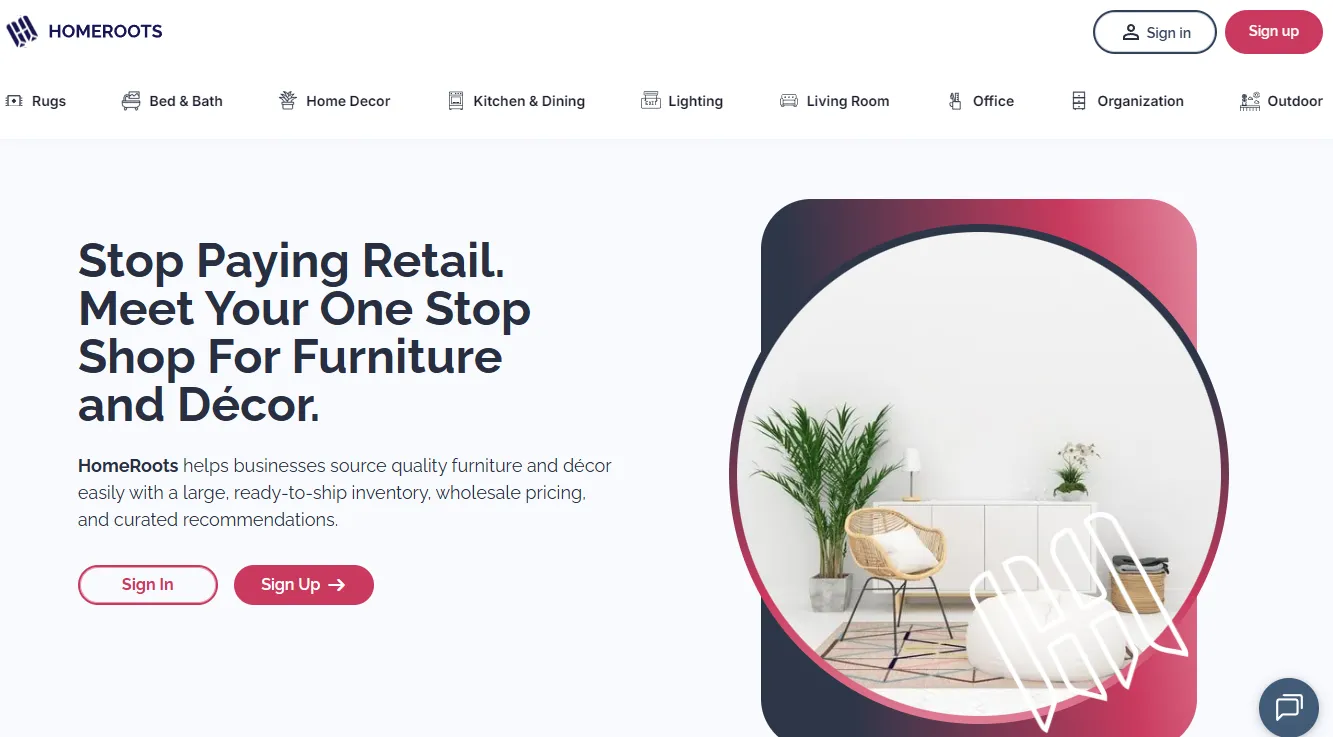
HomeRoots is a B2B marketplace with over 150,000 SKUs across furniture, lighting, rugs, and décor.
US warehouses ship in 2–5 business days, and there's no minimum order. Shopify and WooCommerce integrations make it a fit for stores wanting variety without juggling ten suppliers.
Modway

For stores balancing modern style with affordable pricing, Modway delivers. They stock 7,000+ SKUs across every major furniture category, from sofas to boxed mattresses and rugs.
Warehouses on both US coasts offer real-time inventory, no order minimums, and full drop-ship capabilities.
Sagebrook Home
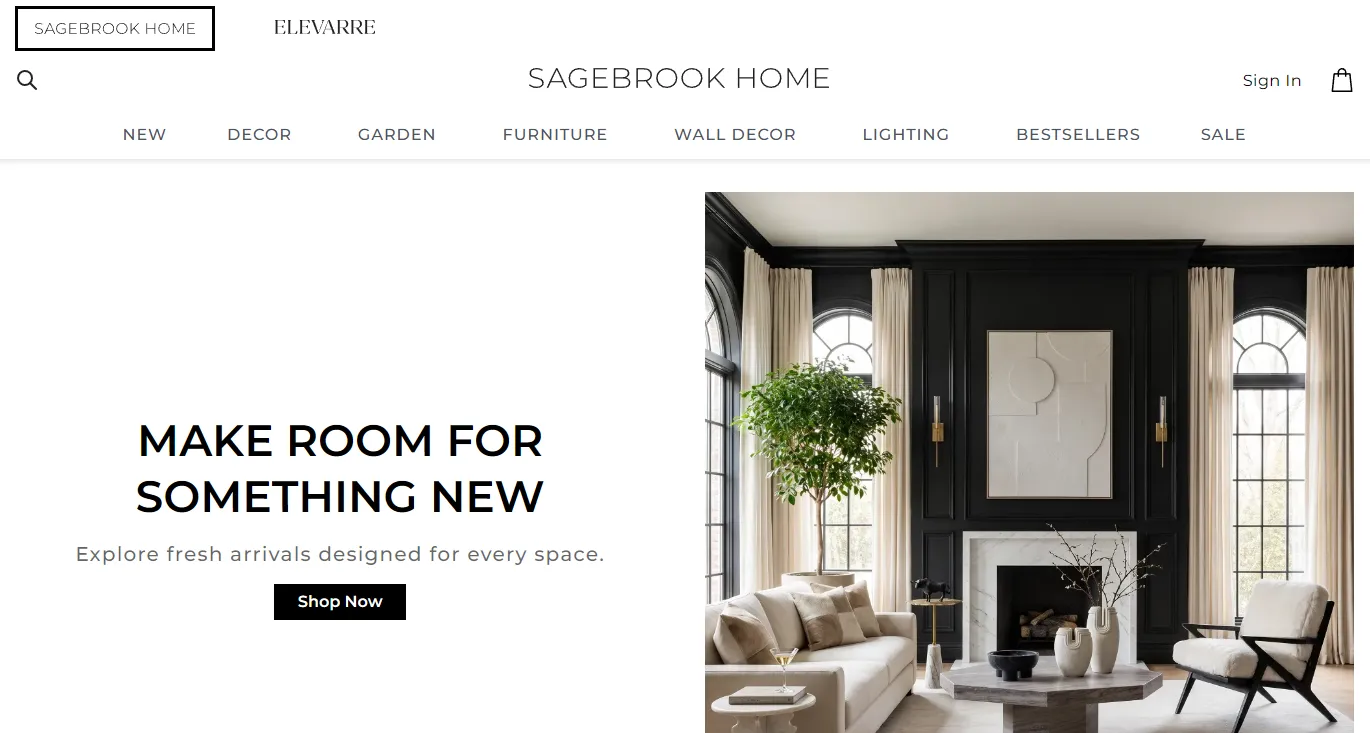
Sagebrook Home supplies wholesale furniture, wall décor, lighting, and accessories with a contemporary design focus.
Their catalog fits both residential and commercial spaces. Good for boutique home stores and interior designers who want on-trend pieces at reasonable prices without minimum quantity headaches.
Wholesale Interiors

Wholesale Interiors is the parent of Baxton Studio, a well-known modern furniture line. Their catalog spans living, dining, bedroom, and commercial pieces.
Warehouses in Illinois and California ship in 1–7 days. A trade account is required — solid for stores focused on affordable designer looks.
Zuo Modern

Design-driven stores selling statement pieces should look at Zuo Modern. Their trend-forward furniture and décor refresh regularly, and they ship from both US and EU warehouses.
Direct Shopify integration makes setup smooth for stores whose buyers want something beyond mainstream catalog styles.
VIG Furniture
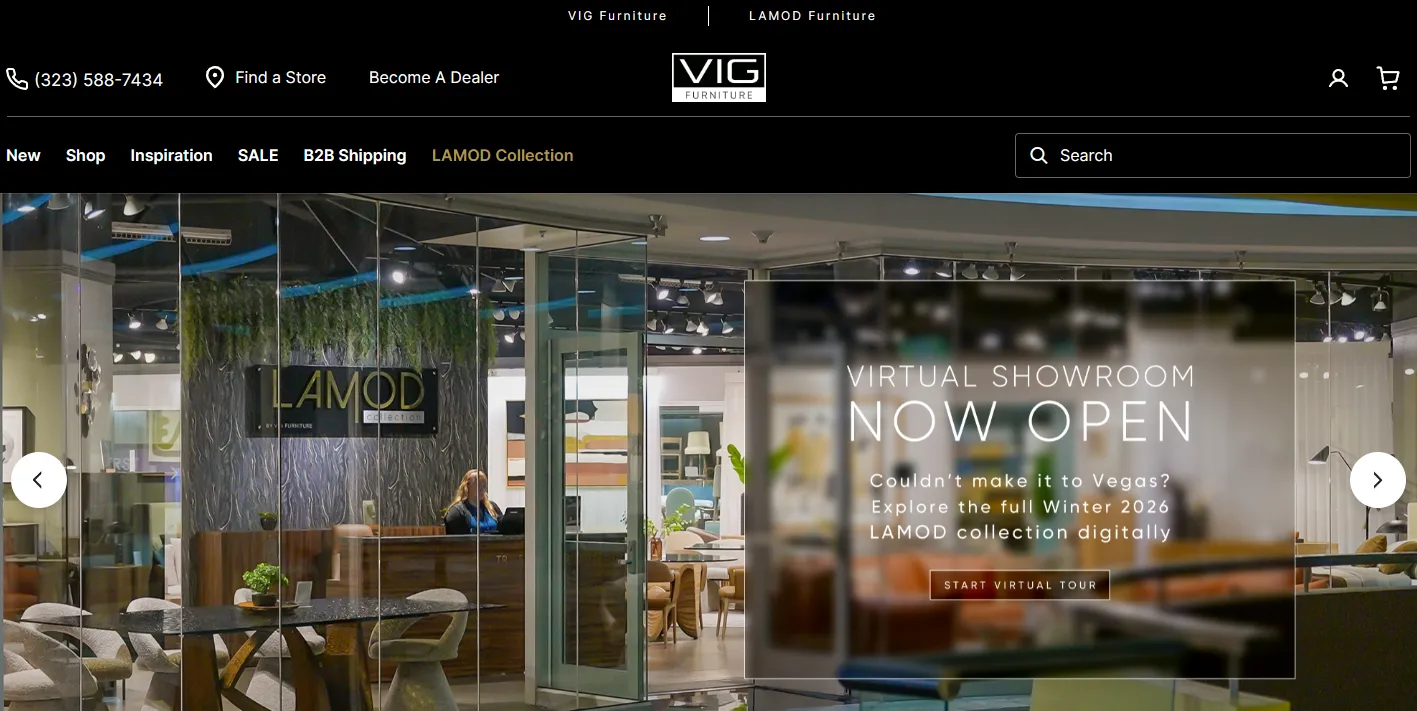
VIG Furniture specializes in European-style modern furniture — Italian-inspired dining tables, sofas, bedroom sets, and office pieces.
Based in Los Angeles with no minimum purchase, they refresh collections often. Best suited for mid-to-high-end stores selling contemporary looks with a bit of Old World craft.
Classic Home
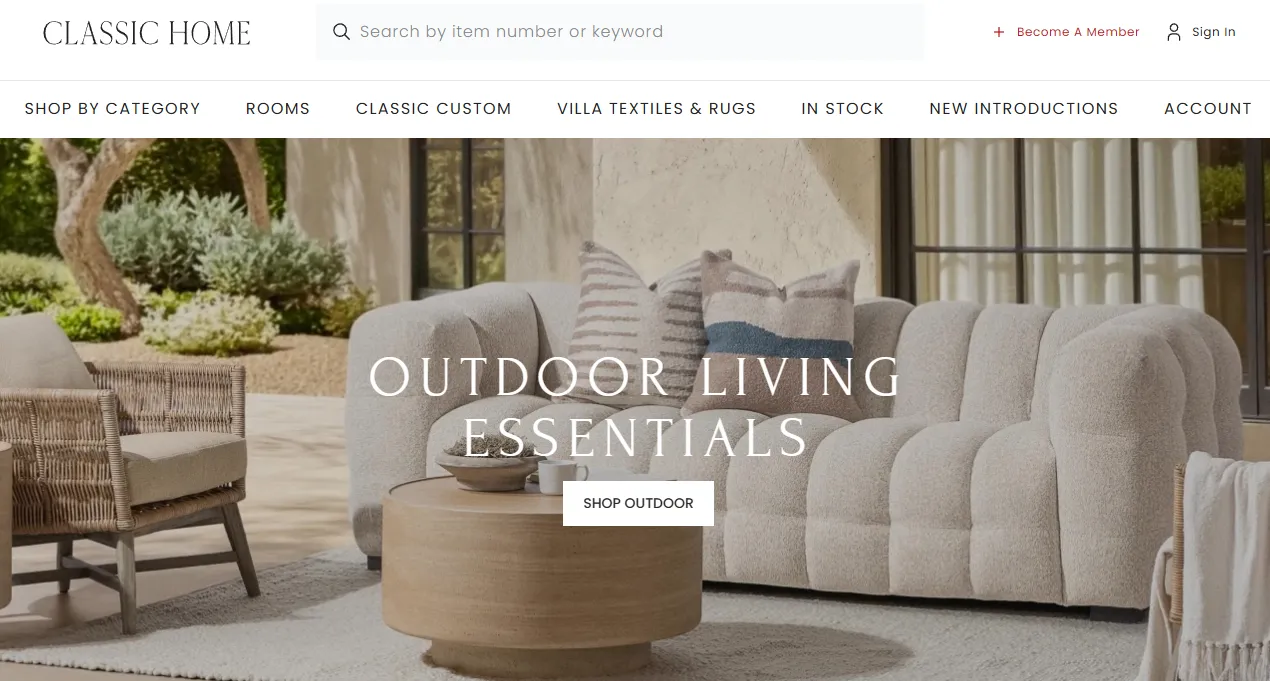
Classic Home (part of Villa Home Collection) offers globally sourced textiles, décor, and accent furniture, including one-of-a-kind pieces made with reclaimed materials.
Their trade program suits boutique and lifestyle home décor retailers whose buyers want character pieces over mass-produced designs.
How to Choose the Right Furniture Dropshipping Supplier
Check Shipping Speed and Coverage
Furniture is heavy, so shipping matters more than in most niches. Look for suppliers with US-based warehouses and dispatch times under 3 business days.
Ask about LTL freight rates and which states they can reach — one uncovered region can cost multiple lost sales a week.
Ask About Damage and Return Policies
Broken sofa legs and cracked table tops happen more often than sellers expect. A good supplier handles damage claims without making the store eat the loss.
Get their return window, restocking fee, and freight-return process in writing before listing a single product.
Test Inventory Sync Reliability
Selling a "Ships in 3 days" sofa that's actually out of stock will tank a store fast.
Suppliers offering real-time inventory feeds through Shopify, WooCommerce, or a data API are worth more than ones sending weekly spreadsheets. Ask for a demo before signing on.
Compare Wholesale Margins Honestly
A 30% discount sounds great until freight eats half of it. Calculate the true margin on a few sample products — wholesale price plus shipping, minus your ad cost and platform fees.
Anything under 20% net on furniture usually isn't worth the customer service load.
Look at Their Existing Sales Channels
If a supplier already sells on Wayfair, Amazon, and their own site at retail prices, competing gets brutal.
Check where else their SKUs show up. Suppliers with MAP policies (minimum advertised price) protect resellers from being undercut by the source.
Read Real Reseller Reviews
Testimonials on a supplier's site are cherry-picked. Search Reddit, Trustpilot, and dropshipping forums for reseller experiences — not just customer reviews.
Watch for repeat complaints about ghosting on damage claims, sudden price hikes, or inventory feed failures. Those patterns rarely change.

How to Calculate the True Cost of Furniture Dropshipping
Add Up Every Landed Cost
Most sellers only look at the wholesale price and think that's the cost. It's not. The real number is the landed cost — what a piece actually costs to get to the customer's door.
Miss one line item and the whole margin math breaks.
Include all of these in every calculation:
- Wholesale price from the supplier
- LTL freight (large items ship on pallets, not parcel)
- Oversized handling or lift-gate fees
- Payment processing fee (usually 2.9% + $0.30)
- Return reserve (5–10% of sale price)
Know the Gap Between Gross and Net
A sofa with a 50% gross margin sounds like a home run. The catch is that freight and damage claims quietly eat most of it.
After all costs, real net margins on dropshipped furniture usually land between 12% and 18%. Anything above 20% is genuinely good performance.
Run the Math on a Sample Product
Pick one SKU and stress-test the numbers before listing dozens. Say a sectional wholesales for $600 and retails for $1,200. On paper that's a $600 gross profit.
But add $180 freight, $35 processing, $60 return reserve, and $80 ad spend — profit drops to $245. That's the real picture.
Build a Return Reserve Into Pricing
Furniture returns cost more than most niches because of freight both ways. Set aside 5–10% of every sale as a return reserve in the pricing model itself.
Ignore this line and one damaged sectional refund can wipe out the profit from five clean sales.

Common Mistakes to Avoid in Furniture Dropshipping Business
Ignoring Freight Class and Dimensions
New sellers often quote flat shipping without checking freight class. A dresser and a bookcase with similar prices can have wildly different LTL rates.
Always request the freight class code and dimensional weight from suppliers before pricing a product — surprise fees erase margins overnight.
Listing Products Without Ordering Samples
Photos lie. What looks like solid oak online sometimes arrives as veneered particleboard with sharp edges.
Order at least one sample piece from every new supplier before listing their catalog. It costs $200–$400 upfront and saves months of one-star reviews later.
Skipping the White Glove Question
Standard freight drops furniture at the curb — customers assemble and haul it inside. Many shoppers don't know this and expect white glove delivery.
Either offer it as a paid upgrade or state the delivery type clearly on product pages, or refund requests will pile up fast.
Trusting Supplier Stock Counts Blindly
Suppliers update inventory feeds on their own schedule, not real-time.
Overselling a sofa that's been out of stock for a week means canceling orders and refunding customers — a fast way to kill store trust. Set buffer stock rules so items pause selling below a threshold.
Underestimating Customer Service Load
Furniture generates more support tickets than almost any category. Damaged corners, missing hardware, delivery reschedules — one $800 sofa can create five emails.
Budget at least 10 minutes of service time per sale into pricing, or hire help before scaling past 20 orders a week.
Competing Only on Price
Racing to the lowest price on Wayfair or Amazon is a losing game. Suppliers there already sell direct.
Win instead with better content — lifestyle photos, room-scene videos, honest dimension notes, and styling guides. Buyers pay more when they feel confident about what shows up.
Expert Tips
The furniture market is growing fast. Buyers want modular, sustainable, and tech-friendly pieces. Smaller stores have real room to compete.
The 14 suppliers here all offer clear dropship furniture programs. Pick two or three that match your audience. Order samples. Test the numbers before scaling.
Take shipping seriously. Watch your net margins, not just gross. Do those things well, and furniture becomes one of the strongest high-ticket niches out there.
FAQs
Is dropshipping furniture profitable?
Yes, but net margins usually land between 12% and 18% after freight, damage claims, and processing fees. High ticket prices help, though careful supplier selection matters more than picking pretty products.
What sells best in dropshipping furniture?
Modular sofas, storage beds, outdoor patio sets, and space-saving pieces move fastest. Buyers in small apartments and first-time homeowners drive a lot of demand for flexible, functional designs right now.
Can I dropship high-ticket furniture successfully?
Absolutely. Items priced $500–$2,000 bring stronger profit per sale than low-cost goods. Success depends on trust signals — clear photos, honest dimensions, responsive support, and suppliers who back their damage policies.
Do I need a business license to work with wholesale suppliers?
Most US suppliers ask for a resale certificate and tax ID before approval. Requirements vary by state, so check local rules early. Skipping this step blocks access to the best programs.
Is $100 enough to start dropshipping furniture?
It's tight but possible. That budget covers a basic Shopify plan and a domain. You'll need extra cash for product samples, small ad tests, and a return reserve to handle the first damaged shipment.
Share article


Written by

Supply chain background | Covers sourcing and cross-border logistics | Curious about what works in dropshipping and what doesn't









 Early access

