





Ready to try BrandSKU?

Finding the right amazon dropshipping suppliers is what separates beginners who scale from beginners who get suspended. Wrong supplier, wrong packaging, and your account is gone in a week.
A handful of suppliers are actually built for Amazon sellers—branded packaging, fast shipping, no third-party logos in the box. This guide covers the 12 best for 2026 and how to pick the right fit.
What is Amazon dropshipping?
Amazon dropshipping is when you list products on Amazon without owning any inventory. A customer buys from your store, you forward the order to your supplier, and they ship it straight to the customer with your name on the package. You never touch the product.
Amazon allows it, but only if you're the seller of record on every invoice and packing slip—not the supplier, and never another retailer like Walmart.
How Dropshipping on Amazon Actually Works
The Basic Flow
A customer buys from your Amazon listing. You forward the order details to your supplier. Your supplier ships the product directly to the customer, using your branded packaging and invoice.
You pay the supplier, keep the difference as profit—no warehouse, no upfront inventory.
You Stay the Seller of Record
Amazon requires that your business name appears on every packing slip, invoice, and return label—never the supplier's or another retailer's.
This is what separates legal Amazon dropshipping from banned retail arbitrage. If a customer opens the box and sees someone else's brand, you're in policy trouble.
Margins Are Tighter Than You Think
Amazon takes a referral fee of around 8–15%, plus your supplier's product cost and shipping. A $30 product might leave you $4–6 in profit, not $15.
Beginners overestimate margins because they forget these cuts, then wonder why scaling doesn't feel profitable.
Shipping Speed Decides Everything
Amazon customers expect fast delivery, and your account health depends on hitting it. Suppliers with US or EU warehouses ship in 3–5 days; overseas suppliers often need 10–15.
Late shipments spike your Order Defect Rate, and once that crosses 1%, Amazon starts limiting your account.
Returns Go Through You, Not the Supplier
When a customer returns something on Amazon, it comes back to your address—not the supplier's.
You either eat the loss, ship it back to your supplier (if they accept returns), or sell it as used. Factor this into your margins before you assume dropshipping is hands-off.
Automation Tools Do the Heavy Lifting
Manually forwarding orders works for 5 sales a day, not 50. Platforms like AutoDS, Spocket, and CJDropshipping sync inventory, push orders to suppliers automatically, and update tracking numbers on Amazon.
Without automation, dropshipping becomes a full-time data entry job pretty fast.
12 Best Amazon Dropshipping Suppliers to Try in 2026
BrandSKU
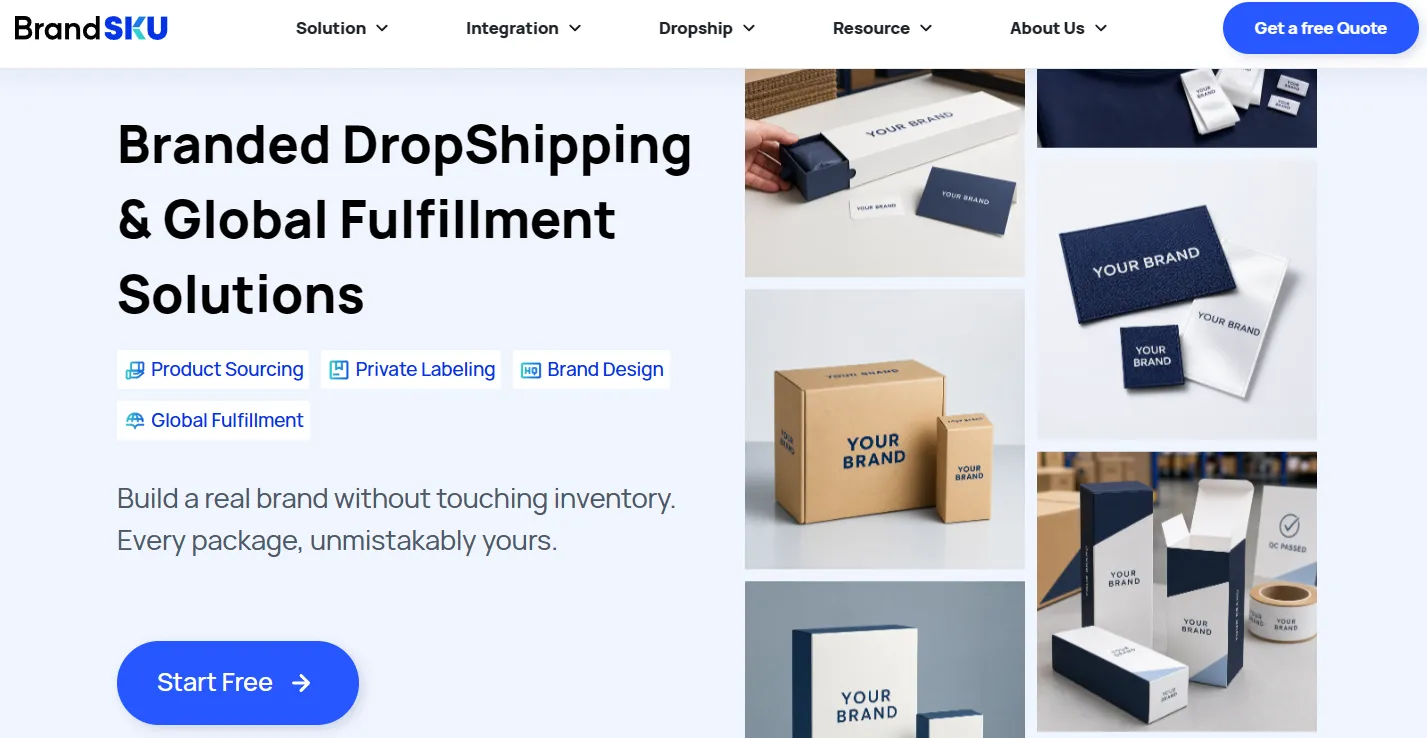
BrandSKU is built for sellers who want to grow real brands, not just resell. Sourcing, private label, and custom packaging live in one place—so your Amazon store doesn't look like a hundred others selling the same generic products. A solid pick for brand-first beginners.
Spocket
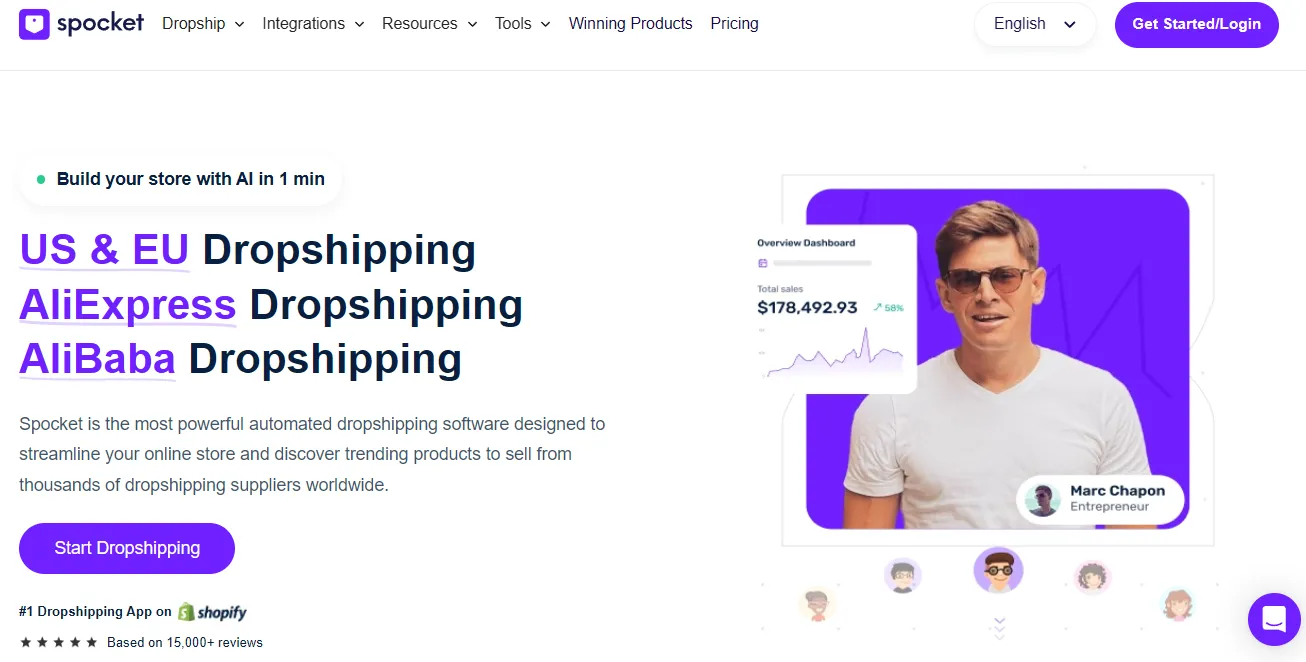
Spocket connects you with suppliers based in the US and EU, so orders reach your Amazon customers in days, not weeks.
That speed is exactly what Amazon's shipping policy expects, making Spocket one of the safer beginner picks for Western marketplaces.
PrintKK
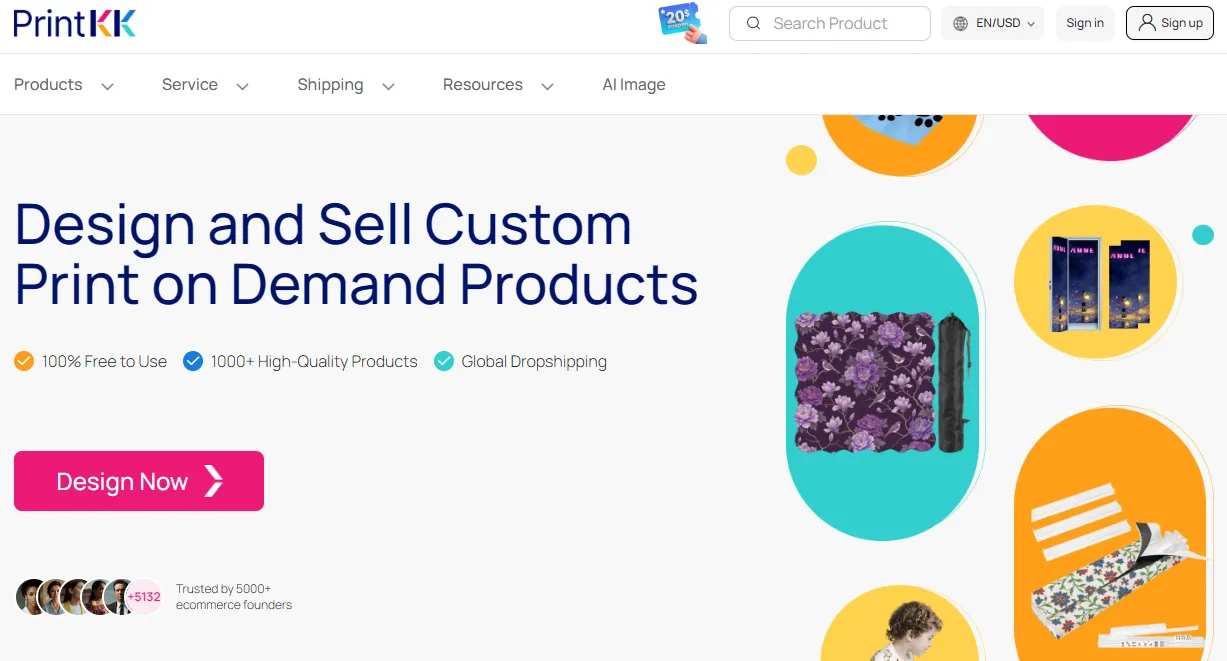
PrintKK is a print-on-demand platform with 1,300+ customizable items—t-shirts, mugs, home decor, and more.
It's a good fit if you want to sell your own designs on Amazon Merch or a regular seller account without touching inventory or upfront costs.
Doba
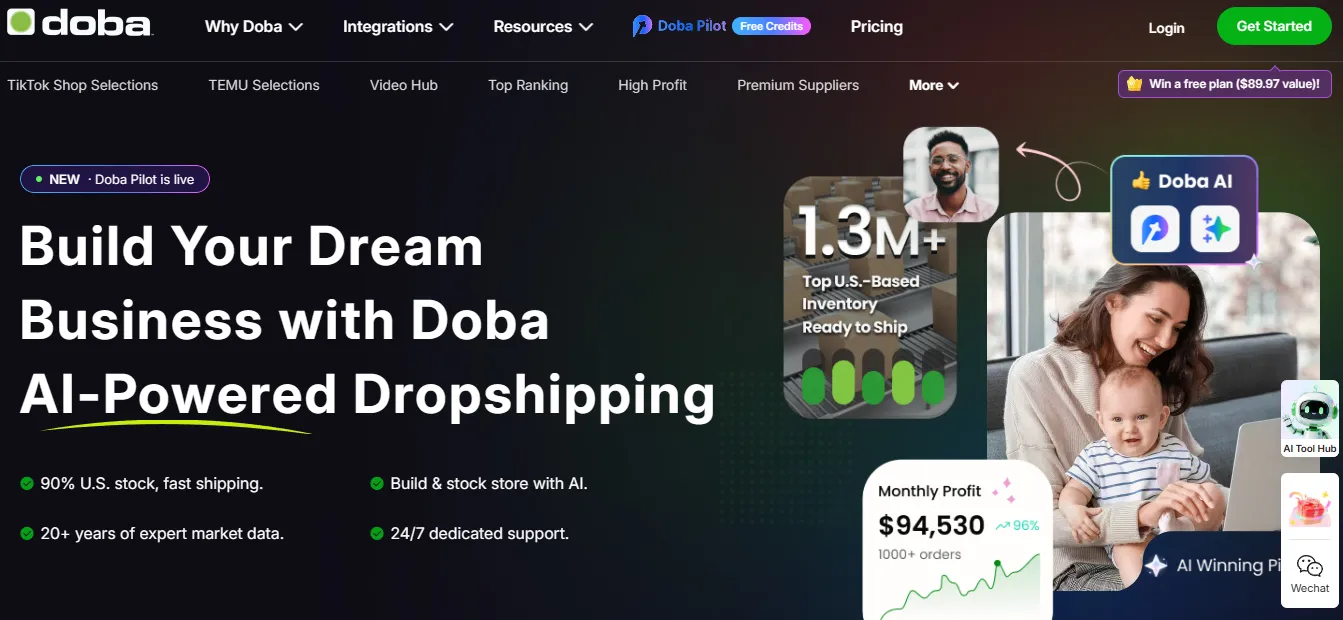
Doba pulls hundreds of suppliers into one catalog, so beginners don't have to juggle separate accounts.
It's easy to browse, easy to import, and works well when you want a wide product range without the mess of managing multiple supplier relationships.
Wholesale2B
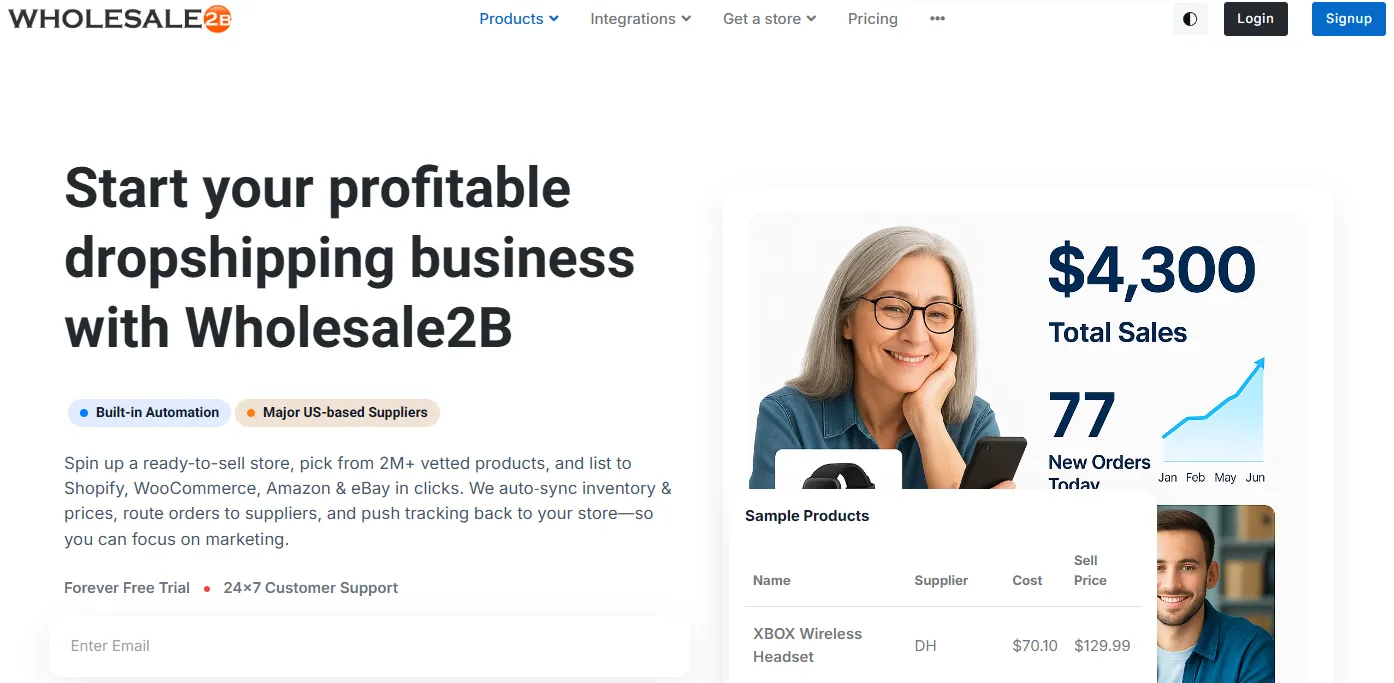
Wholesale2B gives you access to 1.5 million products from vetted US and Canadian suppliers. It even has a dedicated Amazon Dropship Plan, which is rare—most platforms treat Amazon as an afterthought, but Wholesale2B built the workflow around it.
AutoDS
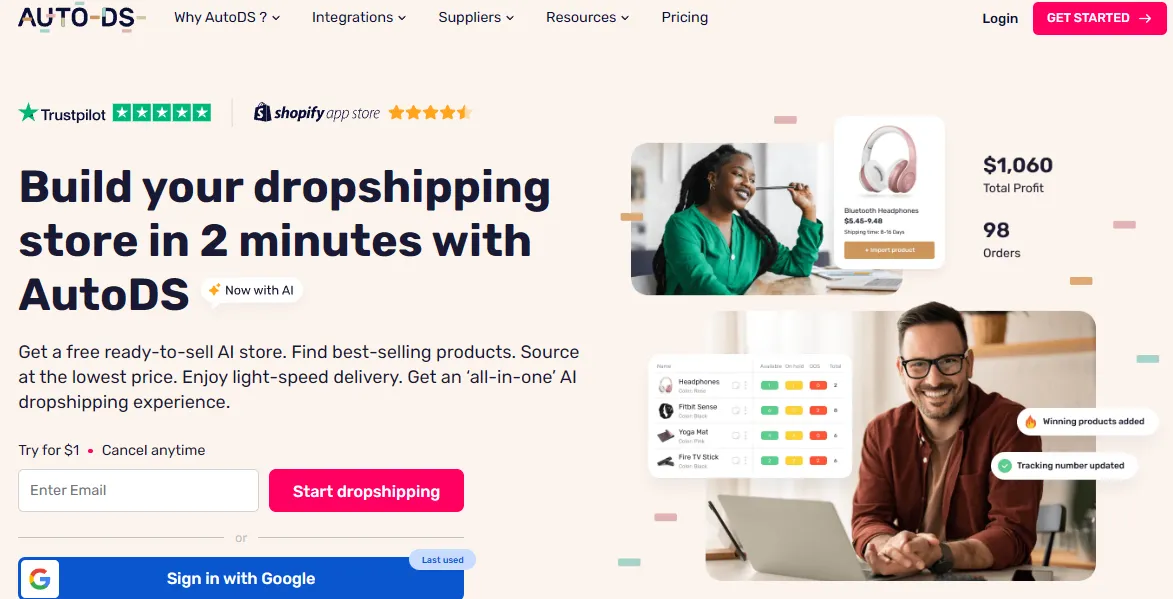
AutoDS runs on full automation—product research, price monitoring, and order fulfillment all handled in the background.
It also owns a US warehouse, so beginners can move fast while staying within Amazon's shipping speed and seller-of-record rules.
BigBuy
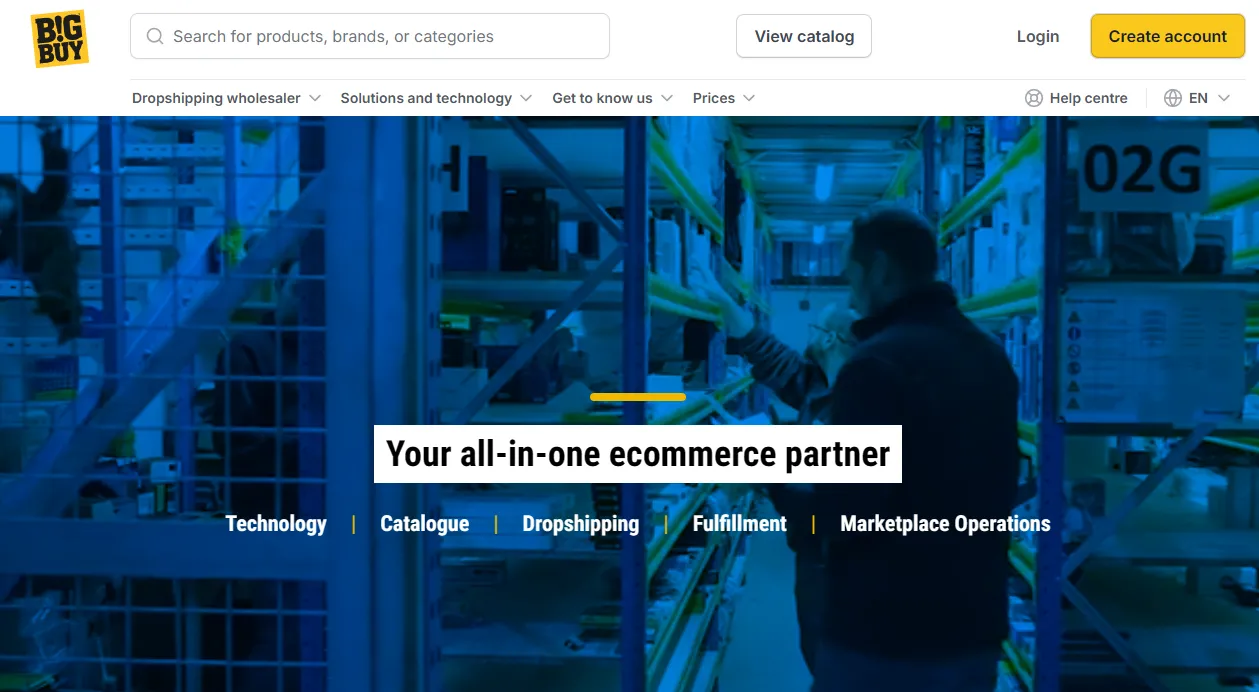
BigBuy is a European wholesaler with warehouses across the EU, giving you fast local fulfillment for Amazon UK, DE, FR, and IT.
If you're targeting European buyers, BigBuy cuts delivery times in a way overseas suppliers simply can't match.
Avasam
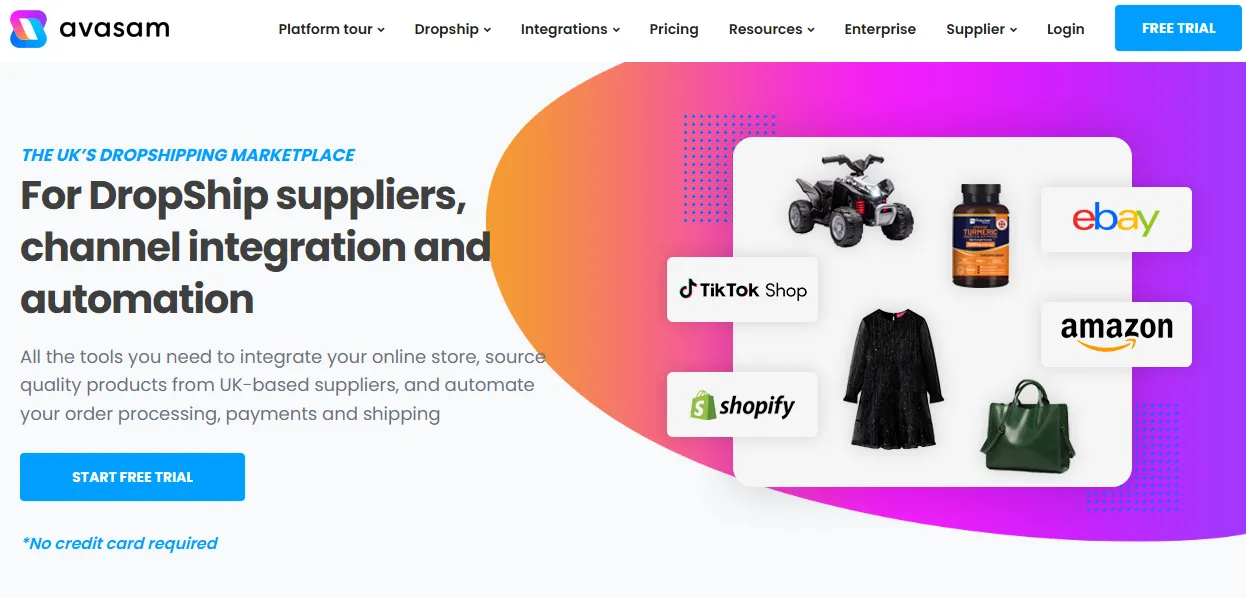
Avasam is a UK-focused platform (with some US suppliers) built around verified suppliers and automated order flow.
Great for beginners selling on Amazon UK—local sourcing means no customs surprises and shipping speeds that comfortably meet Amazon's requirements.
CJDropshipping
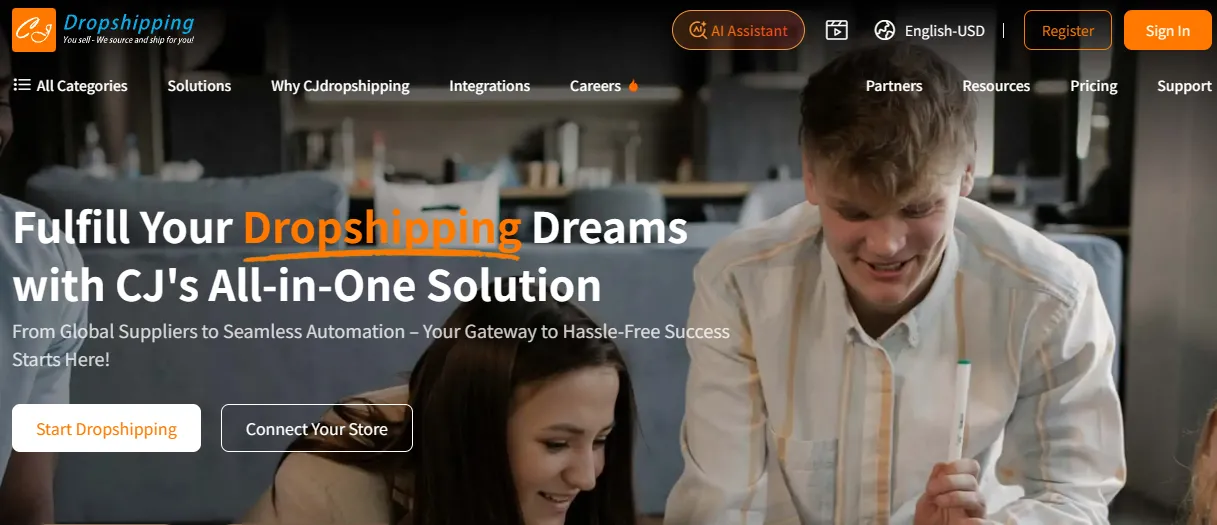
CJDropshipping offers global warehouses plus white-label packaging and custom invoices—both critical for staying compliant with Amazon's dropshipping policy.
Wide catalog, decent shipping, and features that let your store look like a real brand instead of a reseller.
BrandsGateway
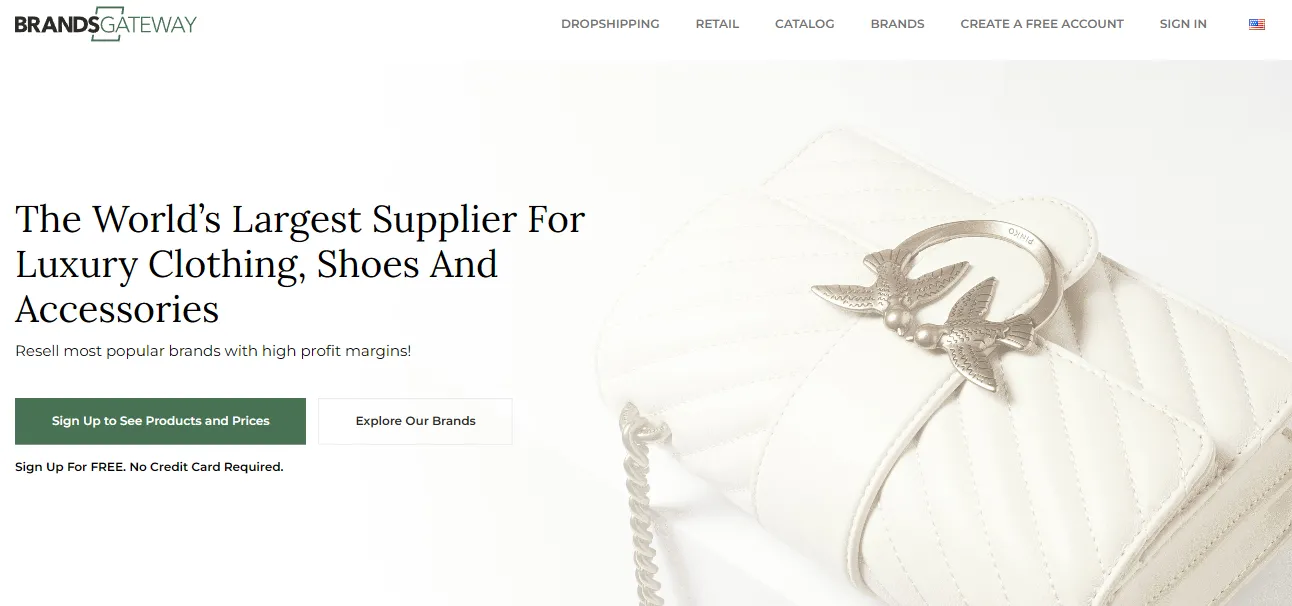
BrandsGateway focuses on luxury fashion dropshipping with real designer brands. Worth noting: Amazon gates most luxury categories and often requires brand authorization, so this one suits sellers who've already sorted out the approvals—not a starter pick for everyone.
TopDawg
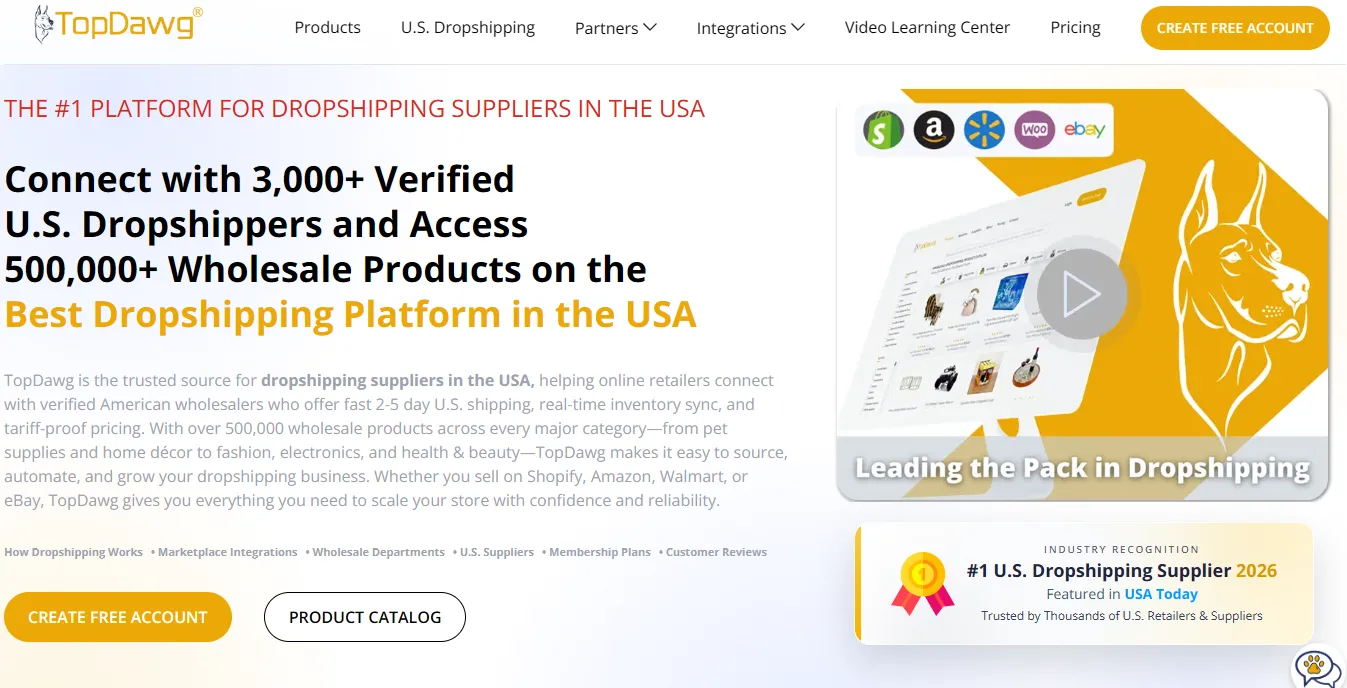
TopDawg gives you 500,000+ products from 3,000+ US suppliers, all shipping domestically.
Fast US delivery keeps you in Amazon's good books, and the catalog covers pet supplies, home goods, apparel, and electronics—plenty of room to find your niche.
SaleHoo
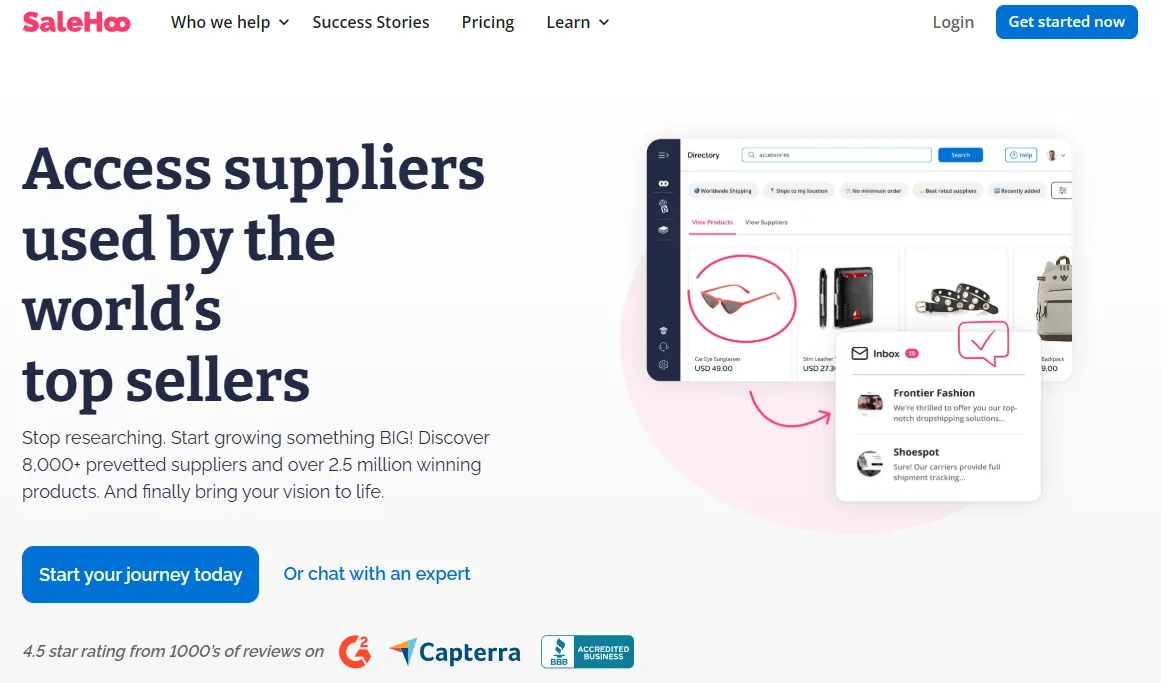
SaleHoo works differently from the others—it's a supplier directory, not a fulfillment tool. Beginners use it to research and vet 8,000+ wholesalers and dropshippers before committing. Think of it as your homework tool, not a plug-and-play supplier.
How to Choose an Amazon Dropshipping Supplier
Amazon Policy Compliance
Before anything else, place a test order to your own address. Check the packing slip, invoice, and box—if you see the supplier's brand, a third-party retailer's name, or anything but your store's info, they're not Amazon-safe. This one test filters out most bad suppliers.
Product Quality You Can Trust
Order samples of your top 3–5 products before listing them. Feel the material, check the stitching, test how it works.
A supplier's catalog photos always look great; the actual product doesn't always match. Bad quality means returns, refunds, and Amazon account warnings.
Shipping Speed That Matches Amazon's Bar
Amazon customers expect delivery in days, not weeks. Ask suppliers for average transit times to your main market, not just "we ship worldwide."
A US warehouse hitting 3-5 days beats a China warehouse promising "fast shipping" that actually takes 15.
Dispute and Refund Handling
When packages arrive damaged or go missing, who pays? Good suppliers cover the replacement cost without arguing. Ask before you sign up: "What happens if my customer files an A-to-Z claim?" A vague answer here means you'll be eating the losses yourself.
Transparent Total Cost
Cheap-looking product prices often hide platform fees, per-order charges, or expensive shipping.
Ask for the total landed cost—product plus shipping plus any fees—for a real order to your customer's zip code. Do this math before you touch pricing on Amazon.
Real-Time Inventory Sync
Overselling on Amazon triggers canceled orders, refunds, and metric penalties. Choose suppliers who sync inventory levels to your store automatically, ideally every few minutes.
Daily updates aren't enough when a viral listing can sell hundreds of units in one afternoon.
Room to Grow With You
The supplier handling 10 daily orders may crack at 500. Ask about bulk pricing, private label options, and how their fulfillment scales.
Switching suppliers after you've built momentum is painful—pick one now that won't become a bottleneck in six months.

How to Avoid Amazon Dropshipping Account Suspension
Know the Line Between B2B Wholesale and Retail Arbitrage
Amazon lets you dropship from B2B wholesale suppliers, but not from other retailers.
Buying a product on Walmart or Costco and shipping it to your Amazon customer counts as retail arbitrage dropshipping—Amazon's Seller Code of Conduct bans this outright, and accounts caught doing it get suspended fast.
Confirm You Are the Seller of Record
Amazon requires your business name on every packing slip, invoice, and shipping label—not the supplier's, not another retailer's.
If a customer opens the box and sees "Ships from Walmart" or the supplier's logo, that's a policy violation waiting to happen. Ask before signing up:
- Do you ship in unbranded packaging?
- Can invoices show my store's name and address?
- Will packing slips include your logo or brand?
If any answer is "no," walk away.
Run a Test Order Before You Scale
Never trust a supplier's word alone. Place a test order to your own address and inspect everything—box, tape, packing slip, invoice, return label.
If a single item points back to the supplier or a third-party retailer, your Amazon account is one customer complaint away from suspension.
Custom Packaging and Blind Shipping Checklist
Before adding any supplier to your Amazon workflow, verify these basics:
- Plain boxes with no supplier branding
- Packing slips showing your store name only
- Invoices free of third-party retailer logos or URLs
- Return address set to yours or a neutral warehouse
- No promotional inserts from the supplier or their partners
Miss one, and you're leaking clues that break Amazon's rules.
Watch Shipping Times and Order Defect Rate
Amazon tracks your order defect rate, late shipments, and cancellations. Even a compliant supplier hurts you if their shipping is slow or unreliable.
Keep your ODR under 1%, cancellations under 2.5%, and late shipments under 4%—these thresholds are how Amazon decides who stays and who goes.
Keep Records of Every Supplier Agreement
When Amazon flags your account, you'll need proof you're following the rules. Save supplier contracts, invoices you received, and screenshots of their compliance policies.
If Amazon asks for a Plan of Action after a suspension, this paperwork is what gets your account reinstated instead of permanently closed.
Amazon FBA vs Dropshipping on Amazon
Both let you sell on Amazon without a warehouse, but the money, risk, and speed look very different. Here's the quick side-by-side:
| Factor | Amazon FBA | Dropshipping |
|---|---|---|
| Upfront cost | $2,000+ for inventory | Under $500 |
| Storage fees | Yes, monthly | None |
| Prime badge | Yes | No |
| Shipping speed | 1–2 days | 3–15 days |
| Product testing | Slow and expensive | Fast and cheap |
| Best for | Proven winners | Finding winners |
How Each Model Actually Works
FBA: You buy stock in bulk, ship it to Amazon's warehouses, and Amazon handles the rest. Great margins once a product sells, painful when it doesn't.
Dropshipping: Your supplier holds stock and ships each order after the sale. Zero inventory risk, but tighter margins and no Prime badge.
Which One Fits You?
Pick FBA if you:
- Have $2,000+ to invest
- Already know which product sells
- Want the Prime badge for higher conversions
Pick dropshipping if you:
- Are starting with under $500
- Want to test many products before committing
- Are building a brand-first store with private label
The Smart Play: Do Both
Most successful Amazon sellers use dropshipping to find winners, then switch those proven products to FBA. You skip the guesswork of committing to inventory blind, and you still get Prime benefits on your best sellers. Slower than picking one lane, but far less risky.
Expert Tips
Picking the right amazon dropshipping suppliers is the biggest decision you'll make as a beginner. Get it right, and shipping, margins, and account health all fall into place.
Start with one or two suppliers from this list. Run a test order. Check the packaging yourself and make sure your name is on the invoice.
You don't need 50 products or a perfect plan. You need one good supplier and a first step.
FAQs
Is Amazon dropshipping legal?
Yes, dropshipping is fully allowed on Amazon as long as you're the seller of record on every invoice, packing slip, and return label—not your supplier or another retailer.
Does Amazon allow dropshipping from AliExpress?
Technically yes, but it's risky. AliExpress ships slowly and packages often carry the supplier's branding. Both issues violate Amazon's policy and can get your account suspended fast.
Are there free Amazon dropshipping suppliers?
Some platforms like BrandSKU and Spocket offer free plans with limited features. You'll pay for the products themselves, but the supplier account and catalog access cost nothing to start.
Can I make $1000 a month selling on Amazon?
Yes, it's realistic within a few months if you pick a solid niche and reliable suppliers. Most beginners hit this range after testing 5–10 products and finding one or two winners.
Share article


Written by

E-commerce enthusiast | Focused on Shopify and small store growth | Breaking down complicated topics into something you can actually use

 Early access

